
Common Issues with Cooperative Games
Cooperative games are great for teamwork but come with challenges. From dominant players taking over to disengaged teammates, these issues can ruin the fun. Here's a quick breakdown of the most common problems and how to fix them:
- Alpha Player Syndrome: One player dominates decisions, sidelining others.
- Free-Riding: Some players disengage, letting others do the work.
- Analysis Paralysis: Overthinking slows the game down.
- Difficulty Balancing: Games can feel too easy or too hard, frustrating players.
- Miscommunication: Poor communication leads to confusion and conflict.
Solutions:
- Encourage Equal Participation: Rotate leadership, frame advice as questions, and give players decision-making space.
- Use House Rules: Adjust turn order, limit advice, or assign roles based on experience.
- Pick Games with Built-In Fixes: Look for games with hidden information, secret roles, or time-based mechanics.
The key? Focus on fair participation and clear communication to keep the game engaging for everyone.
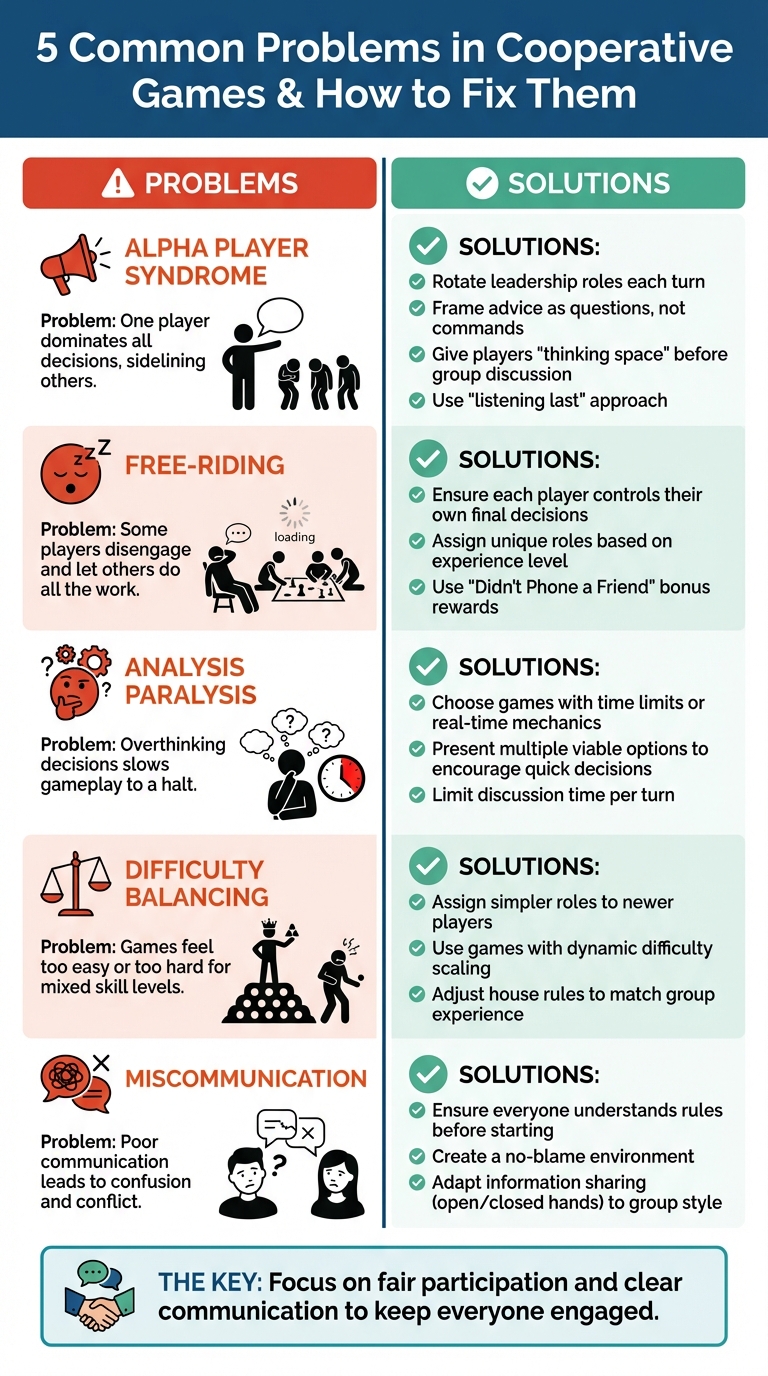
5 Common Cooperative Game Problems and Their Solutions
Preventing the Alpha Gamer Problem - Is It the Designer's Responsibility?
Common Problems in Cooperative Games
Cooperative games are built on the promise of teamwork, but they often come with challenges that can frustrate players. Let’s take a closer look at some of the most common issues.
Alpha Player Syndrome
One of the biggest hurdles in cooperative games is alpha player syndrome, also known as "quarterbacking." This happens when one dominant player takes over, making decisions for everyone else. Tanya Short, Senior Gameplay Designer at Funcom, puts it succinctly:
Designing for co-op is basically designing in hard mode. Your players will not only complain about your game, they'll start complaining about each other.
This dynamic can turn a group effort into what feels like a solo game, sidelining other players. It’s especially common in games where all the information is public or puzzles can be solved by a single person. Jason Slingerland, a board game designer, highlights the core issue:
The first purpose of the game is have a fun experience. The second purpose of a cooperative game is that everyone contributes. If they don't, then you might as well be playing a solo game.
Striking a balance between offering guidance and taking control is critical. When one player dominates, others often disengage, which can quickly sap the fun out of the experience.
Free-Riding and Lack of Engagement
Domineering players can also lead to free-riding, where others step back, either because they feel outmatched or don’t want to risk making mistakes. High coordination demands can make things worse, as integrating everyone's input can feel overwhelming. A Reddit user, AmuseDeath, summed it up well in a post cited by Rempton Games:
Anything that is solvable by a single person can and will be solved like that.
When players disengage, the cooperative aspect of the game falls apart, leaving little room for teamwork or shared enjoyment.
Analysis Paralysis in Decision-Making
Another common issue is analysis paralysis, where players overthink their decisions, grinding the game to a halt. This can be especially frustrating in cooperative games, where group discussions often replace quick, intuitive moves. Ben Goldman, Game Designer at North Star Games, explains the problem:
When optimal play means players aren't making decisions for themselves, it limits fun.
The result? A sluggish pace that can drain the energy and excitement from the game.
Difficulty Balancing Game Mechanics
Getting the difficulty just right in cooperative games is no easy task. Games that are too easy can feel dull, while overly challenging ones can leave players feeling demoralized. On top of that, differences in player skill levels can create tension. Experienced players may focus solely on winning, while less skilled players might be more interested in the social aspects of the game. This mismatch can make it hard for the group to work together effectively.
Miscommunication Among Players
Even in well-designed games, miscommunication can throw a wrench into the works. Many players fall victim to the "transparency illusion", assuming their intentions are clear to others. This misunderstanding can lead to mismatched expectations and disagreements over strategy. When interpersonal conflicts go unresolved, players may withdraw, further fracturing the group dynamic.
Cooperative games thrive on teamwork, but as these challenges show, maintaining that spirit of collaboration takes more than just good intentions. It requires careful design and a willingness from players to navigate these pitfalls together.
How to Fix These Problems
Most challenges in cooperative games can be tackled with well-thought-out strategies and adjustments.
Encourage Equal Participation
One of the best ways to address alpha player syndrome is to ensure that each player maintains control over their own decisions. Even after group discussions, the active player should have the final say on their move. This approach helps everyone feel involved and valued during gameplay.
Experienced players can make a big difference by framing suggestions as questions instead of commands. For example, instead of saying, "You should move here", they might ask, "What do you think would happen if you moved here?". Another helpful method is "listening last" - letting others share their thoughts first before offering their own input. This encourages quieter players to speak up and be heard.
Adding a "thinking space" at the start of each turn can also help. This pause gives players time to form their own ideas before the group discussion begins. Some groups even use a house rule called the "Didn't Phone a Friend" bonus, where players earn a small in-game reward for completing their turn without outside advice. This keeps the collaborative spirit alive while promoting independent decision-making.
Introduce House Rules for Balance
House rules can go a long way in improving the group’s experience. For instance, Player Selected Turn Order (PSTO) allows the group to decide who goes next instead of following a fixed clockwise rotation. This flexibility opens up opportunities for strategic teamwork and better coordination.
For groups with dominant players, try rotating leadership by appointing a "Captain" each turn. This ensures everyone gets a chance to lead and contribute. Another idea is to limit advice by proximity, meaning players can only give suggestions when their game pieces are in the same or adjacent locations on the board.
If there’s a mix of skill levels, consider assigning roles based on experience. For example, in a game like Pandemic, newer players can take on simpler roles like the Medic, while experienced players handle more complex characters. Another adjustment is to present multiple viable options for key decisions, encouraging discussion instead of defaulting to a single "best" move.
These tweaks not only reduce leadership conflicts but also improve communication and teamwork.
Facilitate Clear Communication
Clear communication is key to keeping gameplay balanced and enjoyable. Start by making sure everyone fully understands the rules before the game begins. Misunderstandings can often lead to dominant behavior. Create a no-blame environment where players agree not to criticize mistakes. This fosters a space where everyone feels comfortable experimenting and learning.
During the game, manage how information is shared. If your group tends to overanalyze or "quarterback", try using "closed hands", where players keep their cards hidden. On the other hand, if your group thrives on collaboration, "open hands" can encourage even more discussion. The goal is to adapt the information-sharing style to fit your group’s dynamics.
Select Games with Built-In Solutions
Choosing games designed to counter dominant play can also help. Look for games that include hidden information or secret roles, which prevent any one player from dictating the "perfect" move for the group. Games with real-time mechanics or timers are another great option, as they require quick, individual decisions and leave little room for one person to take over.
Titles with role-based mechanics can naturally distribute responsibilities, giving each player a unique role and purpose within the team. Additionally, games with deep tactical complexity often require input from the entire group, as the problem-solving space is too vast for one person to manage alone.
A great example is MINIFINITI’s Red Tape, which uses humor and clever mechanics to spread decision-making across the group. By combining engaging gameplay with social elements, well-designed games like this can reduce common issues and ensure everyone has a great time at the table.
sbb-itb-7b84150
How Game Designers Address Cooperative Gameplay Issues
Game designers have come up with clever ways to tackle the common problems that arise in cooperative gameplay. By weaving solutions directly into the game's framework, they help players avoid the need to constantly police each other's behavior.
Using Asymmetric Roles
One effective approach is designing asymmetric roles, where each player has unique abilities that are crucial for the team's success. This setup ensures no single player can dominate the game, as each role provides access to different information or abilities. For instance, in games like Spirit Island and XCOM: The Board Game, players deal with hidden information or specialized card decks tied to their roles, which naturally prevents any one person from taking over every decision. Some games even formalize rotating leadership, a rule often used informally by players, to further balance control. Adding tactical depth to each role - through intricate resource management or unique hero abilities - also keeps individual players engaged and limits the possibility of one person calling all the shots. These design choices align seamlessly with player-led solutions explored earlier.
Designing for Balanced Difficulty
To address challenges like analysis paralysis, designers now focus on maintaining a steady pace and balanced difficulty. One popular technique is dynamic scaling, which adjusts the game's difficulty based on the group's size. This ensures that both small and large groups stay engaged without feeling overwhelmed or bored. Many games also feature tiered reward systems, appealing to a wide range of players - hardcore gamers might aim for leaderboard glory, while casual players can enjoy a steady sense of progress. Instead of punishing players with harsh "game over" scenarios, some games introduce softer setbacks that encourage less-skilled players to keep going. Adding time constraints can also help by encouraging quick, independent decisions and reducing opportunities for micromanagement. As Tanya Short, Senior Gameplay Designer at Funcom, aptly put it:
Designing for co-op is basically designing in hard mode. Your players will not only complain about your game, they'll start complaining about each other.
Using Humor and Creativity to Engage Players
Beyond mechanics, humor and creativity play a big role in keeping cooperative games enjoyable. Injecting humor into tense moments can turn frustration into laughter, helping players stay positive even when things go wrong. Some games also use communication limits to enhance the theme and balance player input.
A great example of this is Red Tape by MINIFINITI. This game uses humor and shared decision-making to prevent dominant players from taking over. Its comedic theme - navigating the absurdities of bureaucratic red tape - keeps the mood light, while the gameplay naturally spreads decision-making responsibilities across the group. When communication restrictions are needed, they work best when tied to the game's story. For instance, a World War II-themed game might limit talking by incorporating a "radio silence" mechanic.
Conclusion
Review of Common Problems and Solutions
Cooperative games bring people together but often come with their own set of challenges. Issues like alpha player syndrome, where one person takes over decision-making, free-riding, which leads to disengagement, and analysis paralysis, which stalls progress, can disrupt the fun. The bright side? These problems have practical fixes. Giving players space to think at the start of each turn promotes autonomy. Rotating leadership ensures everyone has a chance to contribute. Opting for games with hidden information or time limits can naturally curb dominant behavior. As Goldman points out, quarterbacking happens because cooperative games often encourage it - better game design, not finger-pointing, is the real solution. These strategies pave the way for smoother teamwork and more enjoyable gameplay.
Building Better Group Dynamics
Balanced participation is the heart of successful and enjoyable cooperative games. Building strong group dynamics takes effort, but it pays off. Assigning clear roles that encourage collaboration can strengthen team bonds. Steering clear of blame keeps players motivated and engaged. Regular check-ins help ensure everyone feels included, while celebrating small victories boosts morale. When players focus on addressing behaviors and underlying issues instead of personal conflicts, disagreements can become opportunities for growth.
Final Thoughts
Ultimately, applying these solutions doesn’t just fix gameplay hiccups - it also enhances team dynamics. Whether you're addressing an overly dominant player or trying to keep everyone involved, the strategies discussed here - from thoughtful game choices to better communication - can make a big difference. Games like Red Tape by MINIFINITI highlight how humor and shared decision-making can naturally balance player contributions while keeping things fun. The real secret? Prioritizing the social experience over perfect strategy. As Slingerland points out, cooperative games thrive when everyone plays a meaningful role in the shared journey. By fine-tuning both the game mechanics and how players interact, every session can become a rewarding, team-focused adventure.
FAQs
How can I stop one player from taking over in a cooperative game?
One common hurdle in cooperative games is the alpha player problem - when one person takes control of the group by making all the decisions. This often happens because they have more experience, know the best strategies, or simply enjoy leading. Unfortunately, this dynamic can leave others feeling excluded, draining the fun out of the experience for everyone.
To address this, consider introducing house rules that promote balanced involvement. For instance, you could rotate the turn order each round or let the group collectively decide who should act next. Another helpful idea is a "no unsolicited advice" rule, where players can suggest options but not dictate what others should do. Some games even include mechanics like voting tokens or unique role abilities to make sure everyone gets a voice.
These tweaks can go a long way in preserving the cooperative nature of the game, making sure everyone feels engaged and appreciated.
How can I encourage less active players to engage more in cooperative games?
Disengaged players often feel excluded when one person takes over the decision-making process. To create a more inclusive experience, start by setting clear expectations before the game begins. Let everyone know that each player has a unique role, and their contributions matter. Giving players specific tasks or abilities can help ensure everyone has a meaningful decision to make, which naturally curbs overly dominant behavior.
Another helpful approach is rotating the leadership role during each round. This keeps any single player from controlling the game and allows everyone to have their moment to lead. Framing the game around shared objectives can also encourage active participation - when success hinges on teamwork, players are more likely to stay engaged. Lastly, consider using gentle prompts to draw quieter players into the conversation, making the game enjoyable and inclusive for everyone.
What strategies do game designers use to solve common issues in cooperative games?
Game designers tackle challenges in cooperative games, such as alpha player syndrome, by crafting mechanics that promote teamwork and shared decision-making. One common approach is assigning unique roles or abilities to each player, making collaboration essential for success. Another strategy is limiting shared information - like secret objectives or hidden cards - to prevent any one player from taking control.
To keep everyone actively involved, designers often include features like turn timers, action limits, or phases where only certain players can act. These elements help balance participation and avoid situations where one person dominates the conversation. Additionally, providing multiple strategies and adjustable difficulty levels ensures that players of varying skill levels can contribute in meaningful ways.
By focusing on thoughtful design, rigorous testing, and player feedback, game creators turn potential obstacles - like uneven skill levels or resource conflicts - into opportunities for engaging, team-focused gameplay.