
Game Talk
8 Ways Dice Enhance Storytelling in Games
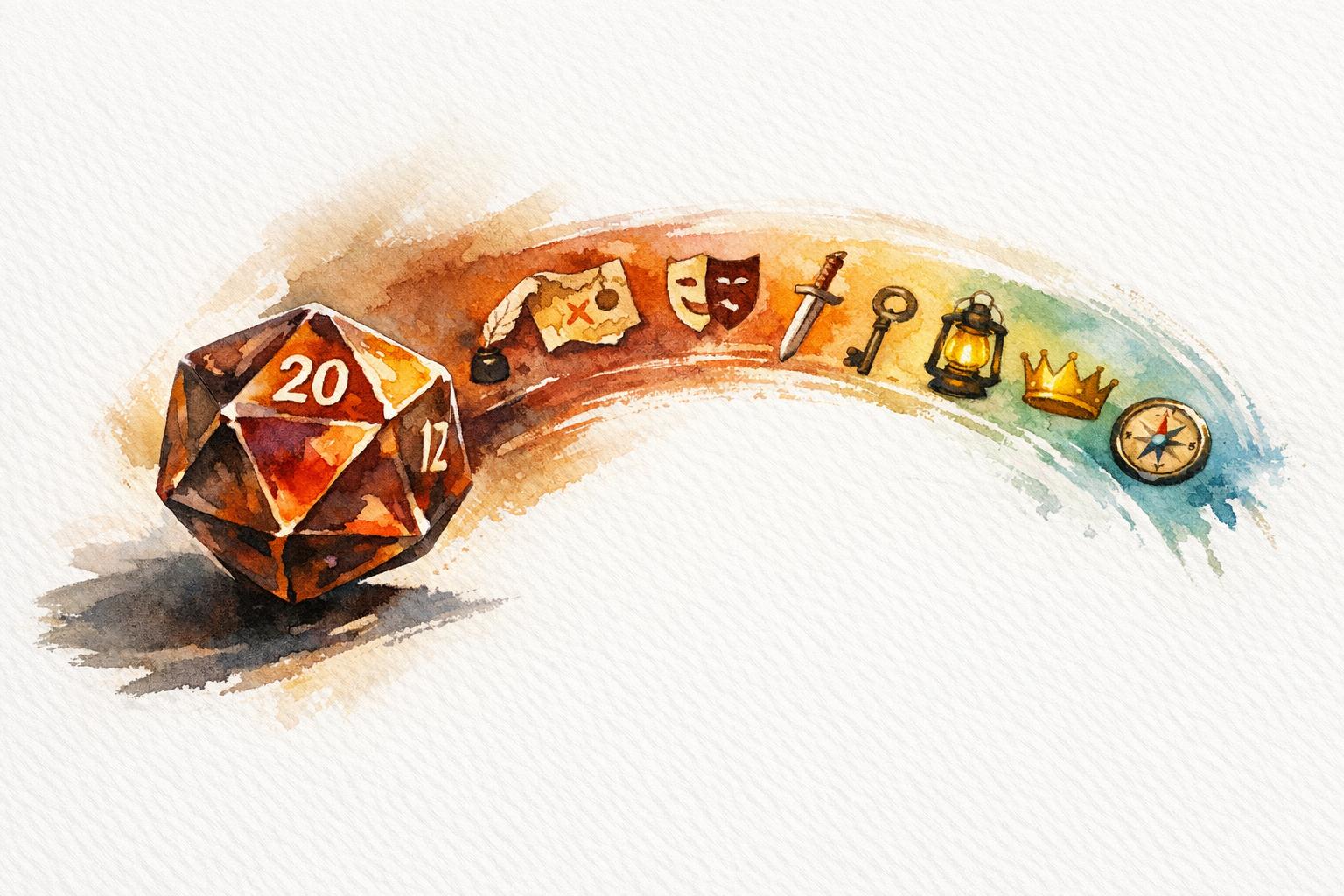
Dice in tabletop games do more than determine outcomes - they shape the story, adding unpredictability, tension, and depth. Each roll introduces new possibilities, turning even simple actions into moments of suspense. Here’s how dice transform gameplay into memorable storytelling:
- Unpredictable Plot Twists: Dice rolls can flip the narrative, creating surprises like failed alliances or unexpected discoveries.
- Random Elements: From world-building to character backstories, dice tables generate unique, on-the-spot details.
- Action Decisions: Dice decide success, failure, or partial outcomes, adding complexity to every choice.
- Collaborative Stories: Players and GMs share control, reacting to dice outcomes in real time.
- Emotional Investment: The risk of failure makes every roll meaningful, heightening tension and engagement.
- Themed Dice: Special designs or materials match characters or settings, enhancing immersion.
- Improvised Role-Playing: Unexpected outcomes push players to think creatively and stay engaged.
- Campaign Impact: Dice influence long-term story arcs, creating dynamic and evolving narratives.
Dice are more than tools - they’re storytellers, shaping every game session into a unique adventure.
8 Ways Dice Enhance Storytelling in Tabletop Games
Tabletop RPG Accessories | Rory’s Story Cubes (Classic, Voyages, and Actions)
sbb-itb-7b84150
1. Creating Unexpected Plot Twists
A failed persuasion check can completely change the course of a story. Instead of forging an alliance, it could lead to the outbreak of war, forcing players to rethink their entire strategy. Dice bring an element of unpredictability, ensuring no game feels pre-planned. Every roll introduces the potential for surprising turns, keeping each session fresh and exciting.
Critical successes and failures often lead to unforgettable character moments. Imagine a stealth mission gone wrong because of a poor roll - one misstep alerts every guard in the area, turning a simple infiltration into a frantic escape. Conversely, a natural 20 on an investigation check might uncover a hidden conspiracy or an unexpected ally, adding depth and intrigue to the storyline.
Using the “Fail Forward” method ensures that even missteps push the story ahead. For example, failing to pick a lock might set off an alarm, creating new challenges for the group. This approach makes every roll a chance to propel the story rather than halt it.
“The randomness keeps the table alive with anticipation. A perfect roll might mean a daring escape, while a low roll could turn a small challenge into a dangerous complication.” - Hannah Coleen, Writer, Runic Dice
Dice also act as a way to simulate external forces, like sudden weather changes or equipment malfunctions, without bogging down the game. This creates what some call the “Schrödinger’s story” effect, where the narrative remains open-ended until the dice decide, making every outcome feel genuinely earned.
2. Generating Random Story Elements
Dice aren’t just for resolving actions - they’re also a tool for creating entire worlds on the spot. Game masters rely on random tables to conjure up everything from terrain and weather to town names and NPC personalities. A single roll could decide whether the party stumbles upon a bustling market or an eerie, deserted village. It might also reveal if the skies are calm or if a magical storm is brewing. These random elements don’t just set the stage; they help shape rich, unexpected character backstories.
Take Dungeons & Dragons, for example. Its background tables can spin out thousands of unique character backstories from just one page. By rolling on five or six different tables, players can uncover details about their character’s history, relationships, and pivotal life events. These tables act as creative prompts, transforming character creation into a shared storytelling experience rather than a simple checklist.
“A game can cram in a lot of information into a random table… In around a page, there are literally thousands of possible combinations for each background!” - Chris Pietrzak, RPG Author
For solo players or GM-lite games, dice oracles take on the role of a guiding narrator. They answer questions like “Is the forest safe?” or “Does the merchant trust us?” with results such as “Yes, but…” or “No, and…”. These outcomes challenge players to interpret the results and add new twists to the story. By doing so, everyone at the table becomes a co-author, weaving plot hooks and complications as the adventure unfolds.
Even dungeon designs benefit from this randomness. Procedural generation uses random inputs to create interconnected rooms, doorways, and maps. This not only cuts down on prep time but also makes every dungeon layout feel fresh and unpredictable. No two dungeons are ever the same.
3. Deciding Character Actions and Results
Dice rolls don’t just set the stage for storytelling - they dictate the twists and turns of each character’s journey. From unlocking a door to scaling a sheer cliffside, dice decide whether actions succeed or fail, making them the ultimate arbiters of fate. This unpredictability ensures that every decision feels meaningful and keeps the story from becoming predictable.
In modern games, the outcomes of dice rolls have evolved beyond simple pass/fail results. Many systems now use degrees of success, where the quality of the roll influences the narrative. For instance, rolling moderately well might allow a character to pick a lock but at the cost of breaking their tools. A marginal success might open the door but alert a nearby guard. This “success with a condition” approach adds complexity, ensuring even victories come with challenges that propel the story forward.
“There’s nothing quite like the silence before a crucial roll. Every player leans in, waiting to see if fate will bless or curse the party.” - Hannah Coleen, Writer, Runic Dice
The math behind dice rolls also plays a key role in shaping the experience. For example, rolling a single d20 gives each number an equal 5% chance of appearing, meaning experts can fail spectacularly while beginners might achieve incredible results. On the other hand, systems using 2d6 rolls produce a bell curve, where results between 6 and 9 are most likely, making “partial successes” a common and expected outcome. These probabilities add depth to the narrative, balancing dramatic highs and lows.
The concept of failing forward ensures that even a bad roll keeps the story moving. A rogue who trips over a branch during a stealth check doesn’t just fail to sneak - they alert the guards, turning a quiet infiltration into an adrenaline-filled chase. This approach transforms setbacks into opportunities, keeping every moment charged with narrative energy.
4. Building Shared Stories
Dice bring a unique twist to solo play by turning it into a shared storytelling experience. When a player rolls, they’re doing more than deciding their character’s fate - they’re creating a moment that belongs to everyone at the table. Neither the Game Master (GM) nor the player has complete control over the outcome. Instead, the dice step in as a “third storyteller,” compelling everyone to react and adapt together. This dynamic transforms the game into a collaborative narrative where every roll shapes the story in real time.
Modern game systems amplify this collaboration by letting players take the reins in describing their outcomes. Instead of leaving all narration to the GM, players might detail how their rogue successfully picks a lock or why their warrior’s strike misses its mark. This approach gives players a chance to be co-authors of the story, rather than just spectators. Combined with the unpredictability of dice rolls, this shared storytelling deepens engagement, pulling players further into the narrative.
“The story isn’t something you come to the table with - it’s something you leave with. When the dice stop rolling… that’s when you get your story”.
One of the most memorable aspects of dice rolls is the “ritual of the roll.” That collective pause as the dice tumble, followed by the cheers or groans when they settle, creates emotional moments that anchor the group’s connection.
Some game systems build this collaboration directly into their mechanics. For example, narrative dice systems like Genesys encourage both players and GMs to interpret outcomes together. A roll might succeed but also reveal an unexpected threat, adding layers to the story. Dice pool systems, on the other hand, emphasize teamwork by letting players combine their skills. One character’s roll might benefit from another’s support, turning individual actions into group efforts. As Dice Game Depot puts it, “the narrative becomes a true reflection of the group’s collective creativity and ingenuity”. This shared approach naturally strengthens emotional investment, as every roll carries a sense of risk and reward for the whole group.
5. Increasing Emotional Investment Through Risk
Risk is what gives dice rolls their weight. When players face the chance of failure, every decision feels meaningful. That uncertainty forces them to weigh the potential narrative rewards against the possible consequences, turning even simple actions into moments of real tension. The act of rolling the dice becomes more than a game mechanic - it’s a ritual that blends imagination and reality. That moment before the roll, when the dice are in hand and everyone holds their breath, creates a shared emotional charge that sticks with players long after the session ends.
“The act of rolling becomes a pause in the story. A breath held. A moment where everyone leans in”.
It’s not just about producing a number - it’s about crafting a moment where everything hangs in the balance. The sound of dice hitting the table shifts the energy in the room, sparking cheers of relief or groans of disbelief. These moments of suspense naturally set the stage for the story-shaping impact of each roll.
Failure, surprisingly, can be as thrilling as success. A failed stealth roll might trigger a high-stakes chase, or a missed persuasion attempt could lead to an unexpected plot twist. Systems designer Zach Gage captures this dynamic perfectly:
“If something says you’re going to have a 90 percent chance and you fail, you think it’s unfair. But if somebody says ‘You’re going to be successful at this unless you roll a one on this ten-sided die,’ and you roll a one, it’s kind of exciting”.
The physicality of dice adds a layer of trust and emotional engagement that’s hard to replicate. Unlike hidden computer algorithms, players can see the dice tumble and land, making even disastrous outcomes feel like genuine twists of fate rather than arbitrary mechanics. This transparency builds trust in the randomness, allowing players to embrace both victories and failures as integral parts of the story. By raising the stakes, the risk doesn’t just heighten individual moments - it strengthens the collective storytelling experience that binds the group together.
6. Adding Depth with Themed Dice
Themed dice bring a whole new layer of immersion to tabletop gaming by blending the physical act of rolling dice with the story being told. They turn game mechanics into something that feels alive and personal.
Imagine this: a barbarian player picks up a set of heavy metal dice to roll for an attack. The weight and clatter of the dice perfectly match the raw, powerful energy of the character. On the other hand, a wizard might use sleek, arcane-styled dice, reinforcing the mystical aura of their spells. These small, tactile details help players connect even more deeply with their characters and the story.
The material of the dice also plays a huge role in setting the tone. Metal dice, with their loud, resonant sound, are perfect for dramatic, high-stakes moments. Wooden dice, which roll softly, create a quieter, more intimate vibe - ideal for personal interactions or tense negotiations. For something truly special, glass or gemstone dice (often priced between $69 and $95) bring a smooth, elegant feel to magical or ceremonial moments. As Misty Mountain Gaming aptly puts it:
“Weight changes how a moment feels. The physical sensation reinforces the emotional importance of the moment”.
Some gaming groups take this a step further by treating their themed dice as part of the game world itself. For example, shimmering dice might represent enchanted “Fate Dice” used for healing, while dark, heavy dice could symbolize cursed “Luck Stones” tied to strength checks. Themed dice that match the game’s environment - like plant-inspired designs for forest adventures or celestial patterns for dreamlike scenarios - make the setting feel even more tangible.
Storytelling dice, such as Rory’s Story Cubes, push creativity even further. Instead of numbers, these dice feature symbols - 54 unique icons spread across nine dice - that spark narrative ideas. A bee next to a keyhole might hint at a hidden passage, while a bee next to a hand could suggest a sting. These dice don’t just add randomness; they encourage players to craft imaginative, unexpected turns in their stories.
Themed dice are more than just tools - they’re a way to make every roll feel like part of the adventure.
7. Encouraging Improvisational Role-Playing
Dice don’t just determine outcomes - they ignite unplanned role-playing moments that breathe life into the story. When dice rolls bring uncertainty, players are pushed to react in real time, adapting their characters’ decisions and responses. These spontaneous moments add a layer of unpredictability that makes the narrative feel vibrant and unscripted.
For instance, a failed roll can throw characters into unexpected situations, demanding quick thinking and creative problem-solving. As Hannah Coleen from Runic Dice puts it:
“The randomness doesn’t take away agency, it enhances it. Players still decide what their characters attempt; the dice simply reveal the consequences”.
This approach also ties into collaborative storytelling. Some game masters use dice to build the world dynamically. Take the example of a Star Wars RPG session: a “worst case” roll on a 1d6 revealed that the NPCs being raided were actually working for a crime boss to whom the players owed $25,000 in credits. This twist forced the group to scramble for a way to avoid being recognized during the mission.
The thrill of unpredictable dice rolls keeps players fully engaged. A critical failure might turn a confident hero into a humbled adventurer, creating moments that define their character in unexpected ways. By encouraging players to narrate the outcomes of their own rolls - whether they succeed or fail - game masters empower them to take ownership of how these twists shape their character’s story.
8. Shaping Long-Term Campaign Stories
Dice have a way of steering campaigns in unexpected directions, turning even the most carefully planned narratives into evolving adventures. A single roll can completely alter the story’s trajectory. For instance, a failed persuasion check might transform a potential peace treaty into a full-blown war, setting the stage for an entirely new chapter in the campaign’s history.
Failures, in particular, bring a unique kind of depth to storytelling. Take a botched stealth check - maybe it doesn’t immediately alert the guards, but it could plant the seeds of suspicion. That subtle shift can create tension that lingers and grows over future encounters.
Even the type of dice system you choose can influence the tone of your campaign. A d20 system, with its flat 5% chance for each outcome, brings a mix of high-stakes unpredictability and heroic flair. On the other hand, a 3d6 system produces a bell curve, favoring middle-range results and emphasizing reliability over randomness. Jonas the GM captures this perfectly:
“The fewer dice you roll, the louder they speak. The more you roll, the smoother their voice becomes”.
This choice doesn’t just impact individual rolls - it shapes the entire campaign, influencing how events unfold and how players experience the story.
Critical successes and failures also leave lasting marks on character development. These moments - when an unlikely hero achieves the impossible or a seasoned warrior falters at a key moment - become the stories players retell long after the campaign ends.
Dice-driven random tables add another layer of unpredictability, keeping the game world dynamic and fresh. Rolling for details like terrain, weather, or NPC traits ensures that no two sessions feel the same. This approach makes the campaign feel alive, with dice constantly weaving new threads into the overarching story.
Conclusion
Dice take tabletop gaming beyond a fixed storyline, turning it into an ever-evolving adventure. They’re more than just tools for determining outcomes - they’re instruments of storytelling, engaging players with their tactile feel, weight, and the unmistakable sound they make as they hit the table. The act of rolling dice - the shaking, the anticipation, the collective pause - builds emotional stakes that scripted narratives simply can’t replicate.
This element of chance doesn’t just decide immediate outcomes; it shapes the entire gaming experience. Dice-driven storytelling strikes a balance between player choice and unexpected twists. As mentioned earlier, this interplay ensures that every session feels distinct, even when revisiting familiar scenarios. Each roll introduces a new layer of unpredictability, keeping the story alive and dynamic.
MINIFINITI’s tabletop games and weekly game nights tap into this magic, broadening the possibilities for dice-based storytelling while strengthening the social bonds that make these moments unforgettable.
Whether it’s the thrilling uncertainty of a single d20 roll or the creative complications introduced by custom narrative dice, rolling physical dice connects players to the game in ways digital tools simply can’t. Dice spark the moments of surprise and excitement that define every campaign, making each story truly unforgettable.
FAQs
How do I use “fail forward” without stalling the story?
To make “fail forward” work well, ensure that failures lead to meaningful consequences that push the story ahead. Instead of stopping progress, use failures to introduce twists like unexpected challenges or fresh obstacles. For instance, failing to unlock a door might set off an alarm or spark an entirely new event. The goal is to keep failures exciting and dynamic, ensuring players stay invested in the evolving narrative.
Which dice system best fits my campaign’s tone?
The ideal dice system really hinges on the kind of storytelling experience you’re aiming for. If you’re after a mix of unpredictability and rich narrative opportunities, the Genesys Narrative Dice System is a fantastic choice. It goes beyond simple success or failure, weaving story elements into every roll.
On the other hand, if you prefer something more traditional yet versatile, D&D’s d20 system offers a classic approach that’s easy to adapt. Similarly, dice pool systems like Fate Core provide flexibility while maintaining a straightforward mechanic.
Ultimately, pick a system that fits the tone of your campaign - whether you’re looking for dramatic twists or a simple pass-or-fail structure.
How can players narrate rolls without losing balance?
Players can make dice rolls more engaging by weaving them into the story in a way that feels impactful. Each roll should contribute to the unfolding narrative, whether it’s a success or failure. Describe how the outcome influences the game world, shifts character dynamics, or introduces unexpected plot twists. This approach keeps the storytelling lively and ensures the gameplay remains immersive and balanced.