
Game Talk
Feedback vs. Vision: Striking the Right Balance
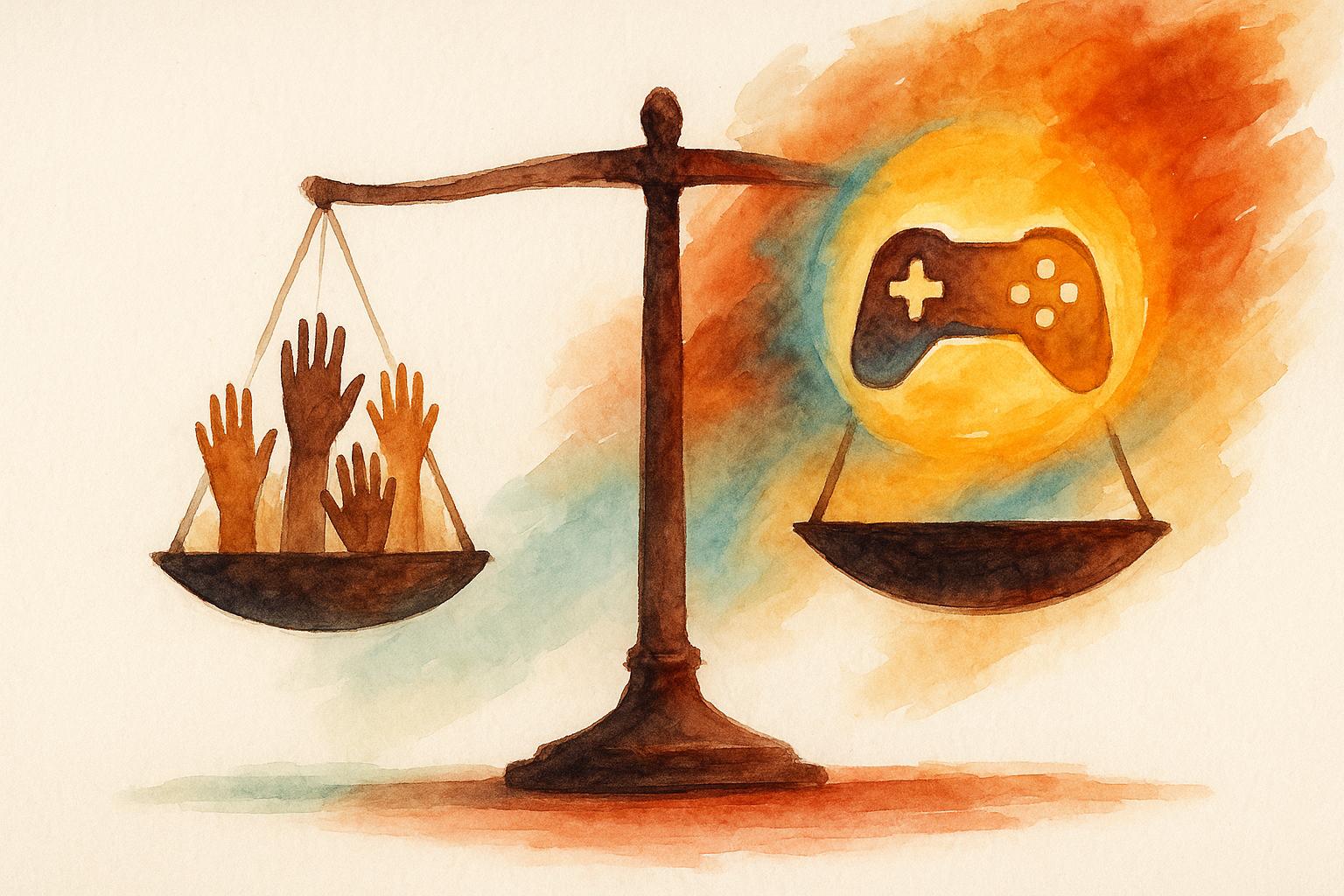
When designing games, creators face a core challenge: balancing their original vision with player feedback. Vision defines a game’s identity, mechanics, and target audience, while feedback refines these ideas to meet player expectations. Striking the right balance ensures games remain engaging without losing their essence.
Key insights:
- Vision drives originality: It shapes mechanics, themes, and player experiences.
- Feedback improves usability: It identifies pain points, clarifies rules, and enhances enjoyment.
- Balance is critical: Over-prioritizing vision can alienate players, while over-relying on feedback risks diluting the concept.
Practical strategies include:
- Setting non-negotiable design pillars to protect the game’s core identity.
- Using feedback to refine details rather than overhaul mechanics.
- Prioritizing recurring feedback patterns over isolated opinions.
- Structuring development with iterative playtesting and milestone reviews.
Example: MINIFINITI’s Red Tape successfully combined humor, strategy, and social interaction by staying true to its vision while refining gameplay based on consistent player input. Weekly game nights allowed them to observe real-time reactions and make targeted improvements without compromising the game’s core identity.
Balancing vision and feedback is challenging, but it’s essential for creating games that stand out while resonating with players.
Should Designers Listen to Negative Feedback?
The Role of Designer Vision in Game Creation
Designer vision is the backbone of game development, turning abstract ideas into engaging tabletop adventures. It provides a clear direction that influences everything - from the mechanics and theme to the overall player experience. This guiding concept not only defines a game’s identity but also informs every design choice along the way.
Why Vision Matters
A strong vision brings cohesion to a game, connecting its mechanics, artwork, and player interactions, while making decision-making more efficient and ensuring it resonates with the right audience.
Take MINIFINITI’s 2025 release, Red Tape, for example. The game was built around a vision of transforming political chaos into a lighthearted and entertaining experience. This vision shaped its unique mechanic, which flips traditional engine-building on its head. Players compete by outmaneuvering each other with cards, all while embracing humor and optimism. The result? A board game that stands out as the only one to blend this particular theme and mechanic.
Another MINIFINITI project, Infinity’s Edge, a D&D one-shot adventure also released in 2025, demonstrates how vision can create unforgettable gameplay. The concept, “Paradox Becomes Power”, invites players to solve paradoxes like Hilbert’s Hotel or Zeno’s Arrow, earning magical items and crafting infinite combos that defy logic. This vision delivers a one-of-a-kind tabletop experience.
A clear vision also helps designers pinpoint their target audience. When creators are intentional about the experience they want to deliver, it becomes easier to identify the players who will connect with their game. This precision simplifies marketing efforts and fosters vibrant communities of players who share similar interests.
Games with a well-defined and well-communicated vision often enjoy better player retention and satisfaction. Players are naturally drawn to experiences that feel consistent and thoughtfully crafted.
However, while vision is essential, clinging too tightly to it can create challenges.
Risks of Over-Prioritizing Vision
Sticking rigidly to an initial vision can backfire, especially if it leads to ignoring player feedback or failing to adapt to changing expectations.
Overemphasis on vision can result in games that frustrate players, leading to poor reviews and low engagement. Developers may overlook usability issues or fail to respond to market trends, leaving their games feeling disconnected from what players actually want.
One common pitfall is when designers mistake their personal preferences for universally engaging gameplay. A mechanic that seems brilliant during development might turn out to be confusing or frustrating for players, requiring more explanation than anticipated.
Market trends also play a significant role. A vision conceived years earlier may no longer align with current player interests or industry standards. For instance, ignoring the growing demand for inclusive themes or simpler rule sets could leave a game feeling outdated before it even launches.
The solution lies in balancing vision with flexibility. Designers must identify the core elements that define their game while remaining open to feedback on peripheral aspects. By doing so, they can refine their creations without compromising the originality that makes them stand out. Successful designers know when to adapt, ensuring their games remain relevant and enjoyable while staying true to their creative identity.
The Value of Player Feedback in Game Development
Player feedback acts as the bridge between a designer’s vision and actual gameplay. It takes abstract ideas and turns them into real-world interactions, uncovers blind spots, and points out areas that need attention.
Benefits of Feedback
Player feedback turns creative concepts into actionable improvements by revealing how players truly interact with a game. This process often highlights specific frustrations or obstacles that might otherwise push players away.
It also helps refine game mechanics, ensuring that difficulty, pacing, and overall enjoyment align with player expectations. Sometimes, players can articulate issues that designers sense but struggle to define. Comments like “the mid-game feels slow” or “there aren’t enough meaningful choices” give designers clear direction to improve the experience.
Positive feedback is equally important. When players praise specific mechanics or express excitement about certain features, it confirms what’s working. This validation helps designers identify which elements resonate most and should remain central to the game.
To gather these insights, developers rely on a variety of feedback collection methods.
Methods for Collecting Feedback
Playtesting sessions are one of the most direct ways to gather insights. Observing players as they navigate the rules and mechanics provides immediate, unfiltered feedback. The key is for designers to resist the urge to explain or intervene during playtests. Instead, they should focus on taking notes where players naturally struggle or get confused.
Surveys and structured feedback forms are another effective tool. These allow designers to collect consistent data from multiple players. The trick is to ask specific questions rather than open-ended ones. For example, instead of asking, “What did you think?”, a better approach would be, “Which part of the game felt the most engaging?” or “How clear were the rules after your first playthrough?”
Community platforms like Discord, Reddit, and forums foster ongoing conversations between players and developers. For instance, MINIFINITI uses weekly game nights to engage directly with players. These events double as real-time playtesting sessions and opportunities to gather honest, constructive feedback. Building these relationships encourages players to share their thoughts openly rather than offering polite, surface-level comments.
In-game analytics add another layer by providing hard data. Metrics like session length, rule lookups, or decision patterns reveal trends that might not be obvious from surveys alone. For example, if players say the game feels fast-paced but analytics show long pauses between turns, that disconnect signals an area worth exploring.
While these methods are invaluable, interpreting feedback correctly can be challenging.
Challenges in Understanding Feedback
Feedback is essential for improvement, but it’s important to separate actionable insights from personal opinions. Not every critique signals a flaw in the game. For example, complaints about game length might stem from an individual’s schedule rather than an actual pacing problem.
Patterns across multiple sources often highlight genuine issues. If five playtesters mention confusion over a rule, it’s likely a design flaw. On the other hand, a lone suggestion to change the theme is more likely a matter of personal preference.
Conflicting feedback is another hurdle. Experienced players might request more complexity, while newcomers may ask for simplicity. Both viewpoints are valid, but the right solution depends on the game’s target audience and overall design goals. Knowing who’s offering the feedback helps determine how much weight to give their suggestions.
Vocal minorities can skew perceptions. The most enthusiastic players often provide the most detailed feedback, but their preferences might not align with the broader audience. Balancing their input with data from quieter players ensures the game doesn’t cater too heavily to a niche group.
The timing of feedback also matters. Early-stage feedback should focus on core mechanics and flow, while late-stage feedback is better suited to polishing details and fixing minor issues. Mixing these contexts can lead to misplaced priorities - like tweaking surface-level details when deeper problems need attention, or vice versa.
Balancing Vision and Feedback: Practical Strategies
Balancing your creative vision with player feedback is no easy feat. It requires a thoughtful approach that preserves what makes your game stand out while embracing meaningful improvements. The secret lies in creating clear boundaries and processes to guide decisions throughout development. Here’s how to integrate vision and feedback without losing the essence of your game.
Setting Non-Negotiable Design Pillars
Think of design pillars as your game’s DNA - the core elements that define its identity. These pillars are non-negotiable and must remain intact, no matter the feedback you receive. They represent what makes your game stand out in a crowded market.
Start by pinpointing the key aspects that inspired you to create the game. For instance, if your game thrives on a mix of satirical humor and strategic balance, those pillars should remain untouched. They shape the game’s personality, and compromising them would fundamentally alter its essence.
Write these pillars down in precise, actionable language and share them with your team. Avoid vague statements like “the game should be fun.” Instead, aim for something specific, such as, “the game builds tension through resource scarcity while offering hope through multiple viable strategies.”
Make sure your playtesters and community understand these pillars too. When players know what you’re aiming for, their feedback becomes more focused. They’ll evaluate whether your game delivers on its promises instead of suggesting changes that steer it in an entirely different direction.
Use these pillars as a filter for feedback. Suggestions that align with your core principles and enhance them should be taken seriously. On the other hand, feedback that conflicts with your pillars can confidently be set aside. This approach ensures your game stays true to its vision while benefiting from targeted refinements.
Using Feedback to Refine, Not Overhaul
The best feedback doesn’t ask you to change your game’s direction; it helps you execute your vision more effectively. Focus on feedback that improves clarity, engagement, and accessibility without requiring a complete overhaul.
Look for recurring themes in player feedback. For example, if several players say “the mid-game feels slow”, they’re probably not asking you to rethink your pacing philosophy. Instead, they might be pointing out that the current implementation lacks enough meaningful decisions during that phase.
Set up a feedback triage system to categorize suggestions based on their alignment with your design pillars:
- Priority one feedback addresses issues that prevent players from fully experiencing your vision. This includes fixing confusing rules, unclear objectives, or mechanics that don’t work as intended.
- Priority two feedback focuses on polishing the experience. These might be interface tweaks, better iconography, or small rule adjustments that smooth out rough edges. For example, during the development of Chonker Party, the designer clarified card instructions based on feedback without altering the core mechanics.
- Priority three feedback involves suggestions that would require major changes to your core systems or conflict with your design pillars. While these ideas might come from well-meaning players, they risk diluting what makes your game special.
Stick to your target audience and design pillars. If experienced players want more complexity while newcomers request simplicity, don’t try to please everyone. Instead, use your pillars and audience goals to decide which direction best serves your vision.
Iterative Development and Review Points
Iterative development is the backbone of refining your game while staying true to your vision. This process creates a cycle of steady improvements without losing sight of your goals.
Structure your work around milestone reviews to evaluate whether changes align with your design pillars and enhance the player experience. These checkpoints prevent you from straying too far from your original vision or ignoring consistent feedback.
Schedule playtesting sessions at regular intervals instead of gathering feedback continuously. This gives you time to implement changes, observe their effects, and gather fresh insights. Structured playtesting ensures each feedback cycle is focused and productive.
Test specific changes during each iteration. For instance, if players feel overwhelmed by too many choices, try reducing options in one phase rather than simplifying the entire game. This targeted approach helps you pinpoint what’s really causing the issue.
Keep a record of what you learn from each iteration. Document which feedback-driven changes improved the experience and which ones didn’t work as expected. Over time, this log will help you identify patterns and build confidence in your decision-making.
Finally, know when to stop tweaking. Once a mechanic consistently delivers on your design pillars, resist the urge to keep making minor adjustments. Recognizing when something is “done” is just as important as knowing when it needs work.
sbb-itb-7b84150
Common Pitfalls and How to Avoid Them
Maintaining your game’s core identity while incorporating feedback is a delicate balancing act. Even experienced designers can stumble into traps that gradually erode the essence of their game. Spotting these pitfalls early can help you adjust course before your game loses its direction or alienates its audience.
Overreacting to Feedback
One of the biggest risks to your game’s identity is design drift. This happens when you try to address every piece of feedback without considering how individual changes affect the bigger picture. For example, one player might suggest simplifying a feature, while another asks for more depth. If you act on both, you could end up with a game that feels disjointed and fails to satisfy anyone.
The challenge is separating valuable feedback from noise. Not every suggestion needs to be implemented, even if it comes from well-intentioned players. Focus on feedback that aligns with your core design goals and strengthens your vision. If a suggestion would require you to overhaul your mechanics or shift your target audience, it’s likely not worth pursuing.
It’s also important to consider who the feedback is coming from. Prioritize input from players who represent your target audience and have invested time in understanding your game. Tracking feedback sources can help you identify the most relevant voices. By avoiding knee-jerk reactions, you’ll be better positioned to address genuine issues while staying true to your vision.
Ignoring Consistent Patterns
While overreacting to feedback can be harmful, being too attached to your original ideas can be just as risky. Designers often overlook recurring issues because they’re too familiar with their own work. What feels intuitive to you might confuse new players, and what seems minor could be a significant frustration for others.
When multiple players point out the same problem - such as unclear mechanics or a slow mid-game - it’s a sign that the issue deserves attention. Consistent patterns in feedback are far more telling than isolated complaints. For instance, if three separate playtest groups mention the same flaw, it’s probably worth investigating. On the other hand, if only one person out of twenty raises an issue, it might not warrant immediate action.
To identify patterns, document recurring themes and note how often they come up and who they’re coming from. This approach helps you differentiate between emotional attachment to your ideas and objective evidence of player experience. Reviewing this data regularly can provide the perspective needed to make informed decisions.
Misreading Feedback Sources
In many cases, the loudest voices don’t represent the majority. Online forums, social media, and even playtesting groups can be dominated by vocal minorities whose preferences don’t align with the broader audience. Making changes based solely on these voices can lead to misguided decisions.
This is particularly common in digital spaces, where highly engaged players often advocate for more complexity, faster updates, or dramatic shifts. While their passion is valuable, their demands might alienate casual players or stray from your core audience’s needs.
To get a clearer picture, combine qualitative feedback with quantitative data. For example, if players are split on an issue, review gameplay metrics like retention rates, session lengths, or feature usage to determine which perspective aligns with actual player behavior.
Diversify your feedback sources to ensure a balanced view. Use anonymous surveys, observe quieter players during playtests, and gather input from individuals who reflect your target demographic. Be cautious of feedback that comes with strong emotional language or urgent demands - cross-check these with data before making significant changes.
Companies like MINIFINITI take a proactive approach by hosting weekly game nights, where designers can observe players in real time. These face-to-face interactions provide valuable insights into how players actually experience the game, often revealing discrepancies between what players say they want and how they behave. This hands-on approach helps ensure that feedback is both diverse and grounded in real gameplay. By integrating these insights with data, you can protect your game’s identity while making thoughtful improvements.
Comparison Table: Vision vs. Feedback
Understanding the balance between vision and feedback can make or break a game’s success. These two approaches each bring distinct advantages, but they also come with risks that can impact your project if not handled thoughtfully.
Here’s a side-by-side breakdown to help navigate their roles in game development:
Aspect
Designer Vision
Player Feedback
Primary Strengths
Ensures creative consistency and a unique identity; drives originality; helps games stand out in competitive markets; upholds artistic goals
Offers real-world insights into player experiences; identifies actual pain points; improves satisfaction and retention by 30% when applied effectively
Key Risks
May result in innovative but inaccessible designs; risks misalignment with player expectations; can overlook usability issues
Over-reliance can dilute the original concept; risks feature creep and lack of focus; may lead to generic, trend-chasing designs
Best Use Cases
Ideal for new IPs, artistic or experimental projects, niche audiences, and establishing a strong identity
Best for live service games, post-launch updates, mass-market titles, and addressing usability or accessibility concerns
Decision Timeline
Crucial during pre-production and early development, especially when defining core mechanics and target audiences
Most impactful during beta testing, post-launch updates, and ongoing live operations
Resource Requirements
Relies on strong creative leadership and clear internal communication
Demands dedicated teams for analysis (used by 70%+ of studios) and robust systems for gathering and processing player feedback
Success Indicators
Leads to critical acclaim, builds a loyal fanbase, creates lasting cultural resonance, and differentiates from competitors
Boosts player retention, improves reviews, extends play sessions, and reduces usability-related support tickets
The key to success lies in blending these approaches. Data shows that games thrive when developers use feedback to refine their vision without undermining it. For example, systematic feedback integration can significantly improve player retention rates, but its value comes from enhancing the core ideas, not replacing them.
In practice, vision shapes the foundation, defining the game’s mechanics and identity, while feedback fine-tunes the details, ensuring the final product resonates with players. Together, they create games that are both innovative and player-friendly.
Case Study: Combining Vision and Feedback in Social Games
MINIFINITI’s creation of Red Tape is a great example of blending creative vision with community feedback. The game turns political chaos into lighthearted entertainment by challenging players with humorous and strategic cards.
At the core of its development were three unshakable priorities: maintaining a distinct sense of humor, ensuring strategic depth, and fostering social interaction. These principles shaped every decision, allowing player feedback to enhance the game without straying from its original concept.
To gather meaningful insights, MINIFINITI hosts weekly game nights. These sessions provide a firsthand look at how players interact with the game, capturing moments of struggle, laughter, and excitement. This approach offers a mix of qualitative insights - like reactions to specific card combinations - and hard data, such as how long players stay engaged.
Each iteration of Red Tape undergoes thorough playtesting, followed by analysis and refinements, ensuring every update aligns with the original vision. This iterative process helps the team identify consistent trends while filtering out one-off opinions.
One of the biggest challenges was handling conflicting feedback, particularly around the complexity of the rules. By focusing on recurring themes, MINIFINITI struck a balance that preserved the game’s strategic depth while improving clarity.
To deepen their understanding of feedback, the team actively communicates with players through Discord and email. This direct dialogue helps clarify suggestions and ensures that feedback aligns with the game’s core vision, avoiding misinterpretations.
Metrics like player retention, session length, and repeat play are carefully monitored to ensure Red Tape meets both its design goals and player expectations.
This case study showcases how MINIFINITI successfully balanced their creative vision with community input. By setting clear priorities, engaging directly with players, and embracing a structured feedback loop, they refined Red Tape without compromising its essence. Their hands-on, face-to-face approach underscores the value of personal interaction in crafting engaging social games.
Conclusion: Achieving the Right Balance
Creating a successful game means striking the right balance between your creative vision and player feedback. It’s about blending originality with a player-friendly experience that resonates.
At the heart of this process are clear design pillars - those core principles that define what makes your game stand out. These pillars act as your compass, helping you decide when to embrace player suggestions and when to stay true to your original concept. If feedback aligns with these pillars, it can enhance the game. But when it clashes, it’s essential to use sound judgment to protect the game’s identity.
Being adaptable is just as important. The gaming world is constantly evolving, and finding ways to grow while staying true to your core vision can help build stronger, more engaged communities. This adaptability isn’t just theoretical - it leads to real results. Games that thoughtfully integrate player feedback can see retention rates climb by up to 30%. It’s no wonder that over 70% of developers now have teams dedicated to managing feedback.
FAQs
How can game designers balance their creative vision with player feedback effectively?
Game designers can find harmony between their creative vision and player input by thoughtfully analyzing feedback to spot common patterns or areas needing adjustment, all while preserving the game’s core identity. By focusing on feedback that aligns with their original design goals, they can refine the game without compromising what makes it stand out.
Maintaining open communication with players is equally important. Explaining the rationale behind design decisions not only helps players feel valued but also builds a deeper appreciation for the creative process. This kind of collaboration can boost player connection and lead to a more refined and engaging game.
How can game designers gather and understand player feedback while staying true to their creative vision?
Balancing player feedback with a game designer’s vision is crucial for crafting a game that resonates with its audience while staying true to its core identity. Start by gathering input through playtesting sessions, surveys, and community discussions. These approaches allow you to spot trends and focus on feedback that aligns with the game’s primary objectives.
When analyzing feedback, pay attention to recurring themes rather than one-off suggestions. This approach helps you make meaningful adjustments that enhance the gameplay without drifting away from your original concept. Feedback should be seen as a way to polish and improve your vision, not to overhaul it entirely. By embracing constructive input while staying confident in your creative choices, you can find the sweet spot between innovation and player satisfaction.
What challenges arise when balancing a game designer’s vision with player feedback, and how can they be addressed?
Balancing a strong creative vision with player input can feel like walking a tightrope. Reacting too much to feedback can result in endless tweaks that water down the original idea. On the flip side, ignoring feedback altogether can push players away and overlook chances to make the game better.
The key? Focus on feedback that complements your core vision and improves the player experience. Start by identifying the elements of your design that are non-negotiable - those foundational aspects that define your game. This will help you evaluate feedback more effectively. And remember, any changes you make should go through thorough testing to ensure they enhance the game without losing its unique identity.