
Games That Work Well Across Cultures
When it comes to bringing people from different backgrounds together, choosing the right game can make all the difference. Games that rely on visuals, numbers, and strategy - rather than language or cultural knowledge - are ideal for creating a fun and inclusive experience. Here’s a quick guide to eight games that work well across cultures:
- Chess: A classic strategy game played worldwide. No language required, just logic and skill.
- Uno: Easy to learn, with simple rules based on colors and numbers. Great for groups of all sizes.
- Carcassonne: Build medieval landscapes using tiles. Minimal text and a focus on spatial reasoning.
- Mastermind: A two-player logic game with colored pegs. No words, just deduction.
- Codenames: Pictures: A team-based game using images instead of words for clues.
- Ticket to Ride: Plan train routes using colors and symbols. Multiple map options available.
- Red Tape by MINIFINITI: A card-based game about navigating bureaucracy with visual gameplay.
- Dixit: A storytelling game using abstract, artistic cards. Open to interpretation and creativity.
These games avoid language barriers, complex rules, and cultural references, making them perfect for diverse groups. Whether you're hosting an international gathering or a family game night, these options ensure everyone can participate and enjoy.
Quick Tip: Start with simple games like Uno or Dixit for larger groups, and try Chess or Mastermind for smaller, strategy-focused sessions.
Top 10 Language Independent Games
Why Language and Cultural Barriers Matter in Gaming
A great game has the power to bring people together, but the wrong one can unintentionally push them apart. Recognizing language and cultural barriers is crucial when selecting games that truly include everyone.
Games heavy on language can pose serious hurdles for non-native speakers. Take a game like Apples to Apples, for instance. It thrives on slang, double meanings, and subtle innuendo. But for someone who learned English as a second language, catching every clever twist or cultural reference can be daunting. Games that reward linguistic wit over strategy can unintentionally exclude players, making inclusivity a challenge.
The problem doesn’t stop at vocabulary. Games that lean on cultural references or shared general knowledge can also alienate players unfamiliar with those touchpoints. Even a classic like Monopoly includes elements tied to specific cultural contexts. When success hinges on understanding these shared experiences, it creates an uneven playing field, favoring those who grew up with that background.
These barriers significantly impact gameplay. Non-native speakers might hesitate during word-based games, slowing the pace and feeling disadvantaged - not because they lack intelligence or strategic skill, but because the game demands language proficiency beyond everyday communication.
Fortunately, many games avoid these pitfalls by focusing on universal mechanics rather than language or cultural knowledge. Games like Uno, Mastermind, and Carcassonne rely on colors, symbols, abstract strategies, or spatial reasoning. These designs ensure fairness by using visual cues, mathematical patterns, or simple rules that transcend language and cultural divides.
Some games even address pronunciation challenges. In Clue, for example, players don’t need to pronounce character names, weapons, or rooms - they can simply point. This thoughtful design choice removes the stress of mispronunciation and keeps the emphasis on deduction and reasoning.
Timeless classics like Chess, checkers, and backgammon highlight the enduring appeal of universal design. These games, played across cultures and centuries, rely on abstract strategy rather than language or cultural knowledge. In fact, many regions have created their own versions of these games, showcasing their adaptability and global reach.
Choosing games that prioritize inclusivity ensures everyone feels welcome and able to compete on equal footing. Language-neutral games make it easy for all players to understand the rules quickly and jump into the action. By focusing on observation, decision-making, and strategy - skills that cross cultural and linguistic boundaries - these games create a fair and enjoyable experience for everyone. This principle of inclusivity shapes the game recommendations that follow.
1. Chess
Chess has a timeless appeal that brings together people from all walks of life, no matter where they come from or what language they speak. Its universal design makes it a game that transcends borders and unites players across the globe.
Language Independence
One of the standout features of chess is that it doesn’t rely on language. The game operates on a symbolic system, with moves like e4 or Nf3 that are universally understood. Players don’t need to speak the same language - they can simply point to pieces and squares to communicate. Unlike games that hinge on understanding slang or cultural nuances, chess is all about spatial reasoning and tactical thinking.
Cultural Neutrality
Chess is free from cultural bias, which adds to its universal charm. Success in the game depends entirely on strategy and skill, not on cultural knowledge. Though chess originated in the Indian subcontinent, it spread worldwide through trade and interaction, becoming a global phenomenon.
Easy to Learn
The basics of chess can be taught in just 10 to 15 minutes, making it incredibly beginner-friendly. The game requires only a board, pieces, and a simple set of rules, eliminating the need for extras like cards or dice. Teaching chess is also straightforward - visual demonstrations are often more effective than verbal explanations, especially for groups with diverse languages. Pairing experienced players with newcomers can speed up the learning process, though mastering the game’s deeper strategies can take years.
Chess is also affordable. A standard set for casual play typically costs between $10 and $50. For those with specific needs, there are large-print boards for the visually impaired and tactile boards with raised pieces for better accessibility.
Flexible Gameplay
While chess is traditionally a two-player game, it offers formats that work for larger groups. Round-robin tournaments, simultaneous exhibitions, and team chess - where groups collaborate on strategies - make the game adaptable for different settings. For a multicultural game night with 6 to 12 participants, multiple games can run at once, ensuring everyone gets a turn and sparking conversations between matches.
Whether it’s a casual game with beginners or a competitive match, chess is a versatile option that bridges language and cultural divides. Its ability to connect people makes it a perfect starting point for exploring other games that bring diverse groups together.
2. Uno
Uno, much like Chess, has a timeless appeal, but it brings its own charm with a vibrant, easy-to-understand design. Created in 1971 as a modern twist on Crazy Eights, Uno has become a global favorite, selling millions of copies worldwide.
Universally Accessible Design
Uno's gameplay revolves around matching colors and symbols, making it accessible to players of all backgrounds. The cards feature bold, bright colors - red, yellow, green, and blue - along with action cards like Skip, Reverse, Draw Two, Wild, and Wild Draw Four. Instead of relying on text, the cards use simple and clear icons, eliminating any language barriers. Its rules steer clear of cultural references, leveling the playing field for everyone. By focusing on numbers, shapes, and symbols, Uno creates a universal gaming experience where anyone can dive in and enjoy.
Quick to Learn
One of Uno's biggest strengths is how easy it is to pick up. The rules can be explained in just a few minutes, and the gameplay - matching colors and numbers - is naturally intuitive. The action cards are straightforward, so even first-time players can quickly understand their purpose. Plus, its turn-based structure allows new players to seamlessly join mid-game without disrupting the flow, making it an inclusive choice for any group.
Perfect for Any Group
Uno works for groups of 2 to 10 players, making it a flexible option for everything from small gatherings to larger events. Recommended for ages seven and up, its simple mechanics and engaging strategy appeal to a wide range of players, from kids to grandparents. With rounds lasting just 10 to 30 minutes, it's perfect for quick games or extended sessions. Its short, dynamic gameplay encourages interaction and keeps the energy lively, making it a go-to choice for bringing people together. Uno’s universal design has paved the way for other games that aim to connect players across boundaries.
3. Carcassonne

First released in 2000, Carcassonne quickly earned its place as a board game favorite, thanks to its distinctive tile-laying mechanics. Players take on the task of creating a medieval world by placing tiles and pawns, aiming to claim and score points for completing roads, cities, monasteries, and grasslands. What sets Carcassonne apart is its reliance on visual and spatial reasoning rather than language or cultural knowledge, making it approachable for players from all walks of life. Its visual gameplay minimizes language barriers, allowing everyone to dive in with ease.
Language Independence
Carcassonne keeps text to a minimum, using tiles that depict medieval landscapes, roads, cities, and monasteries - features that are instantly recognizable. Gameplay revolves around placing tiles and tracking points, with little need for verbal communication. The rulebook is short and straightforward, and most of the game unfolds through actions rather than words. This design ensures that players can follow along effortlessly without requiring lengthy explanations.
Universally Accessible Gameplay
The game’s mechanics are built around concepts that don’t rely on cultural knowledge. The focus is on universal ideas like claiming territory, constructing features, and earning points. Visual clarity is key - features like roads and cities are easily identifiable, and the rules are intuitive. Color-coded pawns and a simple scoring system further enhance the game’s accessibility, ensuring that players from any background can grasp the essentials quickly.
Easy to Learn
Carcassonne’s rules are simple enough for anyone to pick up within minutes. The basic flow is straightforward: draw a tile, match it to the existing layout, and optionally place a pawn to claim a feature. New players can often learn just by watching a few turns, making it perfect for groups where language barriers might make detailed explanations tricky. With a learning curve that’s gentle yet rewarding, it’s a great choice for diverse gatherings.
Flexible for Groups
The base game works well for 2 to 5 players, but expansions are available if you want to include even more people. This flexibility makes it ideal for multicultural game nights, where group sizes can vary. The turn-based structure keeps everyone involved, and there’s no player elimination, so everyone stays engaged from start to finish. With a playing time of about 30 to 45 minutes, Carcassonne fits easily into any social gathering.
Carcassonne masterfully balances strategy with accessibility. Players make thoughtful choices about where to place tiles and pawns, ensuring the game remains interesting for both beginners and seasoned players. Its blend of depth and simplicity highlights its ability to bring people together, no matter their background, and reinforces the idea that games can truly transcend cultural boundaries.
4. Mastermind
Mastermind stands out as a classic game of deduction, offering a strategic challenge that appeals to all kinds of players. It’s a head-to-head battle of logic: one player becomes the codemaker, secretly arranging colored pegs behind a screen, while the other takes on the role of the codebreaker, trying to crack the hidden sequence. The codebreaker makes guesses and receives feedback in the form of pegs, which indicate how many colors and placements are correct. This process continues until the code is solved or the codebreaker runs out of attempts. Unlike games that rely on chance, Mastermind is purely about logical thinking, making it a rewarding puzzle-solving experience for players everywhere.
Language-Free Gameplay
One of Mastermind’s greatest strengths is that it doesn’t require any shared language. Instead of relying on words, the game uses colored pegs and straightforward mechanics, making it accessible to players from any linguistic background. All you need is a sharp mind and a knack for deduction.
Universally Neutral Design
Mastermind’s appeal lies in its universal neutrality. It avoids cultural or historical references, ensuring that players from different backgrounds can enjoy it equally. The focus remains entirely on strategy and logic, making it a game that transcends cultural boundaries.
Quick to Learn, Hard to Master
Mastermind is refreshingly simple to pick up. The rules can be explained in just a few minutes, and once players understand the feedback system, they’re ready to dive into the game. This simplicity allows players to focus on crafting strategies and solving the puzzle, rather than getting bogged down by complicated instructions.
Flexible for Groups
Though designed for two players, Mastermind works well in group settings too. Players can take turns as the codemaker and codebreaker, keeping everyone involved and engaged. This adaptability makes it a great choice for gatherings of any size, offering a fun challenge that everyone can enjoy.
5. Codenames: Pictures

Codenames: Pictures offers a twist on the classic game by swapping out words for images. Instead of verbal clues, players use visual hints to help their team identify specific pictures on a grid. This shift from text to imagery naturally reduces the reliance on language, making it easier for players from different backgrounds to join in. While there isn’t much detailed information available about its setup or how quickly players can learn the rules, the game’s emphasis on visuals makes it an appealing choice for diverse groups. This focus on image-based gameplay aligns perfectly with our exploration of games that break down language barriers, much like the visually-driven Ticket to Ride.
sbb-itb-7b84150
6. Ticket to Ride

Ticket to Ride stands out as a game that appeals through its visual design and strategic gameplay, making it an excellent choice for groups with diverse backgrounds. Players work to build railway networks by collecting and matching train cards, relying on colors, symbols, and patterns rather than language. This design makes it easy for people from various cultures to enjoy together.
Language Independence
This game’s board does most of the heavy lifting. Cities are represented as dots connected by colored railway routes, and players only need to match the colors on their cards to the routes they want to claim. The process is simple: draw cards, match them to routes, and place train tokens. There’s no need for reading or speaking, which keeps the gameplay straightforward and inclusive.
While destination cards feature city names, players don’t need to pronounce or even understand them. All they need to do is locate the cities on the map and plan their routes. Scoring is equally simple - players count their completed routes and destination cards at the end, with no translation or verbal explanation required. The game’s design ensures accessibility and smooth play across language barriers.
Cultural Neutrality
Ticket to Ride offers multiple map versions, such as North America, Europe, and Asia, allowing groups to choose a geography that feels familiar or exciting to them. For example, a group in California might enjoy the North America map, while an international gathering might lean toward the Europe map for its wide-ranging appeal.
The game’s success hinges on strategy and card management, not on cultural knowledge or historical context. Players don’t need to know the backstory of the cities or understand any regional references. Whether you’re from Tokyo or Toronto, everyone plays with the same information and has an equal chance to succeed. This creates a fair and welcoming environment for all players.
Ease of Learning
Ticket to Ride shines with its simplicity. New players can grasp the rules in just 5–10 minutes, and the repetitive nature of the turns helps build confidence quickly.
The game is forgiving of early mistakes. Choosing a less-than-ideal route or drawing the wrong cards doesn’t spell disaster, so newcomers can learn as they play without feeling penalized. More experienced players can offer guidance during the first few turns without slowing down the pace, keeping everyone engaged and involved.
Player Adaptability
The game works well for 2–5 players, striking a balance between strategy and luck that appeals to both beginners and seasoned players. Games typically last 30–60 minutes, regardless of the group size. With fewer players, turns move quickly, and there’s more freedom in route choices. On the other hand, larger groups bring a competitive edge as routes become more contested, but the gameplay remains accessible and enjoyable.
Quick turns ensure everyone stays involved, whether it’s their move or not. Watching the board evolve and planning the next steps keeps players engaged throughout the game. Ticket to Ride delivers a fun, inclusive experience that’s easy to learn and hard to put down.
7. Red Tape by MINIFINITI

Red Tape transforms the chaos of bureaucracy into an entertaining and approachable board game experience. Designed with beginners in mind, it challenges players to outwit each other using clever and visually striking cards. By leaning into the humor of bureaucratic red tape, the game taps into shared experiences that connect people regardless of their backgrounds.
Language-Free Gameplay
One of Red Tape's standout features is its reliance on visual symbols and cues to guide gameplay. Instead of requiring players to read lengthy instructions or text, the game uses imagery and symbols to communicate its rules and mechanics. While the cards include witty text that adds to the fun, the core gameplay remains accessible without relying heavily on language. This means players can focus on strategy and card interactions, making it a fantastic choice for groups where English isn't the primary language.
Universally Relatable
Red Tape avoids diving into specific political systems or figures, opting instead to highlight the universal frustrations and humor of dealing with bureaucracy. By steering clear of political references, the game ensures players don’t need prior knowledge of any particular system to enjoy it. This universal theme makes the game easy to pick up and enjoy, regardless of where players come from.
Easy to Learn, Fun to Play
The mechanics are simple: play cards, build your position, and disrupt your opponents. This straightforward approach ensures that new players can quickly get the hang of it. At $39.99 for the prototype, it’s a budget-friendly option for groups looking to add something fresh to their collection. MINIFINITI also hosts weekly game nights, making it even easier for people to dive in and experience its accessible design.
Perfect for Any Group
Whether you're hosting a small gathering or a larger event, Red Tape adapts effortlessly. Its flexible design keeps both intimate groups and larger crowds engaged, making it ideal for multicultural game nights. Players can compete and interact without worrying about shared language or cultural knowledge, making it a game that truly brings people together.
8. Dixit
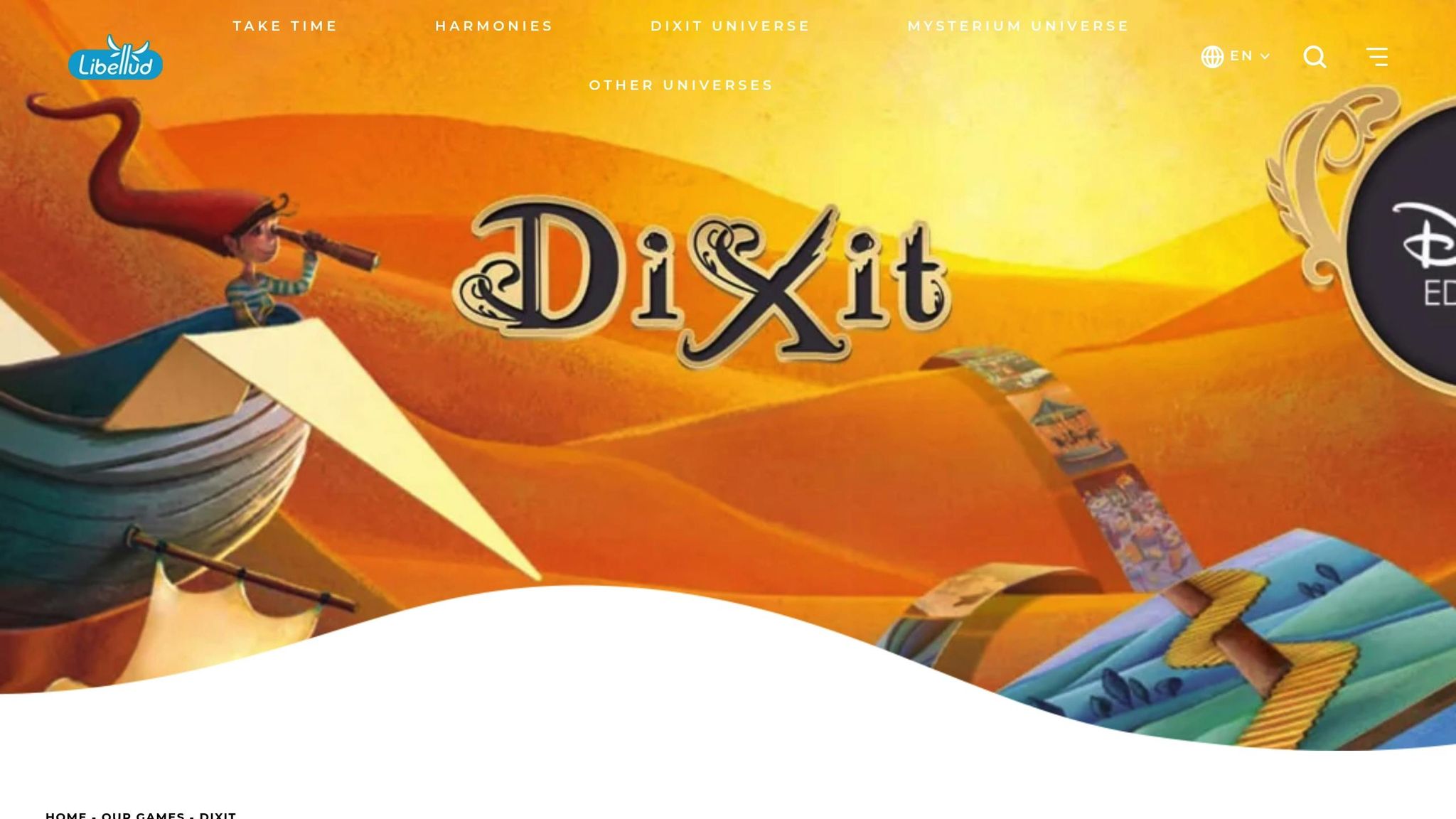
Dixit takes a fresh approach to storytelling through its visually captivating and abstract cards, offering a platform for players to let their imaginations run wild. Each round, one player gives a clue inspired by their card, while the others try to pick a card from their hand that best fits the clue. The twist? The clues are open to interpretation, making the game accessible and engaging for players from all backgrounds.
Its simple rules and ability to accommodate different group sizes make Dixit a breeze to pick up and enjoy. The game’s minimal reliance on language ensures that everyone, regardless of their native tongue, can join in the fun. Whether you're hosting a diverse game night or just looking for a way to spark creativity, Dixit is an excellent choice.
Game Comparison Table
Picking the right game for a multicultural gathering becomes much simpler when you can directly compare how different options measure up. The table below highlights key criteria - language independence, cultural neutrality, ease of learning, group size flexibility, and average game time - to help you find the best fit for your event.
| Game | Language Independence | Cultural Neutrality | Ease of Learning | Player Count | Average Game Time |
|---|---|---|---|---|---|
| Chess | Very High | Very High | Medium | 2 | 30–60 min |
| Uno | Very High | Very High | Very Easy | 2–10 | 15–30 min |
| Carcassonne | Very High | Very High | Medium | 2–5 | 30–45 min |
| Mastermind | Very High | Very High | Easy | 2 | 15–30 min |
| Codenames: Pictures | High | High | Easy | 4–8 | 15–20 min |
| Ticket to Ride | High | Very High | Medium | 2–5 | 30–60 min |
| Red Tape by MINIFINITI | Medium | Medium | Easy | 3–6 | 30–45 min |
| Dixit | High | Very High | Very Easy | 3–8 | 30 min |
Language Independence: Games like Chess, Uno, Carcassonne, and Mastermind excel here, as they don’t require players to share a common language. Others, like Codenames: Pictures and Dixit, rely more on visual elements with minimal text, though occasional clarification might be needed.
Cultural Neutrality: Most of these games avoid favoring players with specific cultural knowledge, making them ideal for diverse groups. Red Tape by MINIFINITI, however, leans into humor and strategy tied to bureaucratic themes, which may resonate differently depending on the group.
Ease of Learning: Simplicity is key for quick engagement. Games like Uno and Dixit can be taught in minutes, while others, such as Carcassonne and Ticket to Ride, require slightly more explanation but remain accessible with a brief demonstration.
Player Count and Flexibility: Uno shines with its ability to accommodate anywhere from 2 to 10 players, making it perfect for gatherings with fluctuating attendance. More intimate games like Chess and Mastermind are ideal for two players, while Codenames: Pictures, Dixit, and Red Tape by MINIFINITI work well for medium-sized groups.
Game Time: If time is limited, Codenames: Pictures offers quick rounds in just 15–20 minutes. For those seeking a more immersive experience, Ticket to Ride or Chess can provide longer gameplay without overstaying their welcome.
When planning your event, think about the group’s size, language preferences, and the time available. Hosting a large, multilingual crowd? Uno or Dixit are excellent choices with minimal language barriers and high player counts. For smaller groups that enjoy strategy, Carcassonne or Ticket to Ride offer engaging challenges while remaining inclusive. And if you need a quick, fun activity between events, Codenames: Pictures is a great pick.
For multicultural gatherings, avoid games that rely heavily on wordplay, trivia, or culture-specific knowledge, as these can unintentionally exclude some participants. Instead, focus on options that bring everyone to the table, regardless of their background.
Tips for Hosting Multicultural Game Nights
Hosting a game night that brings together people from different backgrounds can be an incredible way to build connections. With a bit of planning and thoughtfulness, you can create an inclusive and enjoyable experience for everyone. Here's how to make it happen:
Start by explaining the rules in a way that everyone can easily follow. A live demonstration works wonders - walk through a full round of the game before diving in. This approach helps players understand the mechanics visually, which can be especially helpful if there are language differences.
Set up your game area to make participation easy. A well-lit, clutter-free space where everyone can see the game board and access pieces is key. Keep the atmosphere lighthearted by focusing on fun and connection rather than competition. Celebrate good moves no matter the outcome - it’s all about enjoying the experience together.
Pairing seasoned players with newcomers is a great way to encourage peer learning and create a welcoming environment. Let everyone know that asking questions is not just allowed but encouraged. Make it clear that taking extra time for clarification is perfectly fine - this helps set the tone for an inclusive and relaxed evening.
Be mindful of your game choices. Avoid games that rely on cultural stereotypes or might unintentionally make someone uncomfortable. If concerns arise, be flexible and ready to switch to a different game.
Plan for short breaks during the night to keep the energy up. Use this time for refreshments or informal chats. Offering snacks from a mix of cuisines or sharing a fun fact about the games can spark interesting conversations and deepen the sense of connection.
It’s also important to ask ahead about any accessibility needs. Whether it’s adjusting game pieces or assigning specific roles, small accommodations can ensure everyone feels included. Additionally, try to schedule your game night at a time that works for a variety of schedules and avoid clashing with major holidays or religious events.
Finally, gather quick feedback after the event. A brief chat or survey can help you understand what went well and what could be improved for next time.
The best multicultural game nights happen when everyone feels safe to speak up, make mistakes, and learn together. By focusing on inclusion and connection over perfect gameplay, you’ll create a space where everyone feels they belong.
Conclusion
Bringing people from different backgrounds together can be as simple as picking the right games. The ones highlighted in this article - ranging from timeless classics like Chess to modern hits like Carcassonne and Red Tape - are designed to bridge cultural gaps. These games rely on universal elements such as visual cues, simple symbols, and strategic gameplay, avoiding reliance on language skills or deep cultural knowledge. This thoughtful design not only makes the rules easier to grasp but also encourages genuine connections among players.
Take Uno, for example - its use of colors and symbols instead of words makes it accessible to players around the globe. Similarly, Chess, a game with centuries of history across continents, proves how abstract strategy can transcend cultural differences. These games exemplify how inclusivity and universal design can create a level playing field for everyone, regardless of their background.
Choosing games that work across cultural divides is more than just entertainment - it's about fostering shared experiences and building friendships through play. Companies like MINIFINITI embody this idea with their weekly game nights, where diverse groups connect over creative games like Red Tape. Who knew turning bureaucracy into a lighthearted challenge could bring people together?
The beauty of these games is that they don’t require cultural expertise or advanced language skills. Instead, they let players focus on what really matters: strategy, laughter, and connection. By choosing games that welcome everyone, you can transform an ordinary game night into a moment of meaningful interaction and even cultural exchange.
Why not start your own multicultural game night this week? Pick a game from this list - Uno and Chess are great options to begin with - and invite friends to join. The games are ready, and the only thing left is to gather your group and create unforgettable memories.
FAQs
What should I consider when selecting a game for a multicultural group?
When picking a game for a multicultural gathering, focus on simplicity, inclusivity, and broad appeal. Choose games with straightforward rules that are easy to explain, even for those who might not be fully fluent in the language being used. Steer clear of games that rely heavily on cultural references, specific humor, or themes that might not resonate universally.
Games that emphasize strategy, creativity, or teamwork are often a great choice. They invite participation without requiring any particular cultural background or knowledge. Also, think about the size of your group and pick a game that can comfortably include everyone, ensuring the experience is both fun and engaging for all.
Why are games like Uno and Chess great for multicultural groups?
Games like Uno and Chess work beautifully in multicultural settings because their rules are straightforward and easy to grasp, cutting through language and cultural barriers. Take Uno, for instance - its gameplay revolves around matching colors and numbers, making it intuitive and accessible without requiring lengthy explanations or translations. Similarly, Chess relies on universally recognized pieces and strategies, creating a shared language of logic and skill that players from all walks of life can engage with.
By emphasizing universally relatable elements, these games create an inclusive and enjoyable environment. They reduce the chances of cultural misunderstandings while promoting meaningful social connections.
How can I make a multicultural game night inclusive and fun for everyone?
Creating a fun and welcoming multicultural game night starts with choosing games that are easy to understand and appeal to everyone. Steer clear of games with themes or content that could unintentionally cause cultural missteps. Games that mix humor and strategy are usually a hit, as they promote interaction and teamwork in a natural way.
Beyond the games themselves, it's important to create an inviting environment where everyone feels at ease. Encourage open communication and make sure participants feel included. Hosting game nights regularly can help strengthen connections and foster a sense of community among players from various backgrounds.