
Healthy Competition in Games: Tips for Game Nights
Game nights are about more than just winning - they’re about creating fun, shared experiences with friends and family. To keep the competition friendly and enjoyable:
- Focus on fun over winning: Play your best but prioritize laughter and camaraderie.
- Choose the right games: Select games that are easy to learn, balance luck and strategy, and suit your group size. Start with beginner-friendly options like Ticket to Ride or Codenames.
- Mix game types: Alternate between solo and team-based games to keep things fresh and engaging.
- Set ground rules: Encourage good sportsmanship, ban "kingmaking", and handle disputes with a designated rules master.
- Keep it welcoming: Rotate leadership roles, support new players, and add cooperative games like Pandemic to the mix.
When you prioritize shared enjoyment, game nights strengthen bonds and create lasting memories. Whether it’s a hilarious moment during Exploding Kittens or teamwork in Forbidden Island, the joy of playing together is what makes these gatherings special.
How to Choose Games That Encourage Friendly Competition
The games you pick can make or break your game night. It's all about finding the right balance between complexity, group size, and player experience. For example, most board games are perfect for 4–5 players, while party games can easily handle 8 or more. But steer clear of games that are too complicated for beginners - they can slow things down and dampen the mood.
Another key factor is the balance between luck and strategy. Competitive players usually gravitate toward strategy-focused games with little randomness, while newcomers might prefer lighter games where luck - like a lucky dice roll or card draw - keeps things exciting and fair. Games like Wingspan or Azul are great for mixed groups because they focus on individual scores rather than direct competition.
Here’s how you can pick games that spark friendly competition and keep everyone engaged.
Pick Games That Are Easy to Learn
Nobody wants to spend more time reading rules than actually playing. A good rule of thumb? The Six-Minute Rule: 2 minutes to explain the theme, 2 minutes for an overview, and 2 minutes to walk through the first turn.
For beginners, start with "gateway" games like Sushi Go!, Ticket to Ride, or Codenames. These games are simple to pick up, with minimal rules to memorize, so everyone can dive in quickly. Avoid games that require constant trips to the rulebook - that’s a surefire way to kill the vibe.
And don’t underestimate the power of humor. A mix of laughs and strategy can make the night even more enjoyable.
Try Games That Mix Humor and Strategy
Games that combine humor with a bit of strategy can help keep things light, even when competition heats up. Take MINIFINITI's Red Tape as an example. At $39.99, it’s a solid choice for game night hosts looking to add something fresh to their collection. It’s fun, strategic, and doesn’t take itself too seriously.
Exploding Kittens is another great pick. Its mix of chaos, strategy, and absurd humor creates plenty of laugh-out-loud moments. Even if someone doesn’t win, they’ll still leave the table with a smile.
Mix Solo and Team Games
To keep things fresh and fair, try alternating between solo and team-based games. Cooperative games like Pandemic or Forbidden Island are perfect for building team spirit and introducing new players to the hobby. On the flip side, competitive games like Catan let players flex their negotiation skills.
For larger groups, team games like Codenames or Werewolf are fantastic for keeping everyone involved. Switching between formats also helps ensure no one player dominates the night, making victory a shared experience across the group.
Create Ground Rules for Good Sportsmanship
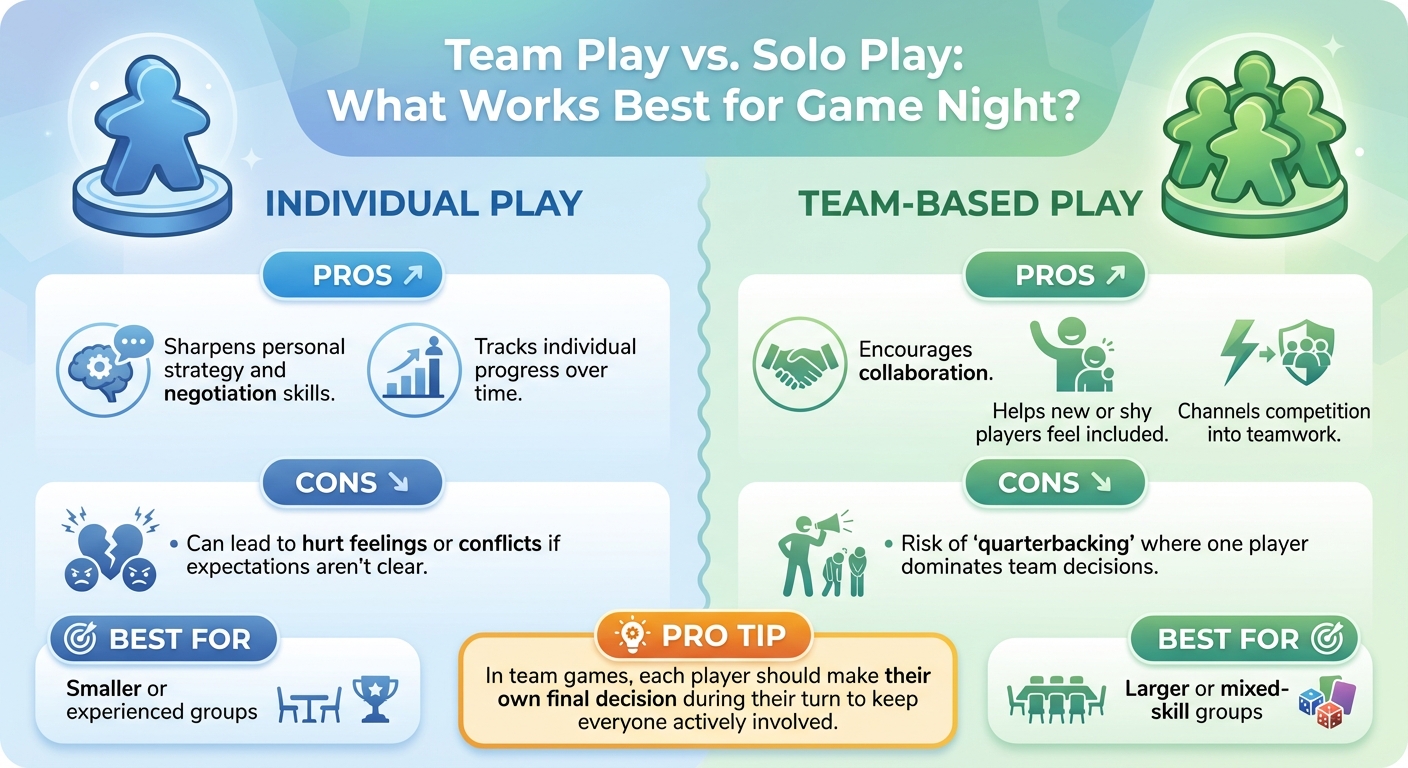
Team Play vs Solo Play: Choosing the Best Format for Game Night
Setting clear expectations before the game begins can go a long way in preventing toxic behavior. The goal? Everyone should aim to play their best without ruining the experience for others. Start the evening with a quick chat to remind everyone that the main objective is to have fun - not just to win. As Moe Tousignant wisely puts it:
"While winning can be part of that fun, it should never be placed above the fun of anyone else at the table".
Basic Rules for Friendly Play
A few simple guidelines can help avoid most issues before they even arise. Keep the atmosphere positive: steer clear of negative comments, celebrate small victories without bragging, and handle losses with grace.
One crucial rule to establish early is a no kingmaking policy. This means that if you’re out of the running to win, you should still focus on improving your score rather than deliberately helping - or sabotaging - specific players. This keeps the game fair and prevents lingering tensions. Another helpful idea is to appoint a rules master - someone familiar with the game who can settle disputes if they come up.
If things start to feel tense, encourage anyone to call for a tension break. A quick pause to grab snacks or refill drinks can help reset the mood and stop minor frustrations from spiraling.
Now, let’s explore how individual and team play styles can shape the game experience.
Team Play vs. Solo Play: What Works Best
Both individual and team formats have their strengths, and knowing which one suits your group’s vibe can make all the difference.
| Rule Type | Pros | Cons | Best For |
|---|---|---|---|
| Individual Play | Sharpens personal strategy and negotiation skills; tracks individual progress over time | Can lead to hurt feelings or conflicts if expectations aren’t clear | Smaller or experienced groups |
| Team-Based Play | Encourages collaboration and helps new or shy players feel included; channels competition into teamwork | Risk of "quarterbacking", where one player dominates team decisions | Larger or mixed-skill groups |
For team-based games, it’s essential to set a rule that each player makes their own final decision during their turn. While discussing strategies is great, the player whose turn it is should always have the last word. This keeps everyone actively involved and prevents one person from taking over the game.
How to Keep Game Nights Fun and Welcoming
Creating a fun and inclusive atmosphere is the key to a successful game night. When everyone feels valued and respected, the competition becomes secondary to the shared experience. Prioritizing mutual respect and enjoyment over a win-at-all-costs mindset ensures that game nights leave lasting, positive memories.
Encourage Players to Support Each Other
Make your guests feel at home by focusing on the joy of playing rather than the outcome. As Matt Miller, Editor-in-Chief at Game Informer, puts it:
"At the end of the day, it really doesn't matter if the rules get bent from time to time to help a new player out."
Celebrate bold moves and treat mistakes as part of the learning process. Offering a bit of flexibility with the rules can make games more accessible for newcomers, easing their transition into the group. If competitive energy starts to overshadow the fun, switching to a lighter, collaborative activity can help restore balance.
Add Cooperative Games to the Mix
When competition heats up, cooperative games can be a refreshing change. Games like Pandemic or Forbidden Island encourage players to work together toward a common goal, fostering teamwork and camaraderie. These games are especially valuable for groups with varying experience levels, as seasoned players can guide and mentor others. Julian Allardyce captured this dynamic perfectly:
"Especially if someone was shy or felt out of their depth, you could see them light up when they made a move that saved the group."
Moments like these build connections and make everyone feel like an integral part of the team. To deepen engagement, consider rotating leadership within the group.
Let Different People Lead Each Game
Avoid relying on the same person to explain the rules every time. Instead, rotate the role of "rules master" to share the responsibility and give everyone a chance to contribute. Choose someone familiar with the game to guide that round, and for new games, send out a quick tutorial video beforehand. This approach ensures everyone starts on the same page and helps create a more inclusive experience.
sbb-itb-7b84150
Plan Game Nights That People Want to Attend
Good planning can turn a casual game night into a cherished tradition. By focusing on logistics, game choices, and scheduling, you can create an experience that keeps your guests coming back for more. Let’s dive into how to make your game nights something everyone looks forward to.
Match Games to Your Group Size
The size of your group plays a big role in picking the right games. For smaller gatherings of 3–4 players, strategy games like Ticket to Ride or Catan are perfect. If you’re hosting a larger crowd - 8 or more people - try social deduction games like Werewolf or high-energy party games like Reverse Charades. Groups of 5–6 players might find it helpful to split into two tables to avoid long waits between turns.
If your group includes a mix of seasoned players and newcomers, opt for gateway games. These are easy to learn and can be explained in just a few minutes, making them ideal for keeping everyone engaged.
Make Game Night a Regular Event
Turning game night into a consistent event can make it something people plan their schedules around. Rob Huddleston, a game enthusiast and author, highlights the importance of predictability:
"If people can get used to the idea that the third Saturday of the month is Game Night, they will start planning for it, and even scheduling around it."
Instead of trying to accommodate everyone’s availability, pick a recurring date that works for your core group. Friday or Saturday evenings are usually best since guests won’t have to worry about early mornings the next day. Use tools like Google Calendar to set clear expectations - include details like start and end times (e.g., "Dinner at 7:00 PM, Games at 8:00 PM") to keep things organized.
Keep Games Interesting with Expansions
Even the most-loved games can start to feel a bit stale after repeated play. Expansion packs are a great way to refresh your favorite games without requiring the group to learn entirely new rules. Games like Carcassonne, Exploding Kittens, and Dixit offer expansions that introduce new scenarios and mechanics to spice things up.
For example, MINIFINITI offers expansions like Red Tape, which blends humor with strategy. Adding these to your rotation keeps things exciting for regular attendees while maintaining the familiarity your group enjoys. A great way to structure the evening is to start with a quick 15-minute filler game, move on to a more strategic game, and wrap up with a fast-paced party game to keep the energy high.
Conclusion
The success of a game night comes down to choosing the right games, setting clear expectations, and making fun the ultimate goal. Picking games that match the group's skill levels and blending competitive and cooperative options keeps everyone engaged and entertained. With simple boundaries and an emphasis on respectful play, the competitive spirit stays lighthearted rather than tense, turning the evening into a celebration of connection.
Ryan Gutowski, co-founder of One Board Family, perfectly captures the essence of what makes game nights special:
"You may not remember who wins or loses a particular game, but you will remember the people that sat around the table sharing a couple hours of their week with you."
Game nights are about more than just winning - they’re about the shared joy and the unforgettable moments that bring people closer. Whether it's a hilarious failed bluff, a surprising comeback, or a burst of laughter over a wild drawing, these experiences create bonds that linger long after the games are put away. From short, lighthearted games to intense strategic battles, every moment spent together strengthens the sense of community. By keeping the competition friendly and the fun front and center, every game night becomes a cherished memory.
FAQs
How can I make game night enjoyable for players of all skill levels?
Choose games that are simple to pick up but still keep everyone entertained. Games with straightforward rules and shorter playtimes - under an hour - are perfect. Some great options include Codenames, Ticket to Ride, or Sushi Go!. For something that mixes humor and strategy, try Red Tape by MINIFINITI, which works well for players of all experience levels.
Set the stage for a fun night by explaining the rules clearly before starting. It’s helpful to have a cheat sheet nearby for quick reference. Encourage a friendly, laid-back atmosphere instead of overly competitive gameplay. Team-based or cooperative games like Pandemic or Hanabi are excellent choices, as they allow players to collaborate and balance out skill levels. If you’re opting for competitive games, consider pairing experienced and new players together to keep things fair and enjoyable.
Keep the vibe light and engaging by including short practice rounds, switching up seating arrangements, and taking snack breaks. By focusing on easy-to-learn games, clear instructions, and a relaxed environment, you’ll ensure everyone has a great time!
What are some good games for beginners to enjoy on game night?
For a game night that's perfect for beginners, pick games that are simple to learn, quick to set up, and can be wrapped up in under an hour. This way, everyone stays engaged and has fun. Some great choices are Codenames, Ticket to Ride, and the lively card game Sushi Go! - all of which are enjoyable for players of any experience level.
If you're looking for shorter, straightforward games, you can't go wrong with classics like Jenga, Mancala, or Checkers. Hosting a slightly larger group (4–6 players)? Consider games like Scrabble, Yahtzee, or the light strategy hit Settlers of Catan. These options add a bit more variety and depth while still being easy to pick up.
Starting off with these games ensures a relaxed, fun atmosphere where everyone can dive in without worrying about complicated rules.
How can I resolve disputes and encourage good sportsmanship during game nights?
To keep disputes in check and encourage good sportsmanship during game night, it's important to set the tone early. Start by reviewing the basic rules and any specific house guidelines so everyone knows what to expect. If disagreements pop up, pause the game and calmly refer to the rulebook together. Let a neutral player or the host make the final call. Sticking to the rules rather than personal opinions can help prevent arguments from spiraling out of control.
After each game, set an example for others. Congratulate the winner with a simple "great game" or "well played", and accept losses with grace. If tempers start to flare, suggest a quick break to cool off and remind everyone that the main goal is to enjoy the experience - not just to win. By creating a positive atmosphere and encouraging players to "win humbly and lose gracefully", you can help ensure the competition remains fun and friendly for everyone involved.