
Game Talk
How Asymmetric Roles Work in Games
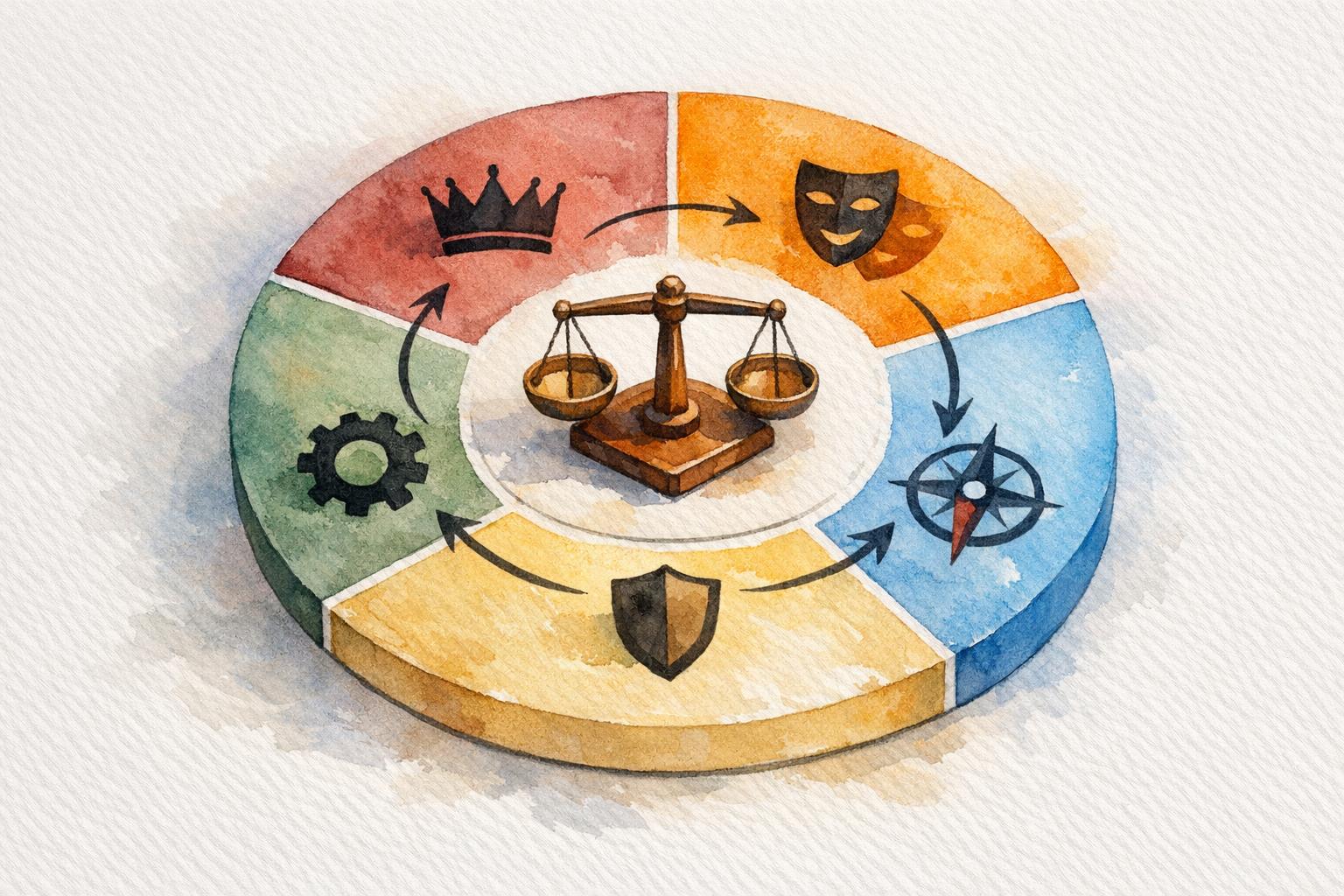
Games with asymmetric roles offer players different abilities, actions, and objectives, creating varied gameplay experiences. Unlike traditional games where everyone follows the same rules, this design approach gives each player a distinct role, making every session feel unique.
Here’s what you need to know:
- Players take on roles with exclusive abilities or goals, shaping their strategies.
- These roles enhance replayability, challenge players to think differently, and encourage social interaction.
- Examples include Pandemic, where roles complement each other in cooperative play, and Android: Netrunner, where opposing sides have separate mechanics.
Key takeaway: Asymmetric roles add depth to games, requiring players to adapt to each other’s strengths and weaknesses while keeping gameplay fresh and engaging. Game designers must balance these roles carefully through shared mechanics, gradual complexity, and extensive playtesting.
The SIX Levels of Board Game ASYMMETRY
sbb-itb-7b84150
How Asymmetric Roles Work in Gameplay
Types of Asymmetric Role Structures in Tabletop Games
Asymmetric roles introduce players to unique challenges that demand distinct strategies, setting them apart from traditional games where everyone follows the same playbook. This dynamic mechanic has become a hallmark of many modern tabletop games, offering a refreshing twist on strategy and interaction.
Different Abilities and Actions
In asymmetric games, each player is equipped with exclusive abilities that shape their approach to the game. Take Pandemic, for example: the Medic can clear all cubes of one color in a single action, while the Operations Expert builds research stations without needing to discard cards. These abilities naturally guide their strategies - while the Medic focuses on controlling outbreaks, the Operations Expert leans into building infrastructure and easing movement.
Jon Shafer, Lead Designer of Civilization 5, highlights the strength of asymmetry:
“If all sides play the same way, then the optimal response in an identical situation will always be the same”.
Asymmetric roles break this mold, forcing players to compare “apples to oranges” instead of “apples to apples”. A tactic that works wonders for one role may completely flop for another, keeping gameplay dynamic and preventing repetitive strategies. These unique abilities also redefine how players interact with one another during the game.
Player Interactions and Dynamics
Asymmetric roles add a layer of unpredictability to interactions. In symmetric games, it’s easier to anticipate your opponent’s moves since you share the same tools. Asymmetry, however, demands constant adaptation. Players must not only focus on their own strengths but also consider how to counter their opponents’ distinct advantages, creating richer, more varied strategies.
In cooperative games, this dynamic fosters teamwork. Players must coordinate their unique abilities to tackle challenges together. For example, one player might handle disease control while another focuses on logistics in Pandemic. In competitive games, the emphasis shifts to exploiting your strengths while neutralizing your opponents’. Success hinges on understanding the interplay of abilities - not just your own, but everyone else’s.
Examples of Gameplay Structures
Asymmetric roles manifest in various formats, each offering a distinctive experience. In cooperative games like Pandemic, roles are designed to complement one another, ensuring that every player contributes something essential to the team’s success. Meanwhile, one-vs-many games pit a single, powerful player against a group of weaker ones. The solo player often has superior abilities, while the group relies on teamwork and numbers to even the odds.
Head-to-head asymmetry takes a different approach. Games like Android: Netrunner feature two sides with entirely different mechanics and objectives, creating the sensation of playing two separate games at the same table. Then there’s emergent asymmetry, where players start on equal footing but develop unique abilities over time. In Arcs, for instance, players begin with the same rules but diverge as they research technologies or follow specific “fate” cards, offering depth without overwhelming new players.
These varied approaches highlight how asymmetry can keep games fresh, challenging, and engaging for everyone involved.
Designing Balanced Asymmetric Roles
When it comes to asymmetric roles in games, the real challenge lies in creating a design that feels both distinct and fair. It’s not just about making roles different; it’s about ensuring those differences lead to engaging and rewarding gameplay for everyone involved.
Core Principles of Role Design
Balancing asymmetric roles requires looking at the game as a whole rather than comparing roles directly. Each role should contribute to the overall experience in a meaningful way. For example, a faction that struggles offensively might shine defensively or offer unique utility. Think about it like assembling a sports team - not every player needs to score goals if someone else is an exceptional defender.
Game designer David Sirlin sums up the challenge well:
“Asymmetry makes every game better – it’s just that implementing it properly can be immensely difficult”.
One way to keep things manageable is by limiting the number of roles. Aim for fewer than ten, ideally just three or four. Why? Because in games with large rosters, most players stick to just a handful of characters - usually two to four. A smaller roster not only makes balancing easier but also ensures players can explore and understand the entire system.
This streamlined approach helps manage complexity while keeping the game accessible.
Balancing Complexity and Accessibility
The most successful asymmetric games share a common foundation of core rules. This reduces the need for extra rules specific to each role. For instance, Root refined the extreme asymmetry seen in Vast by giving its factions more consistent, shared mechanics. This made the game easier to teach while still preserving unique playstyles.
Adding difficulty ratings is another way to guide players, especially beginners. Spirit Island does this by rating factions based on complexity, helping new players start with simpler roles. Another approach is designing roles with emergent asymmetry. Here, all players begin with similar tools but diverge as they make in-game choices, like researching new technologies. This method introduces complexity gradually, making the game less intimidating for newcomers.
Once the rules are clear and roles are well-defined, the next step is rigorous playtesting to fine-tune balance.
Playtesting and Iteration
No amount of theoretical planning can replace actual playtesting. Designers typically rely on three key methods to balance roles:
- The Playtest Method, which involves repeated testing to identify game-breaking issues.
- The Baseline Method, where one character serves as a standard for balancing others.
- The Modeled Method, which uses mathematical models to measure abilities quantitatively.
Most successful designs combine all three techniques.
Jamey Stegmaier, founder of Stonemaier Games, highlights the importance of collaboration during this phase:
“Playtesters raise questions; developers propose answers”.
Plan for at least three waves of blind playtesting before considering your game ready. During testing, take detailed notes, but review them after a day to gain perspective. If a playtester identifies a broken element, remove it immediately to avoid skewing your results. However, avoid making drastic changes based on a single report - wait until an entire wave is complete to see the bigger picture.
Incorporating Asymmetric Roles into Game Design
Once you’ve balanced and thoroughly tested your roles, the next challenge is weaving them seamlessly into the game’s design. The aim? Make every role feel distinct, purposeful, and approachable - without overwhelming the players.
Using Themes to Guide Role Creation
Themes can do wonders for reinforcing the identity of a role. When mechanics align with a narrative, players are more likely to embrace the differences as part of the story rather than seeing them as arbitrary design quirks.
For instance, tying a faction’s abilities to its story - like giving a group with organic traits abilities rooted in nature - makes asymmetry feel natural. Creating short character profiles can also help define a role’s personality and habits. These profiles can inspire thematic tweaks to basic mechanics. Imagine a “Master Influencer” in a city-building game who wins ties automatically - it’s a small but impactful touch. You can even add unique physical elements, like a special monastery tile for a priest character, to strengthen the role’s identity both visually and mechanically.
Take Arcs by Cole Wehrle as an example. The game uses “Fate” cards to tie gameplay outcomes to the unfolding narrative. A player might start as an “Ambitious Librarian” and, depending on their choices and outcomes, evolve into a “Bitter Archivist.” This approach lets asymmetry emerge naturally as the story progresses.
Beyond enhancing the theme, role diversity is a powerful tool for keeping players engaged over multiple sessions.
Using Role Diversity for Replayability
Offering a variety of distinct roles encourages players to explore different strategies, which keeps the experience fresh. It’s no coincidence that 80% of the top 10 board games on BoardGameGeek in 2022 featured asymmetric factions - players clearly enjoy the depth and variety these roles bring.
However, introducing asymmetry too quickly can overwhelm newcomers. Cole Wehrle’s method in Arcs is a great example of easing players in:
“With Arcs, I thought that if players started in symmetrical positions, I could slowly introduce players to the game’s asymmetry. Each game a few new elements would be added (or taken away) from a player’s toolbox, which would eventually result in some very different positions”.
This gradual approach helps players learn without feeling lost. To keep things manageable, start with three or four roles and only expand if necessary. Each role should offer at least three viable strategic paths to encourage experimentation and prevent players from feeling stuck in a single playstyle.
The Role of Visual and Rule Clarity
Even the most creative designs will fall flat if players can’t grasp their roles quickly. Clear visuals and straightforward rules are essential.
Dedicated player boards and consistent iconography can go a long way in simplifying complex roles. For example, Arcs uses a shared “vocabulary” of three piece types - ships, extractors, and factories - across all roles. While players might gain a few new technologies each game, the core components remain consistent, making the gameplay easier to follow.
For roles with more intricate mechanics, consider using “cover sheets” or separate instruction booklets. This keeps the main game components uncluttered while giving players all the details they need. Another helpful strategy? Design roles so that players only need to focus on a subset of rules unique to their character. The broader complexity can then emerge naturally through interactions between roles.
Lastly, shared spaces - like common resource pools or map objectives - can anchor the game and show players how their unique abilities fit into the larger system. This creates a sense of connection between the roles and the overall gameplay, making the experience more cohesive and engaging.
Conclusion
Key Takeaways
Asymmetric roles add layers of depth and variety to tabletop games, creating experiences that feel fresh and engaging every time you play. By offering different strategic paths and character perspectives, they make games more replayable and encourage players to experiment with creative approaches. Unlike symmetric designs, where players are on equal footing, asymmetry pushes players to think outside the box, adapt to their opponents’ unique strengths, and uncover surprising strategies.
But it’s not just about strategy. Asymmetric roles also make every player feel essential to the game’s outcome. Whether you’re working together to solve a crisis or competing to outwit each other, the unique abilities tied to each role foster a sense of importance. In cooperative games, this dynamic strengthens teamwork, as each player’s contributions are critical to the group’s success. Research even suggests that asymmetric cooperative play enhances social engagement by promoting stronger connections between players.
In short, these roles don’t just make games more challenging - they make them more meaningful.
Building Social Connections Through Games
Asymmetric roles do more than just spice up the gameplay; they help bring people closer together. When every player has a distinct role, it naturally encourages collaboration, negotiation, and creative problem-solving. Bert Games captured this idea perfectly when they said:
“This was a great way to simulate real life in this game as we all unfortunately are well aware of there are a lot of different types of people working on pandemics”.
This role interdependence fosters clearer communication and stronger bonds among players. Instead of just rolling dice or moving pieces, you’re actively coordinating and combining unique strengths to achieve shared goals. It turns a simple game night into a memorable shared experience where everyone’s input truly matters.
By blending strategy with social interaction, asymmetric roles open the door for even more inventive game designs in the future.
Explore More with MINIFINITI
Want to experience the magic of asymmetric design firsthand? Check out MINIFINITI’s Red Tape, a tabletop game that masterfully combines clever mechanics with humor and engaging gameplay. Plus, MINIFINITI hosts weekly game nights where you can dive into immersive tabletop experiences and connect with other gaming enthusiasts. Whether you’re a designer seeking inspiration or a player eager for something new, these events are the perfect place to see how asymmetric roles come to life. Visit minifiniti.com to learn more about Red Tape and upcoming game nights.
FAQs
How is asymmetry different from unequal balance?
Asymmetry in games refers to when players or game components are deliberately given distinct roles, abilities, or resources. This design choice aims to introduce variety and enhance strategic complexity. On the other hand, unequal balance happens when a game unintentionally favors certain players or elements, often resulting in dominance issues or perceived unfairness. Unlike asymmetry, which is intentional, unequal balance usually points to a design flaw.
How do you stop one role from feeling overpowered?
To keep one role from dominating in asymmetric games, designers often rely on strategies like partial asymmetry. This approach tweaks abilities, resources, or objectives to keep things fair. Another key tool is playtesting, which helps uncover imbalances and refine each role. On top of that, roles perceived as weaker can be equipped with special perks or counterbalancing tools to make sure every player feels their role is both engaging and strategically worthwhile.
What’s the easiest way to teach asymmetric roles to new players?
Start by explaining the concept in straightforward terms: different roles come with their own distinct goals and abilities. To make this idea easier to grasp, use simple analogies - think of a sports team where each player has a specific position and responsibility.
Next, walk players through a quick demo or scenario to show how these roles work together in action. This hands-on approach helps connect theory to practice. Finally, open the floor for questions and discussion. This not only clears up any confusion but also keeps the learning process interactive and engaging.