
Game Talk
10 Tips for Organizing Game Components
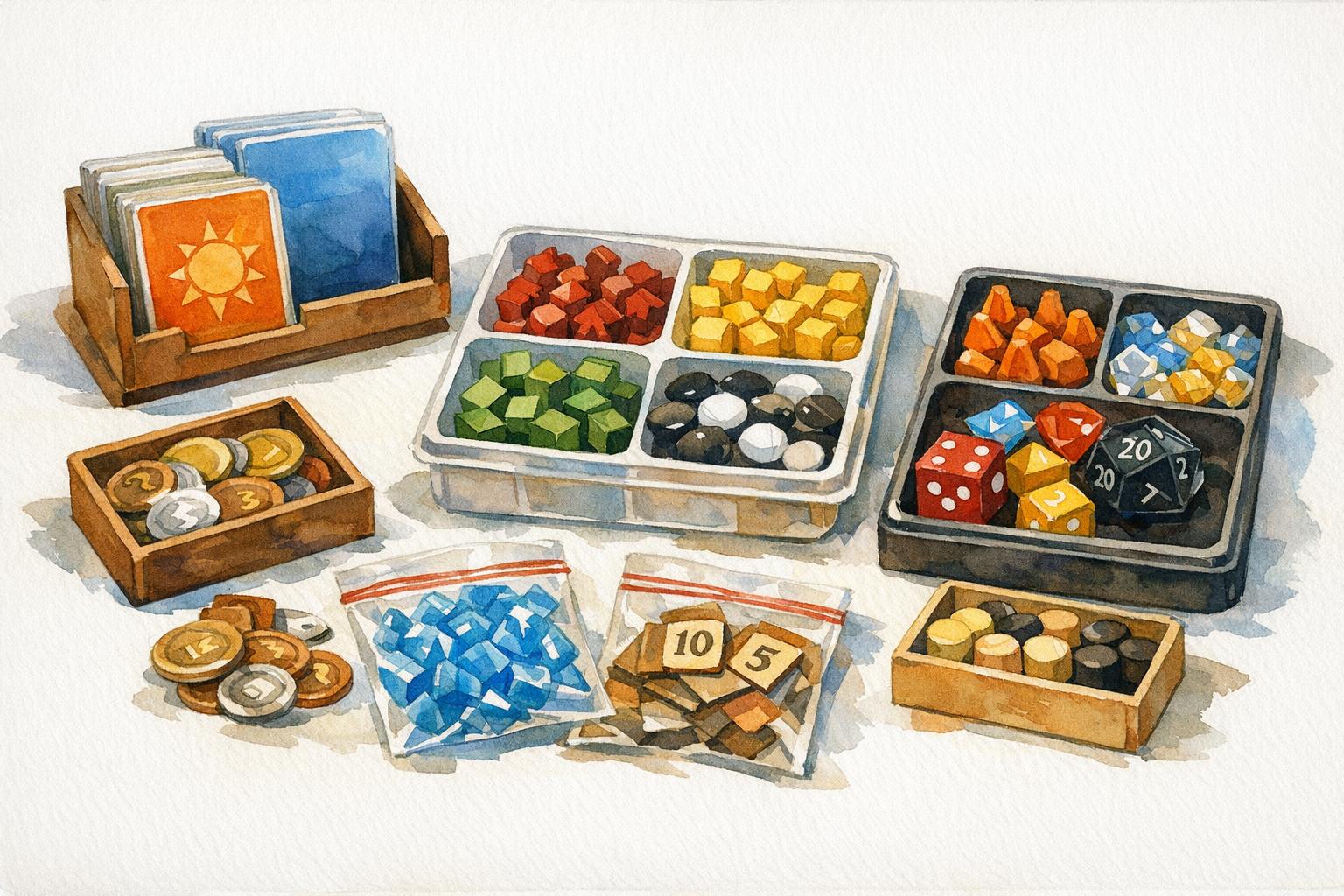
Disorganized game components can ruin the fun of tabletop gaming. But with some simple strategies, you can cut setup time, protect your pieces, and keep everything neat. Here’s how:
- Labeled Ziploc Bags: Perfect for sorting tokens, dice, and cards. Transparent and space-saving.
- Checklists: Track every piece to avoid losing crucial components.
- Tackle Boxes: Adjustable compartments keep tokens and dice secure.
- Player Containers: Individualized storage for each player’s items speeds up setup.
- Crayon Boxes: Affordable and sturdy for small pieces.
- Horizontal Storage: Prevents shifting and damage inside game boxes.
- Custom Inserts: Foam or 3D-printed options keep components organized and protected.
- Color-Coded Bags: Assign colors to players or components for quick identification.
- Removable Trays: Easy to lift out and use during gameplay.
- Measure Before Buying: Ensure organizers fit your game boxes.
These tips help you spend less time sorting and more time playing. Whether you use $5 baggies or invest in custom inserts, keeping your games organized enhances every game night.
Board Game Storage Solutions: Cost and Use Comparison Guide
The BEST Board Game Storage Ideas (That Really Work!)
1. Use Labeled Ziploc Bags for Sorting Pieces
Labeled Ziploc bags are a simple yet effective way to keep game components organized. The transparent material makes it easy to see what’s inside - whether it’s tokens, dice, or cards - so you don’t have to dig through a chaotic pile.
For games with color-coded player sets or multiple factions, grouping matching pieces with their starting cards in a single bag can save a lot of time. Players can jump right into the game without sorting through components. As Home and Kind puts it:
“This game organization system works like files in a filing cabinet. They all sit vertically so they’re easy to shuffle through and find what you’re looking for”.
Another perk? It saves space. By swapping out bulky original boxes for compact bags, you can significantly reduce your storage needs. In fact, you might even consolidate two shelves of games into one. Plus, storing games vertically in bags eliminates the hassle of unstacking heavy boxes every time you want to play.
For most tokens and cubes, standard 2x3 inch bags are a good fit, while larger bags are better for cards or boards. Want to make identification even easier? Cut out the game title from the original box and secure it to the bag with clear packing tape. Alternatively, print a small version of the box art, laminate it, and attach it to the bag.
Looking for more ways to optimize your game storage? Keep reading for additional tips.
2. Create Component Inventories with Checklists
Nothing ruins a game night faster than realizing a crucial piece is missing. To avoid this, create a detailed component inventory checklist to keep track of every game piece. Pair this checklist with labeled containers to make organization a breeze.
Group components by type - think meeples, tokens, or faction-specific items. For faction-based games, store each faction’s pieces along with their starting cards in the same labeled container. This way, everything is clearly organized and easy to access, speeding up both setup and teardown.
Labeling containers to match the checklist is a game-changer. As Nerdist puts it:
“Making sure the game pieces are put away in the correct organizer once the game has ended… cuts down tear down time, as players put their pieces in the right bags, but it also makes set up the next time easier, as you do not have to search the box for the starting pieces.”
Use the exact terms from the rulebook, like “Influence Tokens”, to avoid confusion. This system offers immediate visual feedback - if a labeled container is empty or partially filled when it shouldn’t be, you’ll know something’s missing right away. This approach is especially helpful for games with lots of components and complex setups, ensuring everything is in place before you start playing.
3. Use Plano or Tackle Boxes for Tokens and Dice
Fishing tackle boxes aren’t just for fishing gear - they’re perfect for organizing small game pieces like tokens, dice, and miniatures. Plano boxes, for instance, come with adjustable dividers, letting you create compartments tailored to fit specific components. This setup not only keeps everything neatly in place but also makes it easy to spot what you need at a glance.
Thanks to their clear plastic design, you can see the contents without opening each compartment, which speeds up game setup significantly. Plus, secure latches prevent accidental spills, while the durable outer shell offers better protection than flimsy cardboard inserts or plastic bags.
Ken Newquist, Publisher at Lair of Secrets, highlights their versatility:
“come with modular storage trays that can be re-arranged to accommodate different‐sized fiddly bits for games and are large enough to hold a few rulebooks for their respective games.”
For instance, the Plano 728 is a great fit for smaller games, while the Plano 732 can handle more complex setups, accommodating multiple components and even rulebooks. Many of these tackle boxes also feature removable trays, which can be placed directly on the gaming table - no more passing pieces around during play.
Plano trays are budget-friendly, with individual trays priced at $5–$7, while larger models like the Plano 737 go for around $40 .
Before purchasing, make sure to measure your game box’s interior dimensions to ensure the tackle box fits alongside your board and rulebooks. If you’re transporting painted miniatures, consider adding small foam pieces to each compartment for extra protection during transit .
4. Organize Player Sets in Separate Containers
Keeping each player’s starting pieces - like meeples, tokens, and cards - in their own container makes setup a breeze. Instead of rummaging through a mixed pile, players can simply grab their container and get started.
This approach is especially handy for games with unique factions. By storing matching faction pieces and their starting cards together, players can pick their set and dive right in without delay. When game night kicks off, just hand out one container per player, saving time for rule explanations and getting everyone into the game quickly.
You don’t need anything fancy to make this work. Plastic food storage cups (roughly $9 for a pack of 20) or bead boxes (about $0.50 each in bulk) are great alternatives to baggies. These options double as trays during gameplay, keeping pieces organized and within reach. Wolfie from iSlaytheDragon highlights the convenience:
“You don’t have to dump all your tokens out, just arrange the containers as needed… It keeps components accessible and neat while playing, so things don’t get spread all around or mixed up or lost”.
If you’re on a budget, 2x3-inch baggies (around $5 for 500) are an affordable option for neatly storing components. For something even more compact, coin tubes (approximately $22.74 for 50) work well for wooden cubes or round tokens, keeping them secure and preventing them from rolling around during transport.
To make things even easier, label each container using a permanent marker or label maker. If you store your games vertically, secure lids or box bands can help keep everything in place.
5. Use Crayon Boxes for Small Components
Crayon boxes are a sturdy and affordable solution for storing small game pieces. At about $0.33 each when bought in bulk from dollar stores, these containers offer more protection than flimsy baggies. Their rigid walls keep components secure during transport and do a better job of safeguarding cards compared to flexible storage options.
When it’s time to play, crayon boxes double as convenient, table-ready trays. You can pull them straight from the game box and place them on the table to keep tokens and pieces neatly organized. They’re especially handy for sleeved cards, which often don’t fit well into the original game inserts.
Before purchasing, take a moment to measure the interior of your game box. This ensures the crayon boxes will fit alongside your board and rulebook without causing “lid lift” - that annoying gap where the box lid doesn’t close flush with the base. If needed, you can remove the cardboard insert to make room for your new storage system. For added convenience, opt for clear-lidded boxes, so you can quickly identify contents without opening every container. This approach not only speeds up setup but also keeps everything in its proper place.
sbb-itb-7b84150
6. Store Games Horizontally to Prevent Shifting
When it comes to storing your board games, the way you position them makes a big difference. Laying game boxes flat is a simple yet effective way to keep everything inside neatly in place. When stored horizontally, components like tokens, cards, and trays stay secure and organized. On the other hand, standing boxes upright often causes pieces to slide downward, leading to a jumbled mess inside.
“If you store games on their sides, the lids will fall off and all the various pieces and cards and accessories will become a MESS!” - Megan, Founder, The Homes I Have Made
Vertical storage can also strain box lids, especially if the box material is on the flimsy side. This might lead to lids bulging or popping open slightly over time. Horizontal storage distributes weight evenly, protecting the box’s structure and preventing accidental spills.
If you’re stacking games horizontally, place the heaviest boxes at the bottom to avoid damaging smaller, lighter ones underneath. Games with built-in organizers, like Monopoly or Life, especially benefit from being stored flat, as their compartments are designed to stay intact this way. However, if vertical storage is your only option due to space constraints, make sure to secure loose components with bags or bands beforehand. This ensures your game setup stays quick and stress-free, even after storage.
7. Use Custom Foam or 3D-Printed Inserts
Custom inserts are a game-changer for organizing board games. They provide a dedicated spot for every piece - whether it’s sand timers, miniatures, or tokens - and keep everything secure, even if the box is stored vertically.
Removable trays are especially useful. They not only speed up setup and cleanup but also keep components easily accessible during gameplay. Some trays even double as token banks on the table, making them a versatile addition to your gaming setup. For those on a budget, DIY solutions can strike the perfect balance between cost and efficiency.
“You wouldn’t think white craft glue would be strong enough for this task but once the DIY inserts are dry they are shockingly durable.” - A Pair of Meeples
Creating your own foam core inserts is both affordable and satisfying. All you need is foam board, an X-ACTO knife, and Elmer’s Glue-All. Sewing pins can help hold pieces in place while the glue dries. If you have access to a 3D printer, you can download free insert files from sites like Thingiverse or Cults3D. Keep in mind, though, that filament costs can add up and may exceed the price of foam.
For those looking to splurge, professional inserts made from laser-cut wood or high-quality plastic offer durability and a polished look. However, these premium options can sometimes cost as much as the game itself. If you go this route, make sure the insert can accommodate both the base game and any future expansions, as some designs max out the box’s capacity.
8. Sort Components by Color-Coded Bags
Using color-coded bags is a simple yet effective way to organize your board game components. By assigning specific colors to different types of pieces - like red for one player’s items, blue for another, green for resources, and yellow for tokens - you can quickly identify what belongs where. It’s a system that brings instant clarity to the chaos of game setup.
This approach works especially well with faction-based games like Ticket to Ride. For instance, you can assign each player a unique color for their trains and cards. Once everyone grabs their designated bag, they’re ready to play. Similarly, for games with varying player counts, you can reserve certain colors for components used in larger games - like red bags for pieces needed in 4+ player modes.
“Organizing individual games by the number of players can help speed up setup time, letting you dive into the fun much faster!” - Ursula Carmona, Home Made by Carmona
For even more convenience, consider using mesh zipper pouches. These pouches not only keep everything in place but also allow you to see the contents at a glance, thanks to their transparent design and color-coded edges. You can find sets with a variety of colors - some packs include up to 30 bags in 8 different shades, making them perfect for even the most complex games. For smaller items like cubes, meeples, or tokens, 2x3-inch baggies are a great fit. They’re small enough to keep pieces secure but roomy enough to hold an entire player set. Stores like Michaels or Hobby Lobby often stock these specialized sizes, with bulk packs of 500 baggies costing about $5.
Using matching colored bags for each player doesn’t just make setup easier - it also speeds up cleanup. No more rummaging around or sorting through piles to figure out what goes where. Everything stays organized, and you can wrap up your game night hassle-free.
9. Use Removable Trays for Easy Table Setup
Removable trays make setting up your board games a breeze. Instead of digging through a jumbled box of components, you can simply lift the trays out and place them directly on the table. This method is particularly handy for games with lots of pieces, saving you time and hassle. With everything organized, you can jump straight into gameplay without the frustration of sorting parts.
“Not only will they [bead boxes] organise your box, but you can take them out, chuck them on the table and they’ll keep everything organised while you play.” - Dicebreaker
During the game, these trays double as resource holders, making it easy for players to grab tokens or other components without searching through piles. They keep everything tidy and accessible, much like the other storage ideas mentioned earlier. If you’re looking for a budget-friendly option, small plastic food containers or deli cups work well and can be found in multipacks for under 50¢ each.
For those who play more intricate games, custom foam or laser-cut MDF inserts offer a tailored storage solution. While these inserts can be pricier - ranging from $20 to over $80 depending on the game - they’re worth it for the time saved. Board game reviewer Matt Pioch shared that using a custom insert for Terraforming Mars cut his setup time from 30 minutes to just 5 minutes.
To make cleanup just as easy, consider labeling the trays with a label maker or permanent marker. This ensures every component goes back to its proper place, making your next game night setup even faster.
10. Measure Box Dimensions Before Buying Organizers
Before purchasing organizers, grab a tape measure and check the interior dimensions of your game box. Focus on measuring the inside of the box base rather than the lid or exterior. Why? The lid is usually slightly larger to fit over the base, which can throw off your measurements.
Most box walls are about 2 mm thick. For example, if the lid’s exterior measures 11.8 × 11.8 inches, the interior will likely be closer to 11.6 × 11.6 inches due to the wall thickness. To avoid a snug fit that could damage the box, subtract 2–4 mm from your measurements.
It’s also a good idea to measure all four corners of the box. Sometimes, boxes aren’t perfectly square, and an organizer that fits one side might be too tight on another. Record the dimensions as Length (the longest side), Width (the shorter side), and Height (from the base to the top edge). Don’t forget to factor in the space taken up by your game board and rulebook - measure the remaining depth after placing these items inside to see how much room you have left for organizers.
For tight or narrow spaces, try using a paper strip. Press one end of the strip against a wall, crease it at the opposite side, and then measure the length. This trick is especially handy for measuring small compartments or wells in vacuum-formed trays. Getting these measurements right ensures your organizers will fit perfectly without any hassle.
Conclusion
Streamlining the way you organize game components can transform your gaming experience. Cutting setup time from 30 minutes to just 5 minutes means more time for actual gameplay and less time fumbling with pieces. Plus, keeping your components neat and secure helps protect your investment, ensuring those expensive board games stay in great condition.
No matter the size of your collection or your budget, there’s a solution for you. Start small with affordable options like $5 packs of 2” x 3” baggies. As your collection grows, you can explore more advanced options like tackle boxes or custom inserts. A consistent system is key - it keeps everything accessible and prevents unnecessary wear and tear.
The right organization setup doesn’t just protect your games; it also makes your entire tabletop experience smoother and more enjoyable. Whether you need foam trays for fragile miniatures or simple plastic cups for tokens, the goal is to find a system that works for you and stick with it.
For more ways to elevate your gaming experience, check out MINIFINITI. Discover unique games like Red Tape, read their blog for practical gaming tips, or join their weekly game nights to see organization techniques in action and connect with other passionate gamers.
FAQs
What’s the best way to avoid losing game pieces during storage?
To keep your game pieces secure and neatly arranged, begin by grouping similar components - like cards, dice, and tokens - into separate categories. Store each group in clear resealable bags or small containers so you can easily see what’s inside. Adding labels to these bags or containers can save you time when you’re looking for specific pieces.
If you want to go the extra mile, use card sleeves or inserts to protect delicate components from damage. After each game, take a moment to check that all pieces are accounted for before putting everything away. These simple steps can help you avoid losing pieces and ensure your games are always ready to play!
What are the advantages of using custom inserts to organize board games?
Custom inserts bring a lot to the table for board game fans. They make setting up and packing away your game a breeze, saving you time and hassle. No more fumbling with scattered pieces or endless baggies - everything has its place, making cleanup quick and painless.
They’re also great for keeping your game components safe. By holding everything snugly in place, inserts help prevent wear and tear, so your game stays in top condition for years to come.
On top of that, inserts keep your pieces neatly organized and easy to access. Instead of digging through a chaotic mess, you can dive straight into the fun. If you’re someone who loves efficiency and wants to protect your games, custom inserts are definitely worth considering.
Why should you measure your game boxes before buying organizers?
Before buying organizers for your games, it’s crucial to measure your game boxes. Game boxes come in all shapes and sizes, and skipping this step could leave you with organizers that don’t fit properly or waste valuable space.
Taking a moment to measure ensures you pick the right storage solutions - whether that’s trays, labeled bags, or specialized boxes. The result? More efficient use of space, secure components, and faster setup and cleanup. This simple step can save you time, money, and plenty of headaches later on.