
Social Media Trends Changing Game Night Culture
Game nights aren’t what they used to be. Social media has completely reshaped how people discover, organize, and enjoy them. Platforms like TikTok, Instagram, Twitch, and Discord now drive game discovery, replacing trips to hobby stores. Viral posts can turn a niche game into a sensation overnight. Meanwhile, tools like Discord help communities stay connected, making game nights more accessible to players across locations.
But this shift isn’t without challenges. Phones at the table, the pressure to share "post-worthy" moments, and the focus on entertaining an online audience can take away from the fun of playing. While social media has expanded game night possibilities, finding a balance between digital tools and in-person interaction is key to keeping the experience enjoyable.
Here’s the main takeaway: Social media has made game nights more connected and dynamic but also more complicated. The best game nights combine the ease of digital tools with the joy of face-to-face play.
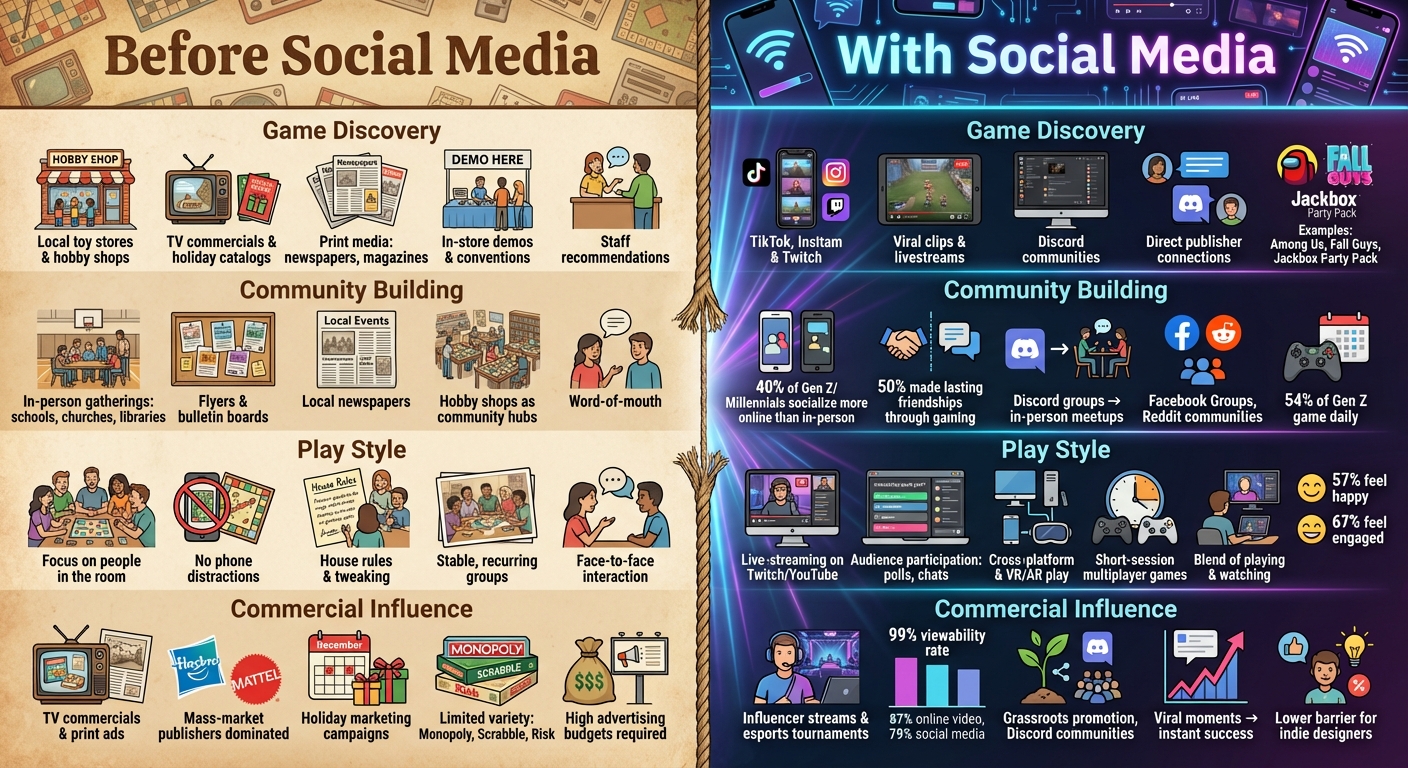
Game Nights Before vs After Social Media: A Comparison
1. Game Nights Before Social Media
Long before social media platforms like TikTok and Instagram reshaped how we discover and share games, game nights relied on simpler, more traditional methods for building communities and finding the next big thing.
Game Discovery
Discovering new games back then was an entirely offline experience. Families would head to local toy stores, big-box retailers like Target and Walmart, or specialty hobby shops to browse shelves filled with eye-catching box art. Staff recommendations and well-placed endcaps often guided purchases. TV commercials and holiday catalogs - especially around Thanksgiving and Christmas - played a huge role in shaping what American families thought a "proper" game night should include, often spotlighting the season’s must-have games.
Print media also had its moment in the spotlight. Newspapers, hobby magazines, and newsletters highlighted games worth checking out, while smaller publishers or independent designers had to hustle. They relied on conventions, in-store demos, and even community bulletin boards to spread the word. There were no viral posts to fast-track success back then - it was all about grassroots efforts and face-to-face connections.
Community Building
Game-night communities thrived through in-person gatherings. Schools, churches, libraries, and workplaces hosted regular events like youth-group game nights, church socials, or office clubs, giving people opportunities to connect and play together. Instead of Facebook event invites, these gatherings were advertised via flyers, bulletin boards, and local newspapers.
In cities with a strong tabletop gaming culture, hobby shops became the go-to spots for enthusiasts. These stores served as community hubs where regulars exchanged game recommendations, planned campaigns, and formed lasting groups. For a company like MINIFINITI, building a loyal following would have depended heavily on these local networks and word-of-mouth buzz to fill weekly game nights.
Play Style
Without the ever-present eyes of cameras or livestreams, game nights were all about the people in the room. Groups could take their time learning rules, tweaking them with house rules, and engaging in meaningful conversations. Cooperative games and role-playing campaigns thrived in these stable, recurring groups, where competition was more about friendly fun than performance for an audience.
Table etiquette was different, too. No one was glued to a phone or distracted by notifications. Instead, players focused on making eye contact, sharing inside jokes, and enjoying uninterrupted time together. Snacks were passed around, stories were told, and the experience was rooted in the joy of being present with others.
Commercial Influence
Mass-market publishers dominated the landscape, using TV commercials, print ads, and prime retail placement to drive sales. Holiday marketing campaigns created massive spikes in game purchases, with family-centric ads shaping what Americans thought a game night should look like. This top-down approach left smaller publishers at a disadvantage. Without the budget for major ad campaigns, they had to rely on conventions and hobby-store demos to gain traction.
As a result, many U.S. game nights revolved around a handful of popular titles like Monopoly, Scrabble, Trivial Pursuit, and Risk. Variety was limited compared to today’s diverse, niche-driven market. Without influencer endorsements or targeted online ads, a game’s success depended on either a hefty marketing budget or years of steady, grassroots word-of-mouth. It was a centralized, slower-moving model that stands in stark contrast to the fast-paced, digital culture of today.
2. Game Nights With Social Media
Social media has reshaped the way Americans discover, enjoy, and share their game night experiences. Platforms like TikTok, Instagram, and Discord have become central to how people find new games, connect with others, and build communities around shared interests.
Game Discovery
Platforms like TikTok, Instagram, and Twitch have turned into powerful tools for discovering new games, thanks to viral clips and easy sharing. Games such as Among Us, Fall Guys, Party Animals, and Goose Goose Duck gained massive popularity after being featured in short videos and livestreams. Similarly, Jackbox Party Pack thrives as players share their game sessions on Discord and YouTube, often inviting friends to join remotely. Publishers have also embraced platforms like Discord to build direct connections with their audiences, offering instant updates on new releases and exclusive deals. This direct interaction has made game discovery faster and more engaging, while also fostering tightly-knit online communities.
Community Building
Social media has turned gaming into a hub for forming and strengthening friendships. Nearly half of Gen Z and Millennials report making lasting connections through gaming, with 40% saying they socialize more online than in person. Platforms like Discord, in-game chats, and voice channels provide spaces where players can interact beyond the games themselves.
What starts online often extends into the real world. Discord groups dedicated to board games have sparked in-person meetups at cafés and game stores. Twitch-hosted game nights, featuring activities like quizzes or drawing games, have inspired offline gatherings as well. For Gen Z, gaming has become a daily activity, with 54% engaging with it regularly. It’s also a source of happiness and connection, with 57% saying it makes them feel happy and 67% feeling engaged through gaming.
Play Style
The way people play games has evolved, thanks to live-streaming platforms like Twitch and YouTube. These platforms encourage audience participation through polls, chats, and real-time quizzes, creating a blend of playing and watching that didn’t exist in traditional face-to-face game nights. Short-session multiplayer games, designed to be shared on social media, have become especially popular. Highlight reels on Instagram and TikTok help these games reach wider audiences and grow their communities organically.
Advances in technology have also changed how people connect during game nights. Cross-platform play and VR/AR integrations make it easy for groups to play together, no matter where they are. By 2025, AI began to adapt game characters to group dynamics, while virtual 3D spaces allowed players to hang out between games, hosting quizzes or even movie nights. The focus has shifted from individual competition to shared experiences, with team quests, seasonal challenges, and collaborative play strengthening social bonds.
Commercial Influence
Traditional TV ads have taken a backseat to influencer-hosted streams and esports-style tournaments as the go-to marketing tools for games. Gaming ads now boast a 99% viewability rate, outperforming online video (87%) and other social media ads (79%). Platforms integrate features like leaderboards, badges, and live events, often sponsored by creators. Social casinos even use win-sharing popups on Instagram and TikTok to keep players engaged.
This grassroots approach to promotion has leveled the playing field for smaller publishers and indie designers. Through Discord communities and partnerships with content creators, they can build loyal followings without needing massive advertising budgets. For example, MINIFINITI runs weekly game nights promoted via Instagram Live and Discord, creating buzz and drawing in players. This decentralized approach allows viral moments to catapult lesser-known games into mainstream success almost overnight. These trends highlight the growing influence of social media on game night culture, offering both opportunities and challenges for players and creators alike.
sbb-itb-7b84150
Pros and Cons
The evolution of game nights, influenced by the rise of social media, offers both opportunities and challenges.
In the past, traditional game nights were simple, low-cost gatherings that brought people together for face-to-face fun. These events fostered close, personal interactions and were accessible to nearly everyone, including older adults or those less familiar with technology. However, they had their limitations - geography and existing social circles often restricted participation, making it harder for newcomers or niche enthusiasts to join in.
Today, social media has transformed game nights into a more inclusive and far-reaching experience. Platforms like Discord, Facebook Groups, and Reddit connect players across vast distances, while hashtags and event pages make it easier for individuals to discover local meetups at places like board game cafés and community centers. Companies such as MINIFINITI have leveraged these tools to promote events and introduce creative tabletop games like "Red Tape", further enriching the gaming community.
But this digital expansion comes with its own set of downsides. Constant notifications and the pressure to post updates can interrupt genuine interaction, while streaming sessions often shift the focus from playing to performing for an online audience. Additionally, the constant online engagement can lead to burnout, with participants spending more time organizing or watching content than actually playing. The rise of commercialization - through sponsored streams, branded tournaments, and even modest cover charges ranging from $5 to $20 - has also introduced financial hurdles, turning some casual gatherings into more commercialized events. These shifts highlight the need to find a balance between digital convenience and the personal connection of traditional game nights.
To maintain this balance, organizers might consider strategies like keeping cover charges low and encouraging reduced phone use at the table. This hybrid approach blends the best of both worlds: the warmth and spontaneity of face-to-face interaction with the expansive reach and community-building potential of digital platforms. Together, these elements can shape a modern game night culture that feels both inclusive and authentic.
Conclusion
The way Americans experience game nights has undergone a major transformation, moving from the cozy, face-to-face gatherings of the past to events shaped by social media and digital platforms. In the pre-social-media era, game nights were all about personal interactions, with classics like Monopoly or Scrabble bringing friends together around a table, free from the pull of screens. Now, platforms like Twitch, TikTok, and Discord have expanded the experience, turning game nights into events that can stretch far beyond a single living room.
Looking ahead, game nights are set to combine the best of both worlds: the efficiency of digital tools with the warmth of in-person interaction. Hybrid formats are already gaining traction, bridging online and offline experiences. For example, niche online gaming communities are starting to organize meetups at board game cafés, where digital coordination leads to real-life bonding. Future possibilities include virtual 3D spaces for casual chats, team-based adventures that unfold over weeks, and matchmaking systems that pair players with similar styles of play. These trends reflect a growing focus on emotional connections rather than just flashy features - a shift some experts describe as moving from "features to feelings".
The challenge lies in finding the right balance between online engagement and authentic connection. Surveys show that gaming is highly rated for bringing happiness (57%) and engagement (67%) to players. To maintain these emotional benefits, it’s important to carve out moments free from devices and prioritize face-to-face interactions. This balance is central to the evolution of game night culture.
Companies like MINIFINITI are already finding ways to merge online and in-person play. As game nights continue to evolve, the most successful gatherings will be those that use digital tools to enhance - not replace - the joy of rolling dice and laughing together around a table. In the end, the best game nights will be the ones that use technology to strengthen real-world connections.
FAQs
How has social media changed the way people find games for game nights?
Social media has completely changed the way we find games for our game nights. With features like live-streaming, trending hashtags, and vibrant online communities, it’s now easier than ever to discover new and exciting options. These platforms let players share their favorite recommendations, watch gameplay unfold in real-time, and connect with others who share their love for games.
What’s even better is how this digital shift shines a light not just on the big-name games, but also on those hidden gems that might have gone unnoticed. By bringing people together and sparking conversations, social media has transformed the way we plan and enjoy game nights, making them more dynamic and inclusive than ever before.
What are the benefits and challenges of using social media to plan game nights?
Social media can be a game-changer when it comes to organizing game nights. It streamlines coordination, making it easier to pick dates, times, and even game themes with just a few clicks. Plus, it helps you connect with a broader audience - whether that's old friends, new players, or members of online communities. Using trending hashtags or group posts, you can quickly drum up interest and get people talking. And the fun doesn’t stop there - social platforms keep the energy alive by encouraging interaction before, during, and after the event.
That said, there are a few hurdles to navigate. Digital communication isn’t foolproof, and misunderstandings can pop up. Dependence on internet connectivity can also be risky - an outage at the wrong time could throw a wrench in your plans. Privacy is another concern; sharing event details publicly might invite unwanted attention. And let’s not forget, planning in-person interactions through online tools can sometimes feel a bit tricky. By keeping these challenges in mind, you can strike the right balance and set the stage for a memorable game night.
How can players enjoy game nights while keeping a balance between technology and face-to-face interaction?
To keep the focus on real connections during game nights while still embracing technology, consider setting up designated tech-free moments. This way, everyone can fully engage with the game and enjoy each other's company without distractions. If you want to share the fun online, wait until the game wraps up to post highlights or memories on social media. That way, the experience remains personal and immersive. You can also tap into online communities for ideas and tips to make your game nights even more enjoyable, blending the best of both worlds - technology and meaningful in-person interaction.