
Game Talk
Terracotta Dice from Indus Valley: A Closer Look
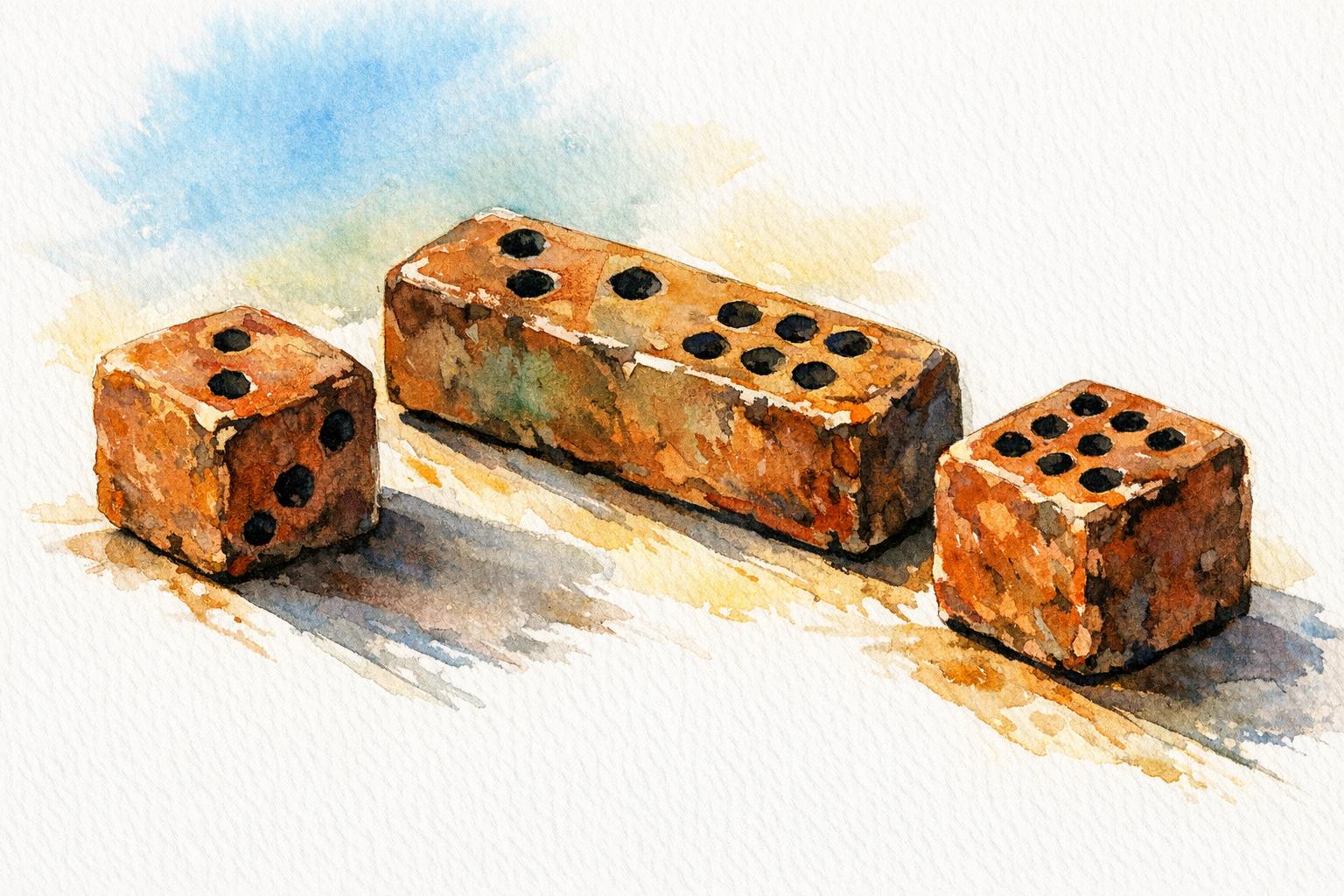
The terracotta dice from the Indus Valley Civilization, dating back over 4,000 years, reveal a society that valued recreation and social interaction. These dice, crafted from light red clay and marked with shallow pips, were not only used for games but also held ceremonial significance. Found in cities like Mohenjo-daro and Harappa, they showcase the advanced craftsmanship and numerical understanding of the era. Archaeologists have identified both non-modern and modern numbering systems, with some dice following the “sum of seven” arrangement still used today. The presence of dice in communal spaces suggests organized leisure activities, reflecting a peaceful and prosperous society. Their legacy continues to influence modern gaming culture, bridging ancient traditions with contemporary play.
Teracotta Dice from Indus Valley Civilization, Harappa 💯 #beyond5000
sbb-itb-7b84150
How Terracotta Dice Were Made
Indus Valley Terracotta Dice: Specifications and Numbering Systems
Materials and Production Methods
In the Indus Valley, artisans crafted dice from light red terracotta, a material both abundant and versatile in the region. The process began with shaping the clay into cubes by hand, after which the pieces were fired in kilns. This firing process hardened the clay, turning it into durable gaming tools that could withstand regular use. Despite the simplicity of their tools, these craftsmen managed to create dice with sharp edges and consistent dimensions. To improve their durability and give them a polished look, many dice were coated in a red or gray finish.
“In all cases they are made of pottery and are usually cubical… The clay of which they are made is light red in color, well baked, and sometimes coated with a red wash.”
- John Marshall, Former Director-General, Archaeological Survey of India
Terracotta was a practical choice not just for its availability but also for its adaptability. The material could serve a variety of purposes, from constructing buildings to creating intricate art. Once fired, the dice became sturdy enough for gameplay. Afterward, artisans marked the dice with shallow pips to define their numbering system.
Physical Features and Numbering Systems
The dice from the Indus Valley were typically small, with sides measuring between 1.2 and 1.5 inches. Some examples, like those found in Harappa, were even smaller at about 0.8 inches (2 cm), while specimens held in the Lahore Museum measured around 1.3 inches (3.2 cm). The number markings on these dice were created using shallow, circular pips, each roughly 0.1 inch in diameter.
Two distinct numbering systems have been identified on these dice. Many of them followed a non-modern arrangement, where 1 was opposite 2, 3 opposite 4, and 5 opposite 6. However, findings such as those noted by S.R. Rao suggest that most Harappan dice adhered to the modern configuration, where the numbers on opposite sides add up to seven (1 opposite 6, 2 opposite 5, and 3 opposite 4).
“These dice must have been thrown on a soft surface, such as a piece of cloth, or on dusty ground, for their edges show little sign of wear.”
- John Marshall, Former Director-General, Archaeological Survey of India
Interestingly, the edges of the dice show minimal signs of wear, hinting that players likely tossed them onto softer surfaces like cloth or dusty ground. This careful handling helped preserve the finely crafted edges and ensured the dice remained in good condition for extended use.
Dice in Indus Valley Daily Life
Gaming and Recreation
Dice games were a popular pastime in the Indus Valley, with evidence of their widespread use found across major cities like Mohenjo-daro, Harappa, and Lothal. The sheer number of dice unearthed at these sites highlights how deeply gaming was embedded in daily life.
“That dicing was a common game at Mohenjo-daro is proved by the number of pieces that have been found.”
- John Marshall, Archaeologist
People played dice games in various settings - courtyards, rooftops, and even designated “gaming parlors”. Wealthy families often enjoyed private games in their courtyards, while friends gathered on rooftops for social gaming sessions in the evenings. These games weren’t just for adults; children also participated, using dice and counters for board games in communal spaces.
Dice were often used alongside game boards, with surviving brick tablets and square models serving as playing surfaces. Some historians suggest that the Indus people might have played games similar to the “Royal Game of Ur”, a well-known game from ancient Mesopotamia. This connection hints at shared cultural practices facilitated by trade routes. Beyond recreation, these games also paved the way for dice to take on ceremonial and symbolic roles.
Religious and Symbolic Meanings
Dice in the Indus Valley weren’t just tools for fun - they also held spiritual and ritual significance. While terracotta dice were crafted for casual play, some with unique markings suggest they were designed for specific rituals. For instance, a terracotta die found at a religious site featured patterns that matched those on nearby terracotta tablets, indicating a likely ceremonial purpose.
This connection between dice and spirituality persisted even after the Indus Valley era. Ancient Indian texts like the Rigveda and the Mahabharata reference dice in contexts that go beyond entertainment. In the Mahabharata, a dramatic dice game leads to the loss of an entire kingdom, showcasing the social and political weight dice could carry. Even today, in some regions, dice (sogtha) are offered to deities during rituals and celebrations, reflecting traditions rooted in ancient practices.
“A game involving the use of dice was very popular in the Harappan and later times, especially in the time of the Mahabharata war.”
- S.R. Rao, Archaeologist
The role of dice in Indus Valley society has sparked debates among archaeologists. Some argue that play-related artifacts should not be dismissed as mere toys but instead viewed as symbols of ritual importance or even markers of social status. The organized distribution of dice throughout Mohenjo-daro suggests they were more than just scattered playthings - they were integral to both the social and ceremonial life of the community.
Ancient Dice in Other Civilizations
Dice in Mesopotamia and Egypt
While the Indus Valley excelled in crafting terracotta dice, other ancient civilizations explored different materials and gaming traditions. In Egypt, early games like Senet relied on flat, two-sided throwsticks before transitioning to dice made from tougher materials like serpentinite during the Ptolemaic period. Meanwhile, Mesopotamian and Iranian sites, such as the Burnt City, revealed dice carved from bone or soapstone.
Dice designs varied widely across regions. Indus Valley dice stood out for their precision, with archaeologist John Marshall describing them as “exceedingly well made with well-defined edges”. In contrast, Egyptians eventually created 20-sided dice featuring Greek letters or Roman numerals, while Mesopotamian dice were mostly cubical. Interestingly, about 90% of ancient dice adhered to either the “Sevens” or “Primes” configuration, despite the 15 possible mathematical arrangements. These regional differences in materials and design highlight the innovative approaches that shaped gaming practices across civilizations.
Trade and Shared Gaming Practices
The diversity in dice-making techniques played a key role in fostering cultural and technological exchanges through ancient trade networks. Evidence suggests active trade between the Indus Valley, Mesopotamia, and Egypt around 2600 BCE. Archaeologists have uncovered board game designs that hint at interactions among these civilizations during this time. For instance, similar gaming sets found at sites like the Burnt City in Iran and various Indus Valley locations point to shared traditions along established trade routes.
One fascinating detail is the custom of coloring the “four” pips red on Asian-style dice, a practice thought to have originated in India. This stylistic choice likely spread westward through maritime and overland trade routes that connected the Indus Valley with Sumerian cities. The rapid adoption of cubic dice across the ancient world during the third millennium BCE further underscores how gaming culture traveled alongside goods and ideas.
From Ancient Dice to Modern Board Games
MINIFINITI’s Approach to Tabletop Games
Modern tabletop games owe much to the rich history of ancient gaming traditions. Take the cubical dice unearthed in Harappa and Mohenjo-daro, dating back to 2500–1900 BCE - this design remains a cornerstone of gaming even today. MINIFINITI’s game, Red Tape, cleverly combines humor and strategy, echoing the communal spirit of ancient gaming parlors. These spaces weren’t just about play; they were hubs for connection, much like how MINIFINITI aims to create shared experiences that bring people together.
The materials may have changed - from terracotta, ivory, and bone to modern plastics - but the tactile essence of gaming remains intact. MINIFINITI’s weekly game nights reflect this continuity, reminiscent of the dedicated gaming areas found in ancient cities. These spaces, identified through archaeological studies, served as precursors to today’s board game cafes and organized play events. This seamless blend of tradition and modernity ensures that the heritage of gaming continues to thrive in contemporary settings.
Keeping Ancient Gaming Traditions Alive
Archaeological discoveries continue to shed light on how gaming has evolved over centuries, offering insights that influence modern design. For example, in 2025, researcher Pankaj V. Bhosale published a study on carved graffiti games found on the walls of Khanderi Fort in Alibag. These games, including Mancala and “Goats and Tigers”, were used by Maratha infantry soldiers to sharpen their strategic thinking and prepare for warfare.
In another fascinating find, an Archaeological Survey of India team led by Ananya Chakraborty and Abhijit S. Ambekar uncovered 64 dice during a 2022 excavation in Vadnagar, Gujarat. These artifacts, spanning from the 4th to the 19th century, highlight the role of recreational activities in stable and prosperous societies. As Chakraborty explained:
“Such recreational activities take place in a society when it is financially and militarily stable. Thus, one can deduce that the society may have experienced a stable and peaceful period”.
Modern game designers also draw inspiration from ancient numbering systems to enhance the balance and probability in dice games. For instance, while Indus Valley dice featured a unique arrangement - placing 1 opposite 2, 3 opposite 4, and 5 opposite 6 - today’s standard dice follow the “sum of seven” rule, where opposite sides always add up to seven. By studying these ancient mechanics, contemporary creators gain a deeper appreciation for how different cultures approached chance and strategy, enriching today’s tabletop games with layers of historical significance.
Conclusion: What Indus Valley Dice Tell Us
The terracotta dice unearthed at Indus Valley sites offer more than a glimpse into ancient entertainment - they reveal the depth of a civilization that thrived on structure, innovation, and community. At Mohenjo-daro, nearly 10% of recovered artifacts are linked to play, emphasizing how integral gaming was to life between 2600 BCE and 1900 BCE.
These dice, with their precise dimensions of 1.2–1.5 inches per side and shallow 0.1-inch holes, reflect the meticulous craftsmanship of the era. Their production aligns with the Indus Valley’s broader achievements in standardized weights and kiln-fired ceramics. The numbering systems - ranging from the unique 1-opposite-2 arrangement to the sum-of-seven pattern found at Lothal - highlight a society skilled in numerical understanding and mathematical precision.
But the significance of these dice goes beyond technical details. They shed light on the social fabric of the Indus Valley. Archaeologist Elke Rogersdotter from the University of Gothenburg notes:
“In a way, it indicates how prosperous and peaceful that society was”.
The clustered locations of these artifacts suggest the presence of communal spaces for recreation, pointing to a society that valued leisure and social interaction.
Without the dominance of grand palaces or temples in their urban centers, these gaming objects provide a unique lens into the priorities of the Indus Valley people. They reveal a culture that celebrated connection, strategic thinking, and shared experiences - qualities that continue to shape how we enjoy games today. The legacy of these ancient dice lives on, reflected in the timeless human tradition of coming together through play.
FAQs
What were terracotta dice used for in the Indus Valley Civilization?
Terracotta dice from the Indus Valley Civilization served as tools for gaming and leisure. These dice, with their precise cubical shapes and marked sides, were clearly designed to create random results, making them ideal for board games or similar activities.
Evidence suggests these dice were often rolled on soft surfaces like dust or fabric, which aligns with gaming habits of ancient times. Their presence underscores how games played a role in promoting social connections and providing entertainment in this highly developed society.
What do the numbers on Indus Valley dice reveal about their understanding of math?
The dice from the Indus Valley civilization reveal their impressive understanding of basic math, especially the concept of balancing opposite sides. A common feature of these ancient dice is that the numbers on opposite faces add up to seven - for example, 1 is opposite 6, 2 is opposite 5, and 3 is opposite 4. This deliberate symmetry showcases their thoughtful design and grasp of numerical relationships.
This design choice hints at a broader mathematical knowledge within the Indus Valley civilization, encompassing arithmetic, symmetry, and proportionality. Their reliance on standardized measurements and geometric patterns further emphasizes how deeply math was woven into their daily lives, shaping not just games but also trade practices and construction techniques.
What impact did ancient dice from the Indus Valley have on modern games?
Ancient dice from the Indus Valley Civilization, dating back to roughly 2500–1900 BCE, hold a fascinating place in the history of gaming. Made from terracotta, these early dice introduced the concepts of chance and strategy, with markings that closely resemble those on modern dice - like the familiar rule where opposite sides add up to seven. But these dice weren’t just about fun and games. They were tools for social bonding and sharpening strategic thinking.
Their influence is still felt today in tabletop and casino games, where the element of chance continues to be a key feature. By bringing people together through play and encouraging mental engagement, these ancient dice set the stage for much of what shapes gaming culture today.