
Thematic Games for All Ages: A Comparison
Board games are back in a big way, appealing to players of all ages with diverse themes and mechanics. From whimsical family games to deep strategic adventures, there’s something for everyone. Here’s a quick overview of 10 popular thematic games and who they’re best suited for:
- Sleeping Queens: Fun for kids (ages 3–8), with simple math and charming characters. Great for quick family play.
- Zingo: Perfect for preschoolers (ages 4+), combining matching and word recognition. Fast-paced and educational.
- Story Cubes: Encourages storytelling for all ages (4+), but relies on players’ creativity.
- Sushi Go!: A light, card-drafting game for kids and adults (6+). Quick, fun, and easy to learn.
- Catan: A trading and resource game for older kids and adults (10+). Engages players with negotiation and strategy.
- Azul: A tile-placement game for ages 8+, featuring colorful patterns and puzzle-like gameplay.
- Pandemic Legacy: Season 1: A cooperative campaign for teens and adults (13+). Offers evolving gameplay and a gripping narrative.
- Gloomhaven: Jaws of the Lion: A tactical, story-driven game for dedicated players (14+). Combines strategy and adventure.
- Terraforming Mars: A resource-heavy game for players 12+, focusing on science-fiction themes and long-term planning.
- Red Tape: A satirical political game for teens and adults (14+). Competitive and humor-driven.
Each game offers unique experiences tailored to different age groups and interests. Whether you’re looking for something light and family-friendly or a deep, strategy-heavy challenge, this list has you covered.
Quick Comparison
| Game | Best For | Age Range | Playtime | Complexity (1–5) | Price Range |
|---|---|---|---|---|---|
| Sleeping Queens | Families with young kids | 3–8 | 10–20 minutes | 1.06 | ~$14.99 |
| Zingo | Preschoolers | 4+ | 5–15 minutes | 1.03 | $20.00–$24.00 |
| Story Cubes | Creative storytelling | 4+ | 15–20 minutes | 1.11 | $2.59–$14.60 |
| Sushi Go! | Light card drafting | 6+ | 15 minutes | 1.16 | $6.29–$11.99 |
| Catan | Trading and strategy | 10+ | 60–120 minutes | 2.29 | ~$48.99 |
| Azul | Puzzle and patterns | 8+ | 30–45 minutes | 1.77 | ~$39.99 |
| Pandemic Legacy: S1 | Cooperative campaigns | 13+ | 45–60 minutes/session | 2.83 | $30.00–$89.99 |
| Gloomhaven: Jaws of Lion | Tactical storytelling | 14+ | 30–120 minutes | 3.64 | $42.00–$59.99 |
| Terraforming Mars | Sci-fi and strategy | 12+ | 120+ minutes | 3.27 | $50.00–$79.99 |
| Red Tape | Political satire | 14+ | 30–45 minutes | 2.5 (approx.) | ~$39.99 |
This table simplifies the key aspects of each game, helping you quickly decide which one fits your group’s preferences and age range.
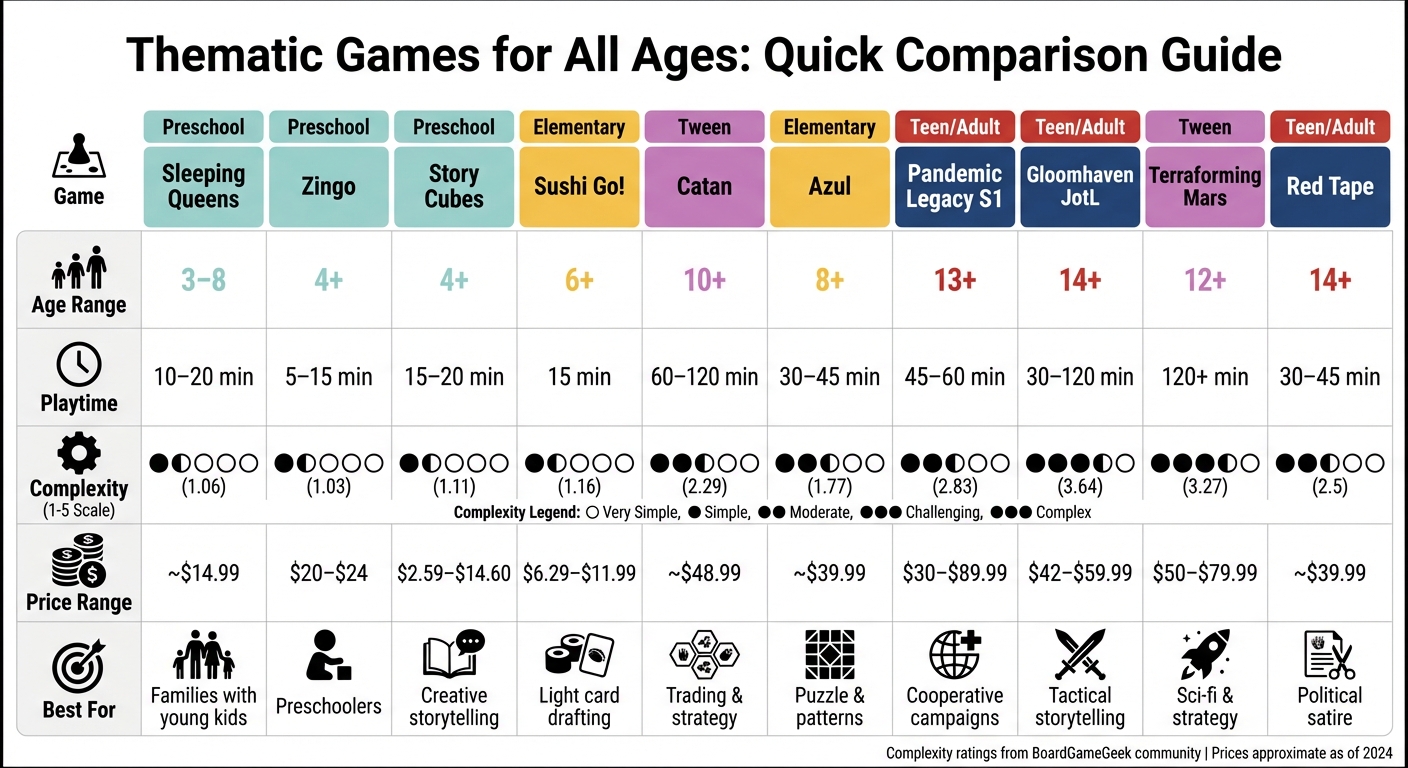
Board Game Comparison Chart: Age Range, Playtime, Complexity & Price
1. Sleeping Queens
Age Suitability
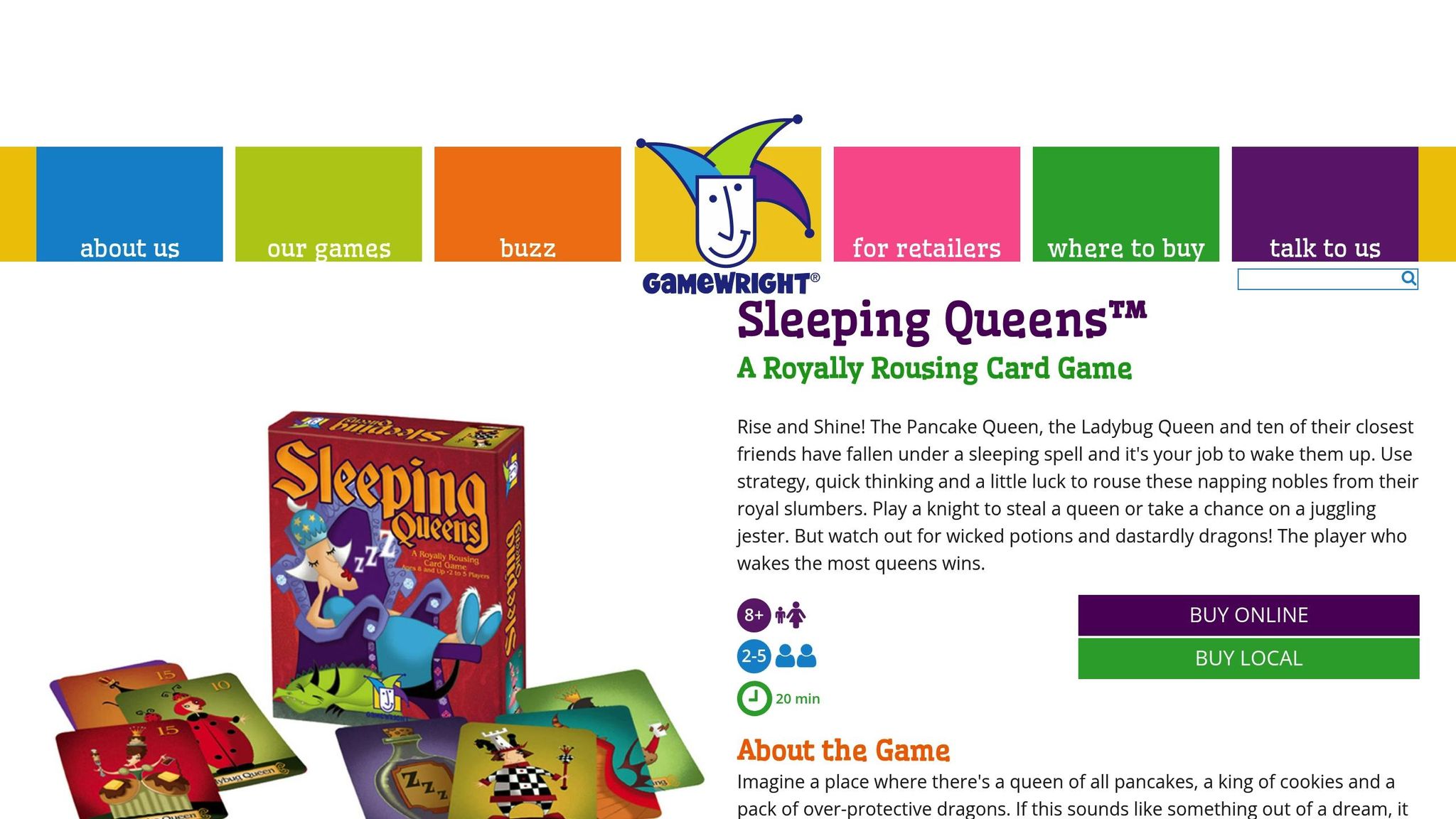
Sleeping Queens is officially recommended for ages 8 and up, but many families adapt it for younger players, even as young as 3. Interestingly, the game was created by six-year-old Miranda Evarts, which explains its intuitive and simple mechanics. For younger children (ages 3–5), parents can simplify gameplay by showing number cards to assist with basic math skills, making it both fun and educational. Families with young kids often praise this aspect, as it keeps the game engaging while teaching valuable skills.
Theme Intensity
The game’s whimsical theme is packed with charm. Players encounter quirky characters like the Pancake Queen, the Ladybug Queen, and the King of Cookies, creating a delightful, storybook-like experience. Each character adds a unique twist to the game: for instance, the Rose Queen lets players wake an additional queen immediately, while the Cat and Dog Queens can’t coexist in the same hand. These playful details add a layer of fun that appeals to kids and adults alike.
Complexity Rating
Sleeping Queens stands out for its simplicity. On BoardGameGeek, it has a low complexity rating of 1.06/5, making it easy to pick up and play. Each turn involves just one action - whether it’s waking a queen, stealing one, or using a special card - keeping the gameplay straightforward. The game strikes a balance between luck (60%) and strategy (40%), with rounds typically lasting 10–20 minutes, making it perfect for quick family sessions.
Player Count
The game accommodates 2–5 players, but it truly shines with groups of 3–5. The win conditions adjust based on the number of players: in smaller games (2–3 players), the goal is to collect 5 queens or 50 points, while in larger games (4–5 players), it’s 4 queens or 40 points. This scalability ensures that the game remains engaging regardless of the group size.
Accessibility Pros/Cons
Pros:
Sleeping Queens features an icon-based design, which makes it accessible to non-readers and players who speak different languages. It also incorporates basic arithmetic in a way that feels natural and enjoyable. As We Play 2 Learn puts it:
It is a fun game that has educational value (addition); as opposed to educational games that try to be fun, but don't usually achieve it.
On top of that, the game is budget-friendly at around $14.99 and often comes in a sturdy metal tin, making it great for travel.
Cons:
While the game’s strategic elements are enough to keep older players interested, adults playing without kids might find it a bit too simple. The heavy reliance on luck (60%) ensures younger players can compete fairly, but it might not hold the attention of more experienced gamers over time.
2. Zingo
Age Suitability
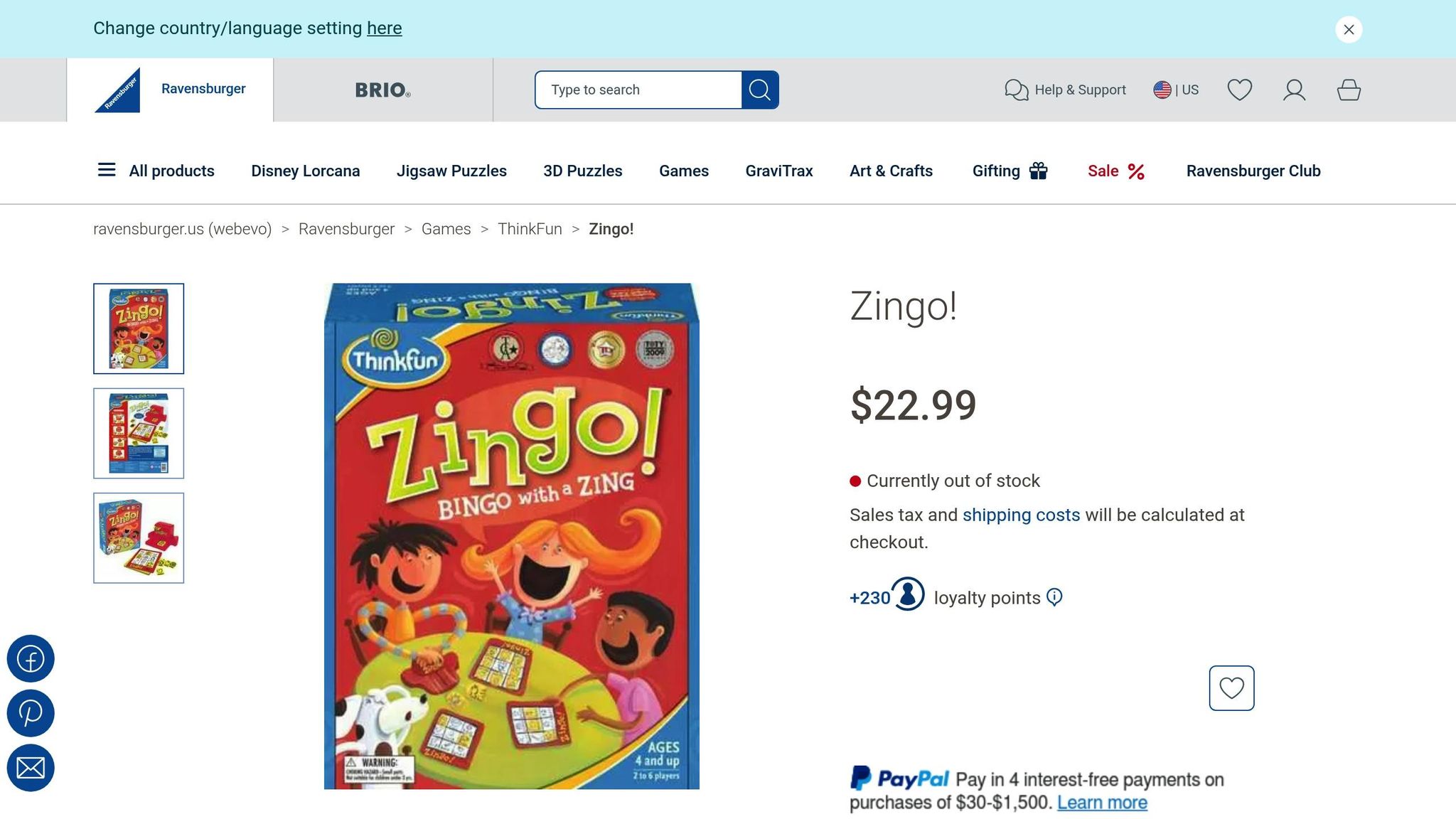
Zingo is designed for kids aged 4 and up, though it can also work for younger children (ages 2–3) with adult guidance. The game combines clear images with matching words, making it ideal for pre-readers and early readers. There are also specialized versions like Zingo 1-2-3, which focuses on number recognition, and Zingo Sight Words, aimed at practicing high-frequency words. These variations help tailor the game to different developmental stages.
Theme Intensity
Zingo keeps things simple with its educational focus rather than a deep storyline. Players match everyday objects like cats, stars, and houses, creating a fun and approachable environment for younger players. One of the game’s standout features is the "Zinger" tile dispenser, which adds a hands-on element to the experience. Linda Wrobel from Engaged Family Gaming highlights its appeal:
"Zingo is a great game for young players... The random distribution of the tiles makes it anyone's game, and the Zinger is a fun way to distribute the tiles."
Complexity Rating
Zingo scores a 1.03/5 on BoardGameGeek's complexity scale, making it one of the easiest games to pick up and play. It’s essentially a fast-paced twist on Bingo, where players need to quickly spot and claim tiles, shifting the focus from pure luck to observation and speed. Games are short, typically lasting 5–15 minutes, and the double-sided cards offer two difficulty levels: the Green side for beginners with fewer common images, and the Red side for a slightly tougher challenge with more shared images.
Player Count
The game accommodates 2–6 players (and can expand to 8) with its 72 double-sided tiles and 6 cards. Variations like Mini-Zingo add even more flexibility, making it suitable for different group sizes.
Accessibility Pros/Cons
Pros:
- Strong visual elements make it great for non-readers and language learners.
- Affordable, typically priced between $20.00 and $24.00.
- Durable plastic tiles can handle lots of use.
- Recognized with awards like the 2010 Oppenheim Toy Portfolio Gold Seal and the TOTY 2015 award, showcasing its educational impact.
Cons:
- The fast-paced "first to call" mechanic might be tough for shy kids or those who process information more slowly.
- Ties over tiles can lead to occasional conflicts.
- Small tiles are easy to lose.
- Its simplicity may not appeal to adults playing without kids.
Zingo’s focus on visual learning and quick interaction makes it a solid choice for young players, offering a balance of fun and skill-building.
3. Story Cubes
Age Suitability
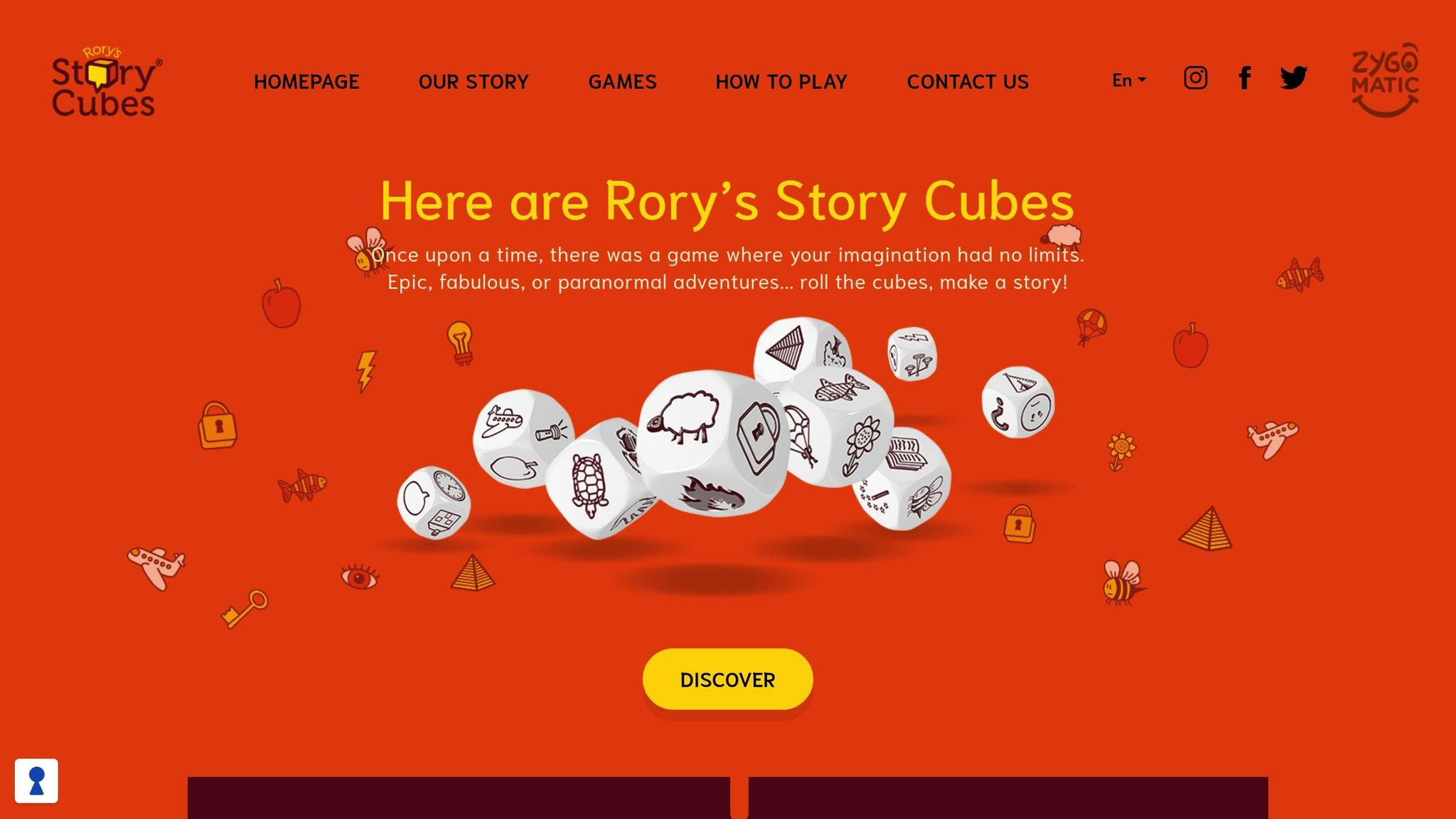
Story Cubes can entertain a wide range of ages, though how players interact with it changes as they grow. While it's officially recommended for ages 8 and up, many reviewers have found success using it with children as young as 4 years old. Younger kids (ages 4–7) often interpret the images literally - seeing a smiley face simply as a face - while older players use the same symbols to spark abstract ideas, emotions, or memories. The game includes nine cubes with 54 images, offering over 10 million possible combinations. Plus, themed sets like Harry Potter, Batman, Star Wars, and others such as "Actions" or "Voyages" add even more variety to the gameplay. This adaptability allows the game to grow with its players, making it a tool for creative storytelling at any age.
Theme Intensity
The beauty of Story Cubes lies in its open-ended nature. Players create the game's theme themselves, interpreting icons like jets or magnifying glasses however they choose - whether as literal objects, abstract ideas, or metaphors. This flexibility makes it equally suited for simple bedtime stories with kids or more complex creative writing exercises for adults. A popular storytelling method, the "3-3-3" approach, encourages structuring narratives into three parts: setup, development, and conclusion. Feeling stuck? Familiar contexts or relatable ideas can help spark creativity.
Complexity Rating
Story Cubes boasts a simplicity that makes it approachable for nearly anyone. With a complexity rating of just 1.11 out of 5 on BoardGameGeek, the game is incredibly easy to learn. There’s only one rule: there are no wrong answers. The challenge lies in letting your imagination run wild, rather than mastering any mechanics. As Cyrus, Editor in Chief at Father Geek, puts it:
"Rory's Story Cubes provides the players an opportunity to create a story and that's where it stops. The majority of the responsibility to provide the fun and game rules is placed on the shoulders of the individuals playing the game."
Sessions typically last 15–20 minutes, though storytelling can stretch longer depending on how detailed players decide to get.
Player Count
This game is incredibly flexible when it comes to the number of participants. It works for solo play as well as large groups of 12 or more. Solo players often use it to spark creativity or overcome writer’s block, while groups can collaborate to build a shared story or compete to tell the funniest or most dramatic tale. Thanks to its language-independent design, Story Cubes is accessible to non-readers and can even be enjoyed in multilingual settings.
Accessibility Pros/Cons
Pros:
- Compact and pocket-sized, making it perfect for travel or quick gameplay.
- Affordable, with prices ranging from $2.59 to $14.60.
- Recognized as an educational tool, having won awards like the 2012 UK Games Expo Best Family Game and the Parents' Choice Gold Award. It’s excellent for building vocabulary, listening skills, and confidence in storytelling.
- Durable cubes with embossed images that hold up to frequent use.
Cons:
- The game relies heavily on players’ willingness to be creative and social. Without engagement, it can feel lackluster.
- Some serious board gamers criticize it for lacking traditional strategy or mechanics, as the enjoyment depends entirely on the players’ imagination.
- Younger kids may need guidance to think beyond literal interpretations of the icons, especially at first.
Story Cubes has earned a 6.2 out of 10 rating from over 4,000 users on BoardGameGeek and ranks #348 in Party Games and #1,305 in Family Games.
4. Sushi Go
Age Suitability
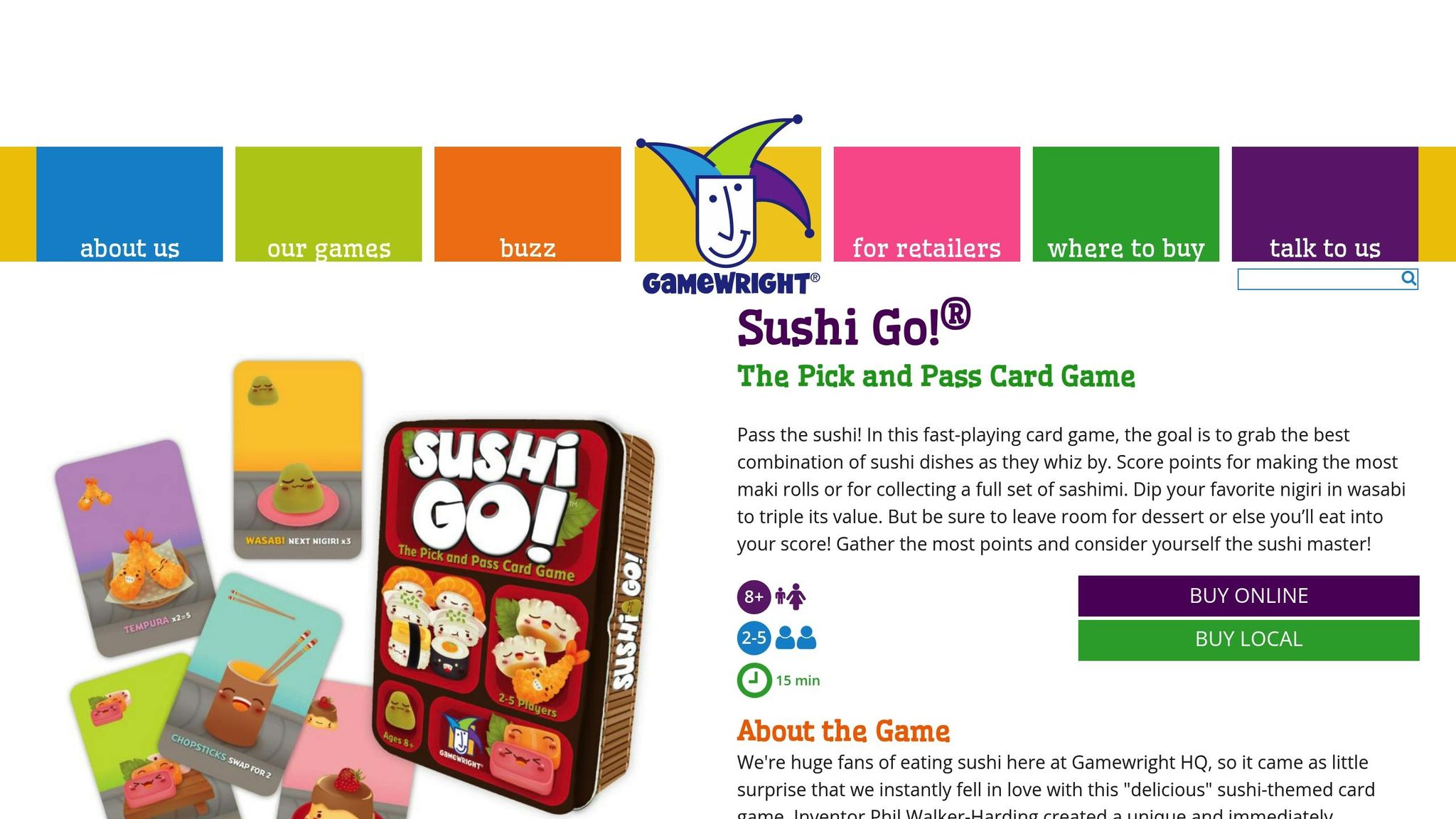
Sushi Go is officially recommended for players aged 8 and up, though kids as young as 6 can enjoy the game with some adult guidance. The adorable Chibi-style sushi artwork appeals to younger players, while its quirky charm still captures the interest of adults. While the content is light and playful, the game does require some strategic thinking and understanding of scoring, which may be challenging for very young players. Beginners can simplify the gameplay by removing the "pudding" cards during the first round to make it more approachable.
Theme Intensity
The sushi restaurant theme is cheerful and fun. Players draft cards to create sushi "recipes", mimicking the experience of picking dishes from a conveyor belt. The game fosters social interaction, with players often shouting "Sushi… Go!" at the start of each round, adding energy and excitement to the experience. As game reviewer Meric Moir from usa.gametheory.ca puts it:
It's a competitive game with low stakes that doesn't take a lot of focus and isn't very punishing.
Complexity Rating
Sushi Go is designed to be simple and accessible, earning a low complexity score of 1.16 out of 5 on BoardGameGeek. It distills the drafting mechanics of more complex games like 7 Wonders into a quick, 15-minute experience. The "pick and pass" gameplay is easy to grasp, with players typically understanding the flow after the first round. Each round lasts about 4–5 minutes, and scoring rules are printed directly on the cards, reducing the need to memorize point systems. For added convenience, a piece of paper or a scoring app can help track points across the three rounds. Its simplicity makes it a great fit for a wide range of players and group sizes.
Player Count
The original Sushi Go supports 2 to 5 players, making it perfect for family game nights or small gatherings. For larger groups, Sushi Go Party! expands the player count to 8 and introduces customizable menus with over 20 different sushi types. However, this expanded version comes with a higher price tag, typically around $29.99, compared to the original's more affordable price range of $6.29 to $11.99.
Accessibility Pros and Cons
Pros:
- Clear Design: The cards feature distinct artwork and large text (around 18-point font), making them easier to read for players with visual impairments.
- Minimal Reading Required: Icons and color coding allow players to rely less on reading, making it accessible to a broader audience.
- Compact and Travel-friendly: Packaged in a small metal tin, it's easy to take on the go.
- Award Recognition: Sushi Go has received accolades from the UK Games Expo (2015) and Boardgames Australia (2015).
- Inclusive Features: The game incorporates 29 specific elements aimed at supporting diverse player needs.
Cons:
- Physical Challenges: Passing cards continuously may be difficult for players with limited hand or arm mobility.
- Math Skills Needed: Scoring involves basic addition and recognizing multiples, which might require assistance for younger players or those with cognitive difficulties.
- Card Quality: Some players have noted that the card stock feels thinner compared to higher-end games, potentially affecting durability.
With over 96,000 users on BoardGameGeek and an average rating of 7.0 out of 10, Sushi Go has earned its place as a beloved "snack-sized" game and an excellent introduction to card-drafting mechanics.
5. Catan

Age Suitability
Catan offers a strategic, resource-management experience that resonates with older players. Designed for ages 10 and up, the base game requires strategic thinking and the patience to enjoy sessions lasting between 60 and 120 minutes. Often referred to as a "gateway game", it serves as a stepping stone for those moving from casual family games to more strategic ones. While younger players around 7 years old might grasp the basics, it’s typically around age 10 that players develop the attention span and strategic mindset to fully engage.
For younger audiences, Catan Junior provides a simplified version aimed at ages 6–9. This version features shorter gameplay (30–40 minutes) and replaces the traditional "Robber" mechanic with the "Ghost Captain", who blocks production without stealing resources.
Theme Intensity
Catan's theme revolves around discovery and settlement, with players gathering resources like lumber, brick, grain, wool, and ore to build roads and settlements on a fictional island. As the Financial Times put it:
Settlers has its own elegant economy, in which the supply and demand for five different commodities are determined by tactics, luck and the stage of the game.
While the game focuses on resource management and negotiation rather than an elaborate storyline, this simplicity allows for a moderately challenging strategic experience without overwhelming players.
Complexity Rating
On BoardGameGeek, Catan scores a complexity rating of 2.29 out of 5, placing it in the "Medium Light" category. Setting up the game takes about 15 minutes, and learning the rules can take up to 2 hours, although the Family Edition simplifies the process for beginners.
The game’s strategic depth comes from its dice probabilities. Certain numbers statistically favor resource production, and the number tokens include "pips" (dots) to highlight the likelihood of each roll. High-probability numbers are even marked in red to guide players.
Player Count
The base game accommodates 3–4 players, with an optional expansion allowing for 5–6 players. While the game is less engaging with only two players, it thrives in larger groups where trading and negotiation take center stage. At approximately $48.99, Catan offers extensive replayability and value for its price.
Accessibility Pros and Cons
Pros:
- Stable Board Design: A jigsaw-style frame keeps the hexagonal tiles in place, preventing disruptions if the table is bumped.
- Straightforward Trading: The limited number of resources (wood, sheep, grain, brick, ore) keeps trading simple, even for players with communication challenges.
- Beginner-Friendly Features: Newer editions include a "Starting Map" to streamline the setup process for first-time players.
- No Player Elimination: Unlike games like Monopoly or Risk, all players remain active until someone reaches 10 victory points.
Cons:
- Color Blindness Challenges: The red and orange player pieces, along with certain terrain colors, can be difficult to distinguish for players with color vision deficiencies.
- High Cognitive Demand: Players must juggle multiple tasks, including tracking opponents' resources, evaluating trade values, and managing hand limits.
- Frustrating Mechanics: The "Robber" mechanic and the tendency for players to gang up on the leader (known as "king unmaking") can feel unfair. As one critique describes:
Catan is a game that is borderline cruel in the PvP model it presents to players, and it hits all my emotional buttons at the same time like a mischievous kid in an elevator.
With over 45 million copies sold globally and translations into more than 40 languages, Catan has cemented its status as a modern classic. Its 7.10 out of 10 rating on BoardGameGeek reflects its widespread appeal, as well as the mixed feelings some players have about its competitive mechanics.
6. Azul
Age Suitability
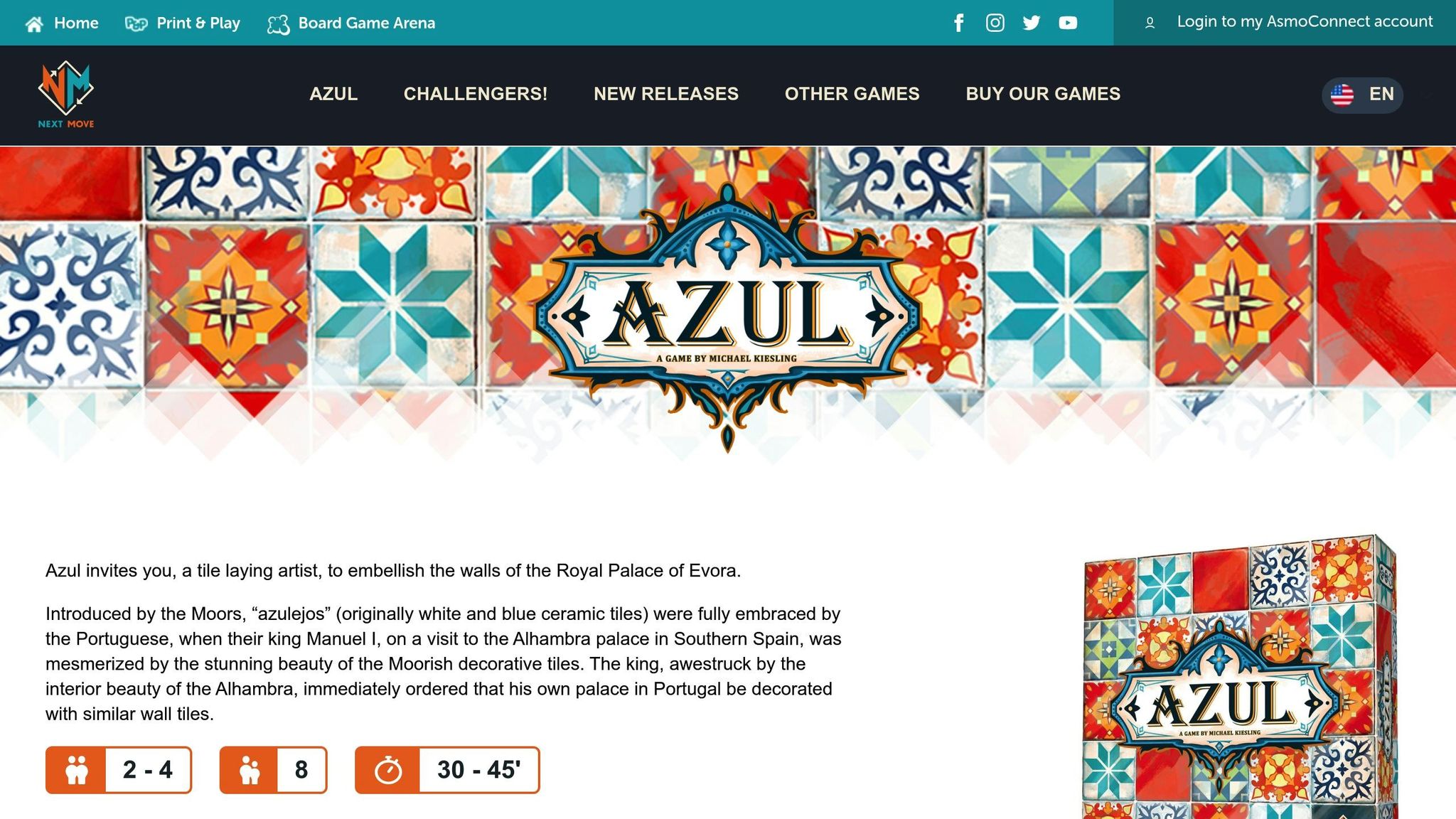
Azul is designed for players aged 8 and up, though younger kids might still enjoy the color-matching aspect. The game's deeper strategy tends to click more with players around age 10 and older. A typical session lasts about 30–45 minutes, making it ideal for families or groups who prefer shorter games. The double-sided player boards cater to different skill levels: the "Standard" side has pre-printed patterns for beginners, while the "Expert" side allows free tile placement for more experienced players.
Theme Intensity
The theme of Azul is abstract and low-key, focusing on pattern-building rather than storytelling. As Keith Law from Paste Magazine put it:
The theme doesn't really tie into or matter for the game play, but the artwork boosts its visual appeal.
This emphasis on visual and spatial puzzles ensures the game appeals to a wide range of players, regardless of their interest in thematic elements.
Complexity Rating
On BoardGameGeek, Azul has a complexity rating of 1.77 out of 5. The rules are simple and can be explained in under five minutes, with setup taking just about three minutes. While the main mechanic - tile drafting - is easy to grasp, competitive play introduces layers of strategy, like blocking opponents and planning ahead. Emily VanDerWerff from Vox described it well:
Absolutely every aspect of playing the game is at once instantly understandable and agreeably fun – right down to how those tiles feel in your hand.
This mix of simplicity and strategy makes Azul a great choice for quick, engaging sessions with small groups.
Player Count
Azul works well with 2–4 players. The setup adjusts based on the number of participants: two players use five factory displays, three players use seven, and four players use nine.
Accessibility Pros and Cons
Azul’s design offers some standout accessibility features, but there are also a few drawbacks to consider.
Pros:
- Tactile Appeal: The 100 resin tiles feel satisfying to handle, enhancing the overall experience.
- No Language Barriers: Since there’s no in-game text, the game is easy to learn and play in any language.
- Colorblind-Friendly Elements: Many tiles include unique patterns alongside their colors, making it easier for colorblind players to distinguish them. However, the red and blue tiles lack these patterns, which can pose challenges.
Cons:
- Component Stability: Scoring markers and tiles can shift easily on the flat player boards. The Azul: Crystal Mosaic expansion offers plastic overlays to address this issue.
- Competitive Friction: The game allows moves that can force opponents to take tiles they don’t want, leading to steep point penalties.
Azul balances accessibility and strategic depth, making it a hit among both casual and competitive players. However, its minor drawbacks are worth considering, especially for those who value component stability or prefer less confrontational gameplay.
7. Pandemic Legacy: Season 1

Age Suitability
Pandemic Legacy: Season 1 is recommended for players aged 13 and up, primarily due to its intricate storyline involving human-engineered viruses and global conspiracies. The game’s unique feature of permanently altering components during play adds a level of emotional depth that may not resonate with younger audiences. For groups with mixed ages, keeping card hands hidden can prevent dominant players from steering the game too heavily. The campaign spans 12–24 sessions, each lasting around 45–60 minutes, with most groups completing it in 16–18 sessions. This structure creates a deeply engaging experience that evolves with every session.
Theme Intensity
This cooperative campaign immerses players in a high-stakes battle against global pandemics. Each player takes on the role of a specialist, navigating a year-long narrative packed with surprises, mysteries, and impactful decisions. The legacy mechanics - where choices permanently alter the game through board writing, sticker application, or card destruction - add a layer of tension and excitement. Spencer Patterson of Geeks Under Grace describes the experience perfectly:
The beauty of a legacy game is that each gaming experience feels like a once-in-a-lifetime experience.
Pandemic Legacy: Season 1 holds the top spot for thematic games and ranks #3 overall on BoardGameGeek, boasting an impressive average rating of 8.5/10 from over 57,000 players. While the permanent changes make the gameplay unforgettable, they also mean the game can’t be replayed once the campaign concludes.
Complexity Rating
Pandemic Legacy: Season 1 has a complexity rating of 2.83 out of 5 on BoardGameGeek, making it more intricate than the original Pandemic, which is rated at 2.39. The game eases players into the new mechanics through sealed dossiers and the Legacy Deck, allowing for a gradual learning process. It’s a good idea for new players to play two warm-up games using the base rules to familiarize themselves with the core mechanics. The game also features a self-balancing difficulty system: after a loss, two Event cards are added (up to a maximum of 10), while a win removes two cards (down to 0), keeping the challenge level fair. This balance, combined with evolving mechanics, ensures a rewarding experience for players of varying skill levels.
Player Count
The game accommodates 2 to 4 players, with flexibility for players to join, leave, or swap out as the campaign progresses. While designed for group play, it’s also possible to play solo by managing multiple characters. However, the best experience comes from a consistent group that’s committed to following the story through to its conclusion.
Accessibility Pros and Cons
Pros:
- Gradual Learning Curve: New rules are introduced step-by-step via labeled slots in the rulebook, making it easier to absorb.
- Cooperative Gameplay: Keeping cards visible encourages teamwork and helps newer players feel included.
- Forgiving Rules: Small mistakes are explicitly allowed, ensuring that errors don’t derail the game.
Cons:
- Permanent Changes: Legacy mechanics mean that mistakes can’t be undone - once a card is destroyed or a sticker applied, it’s final.
- Text-Heavy Components: The extensive text on cards and dossiers may pose challenges for non-native English speakers.
- Limited Resale Value: The irreversible nature of the game reduces its appeal for resale.
Pandemic Legacy: Season 1 typically retails for $69.99, though prices can range from $30.00 to $89.99 depending on the retailer and edition.
sbb-itb-7b84150
8. Gloomhaven: Jaws of the Lion
Age Suitability
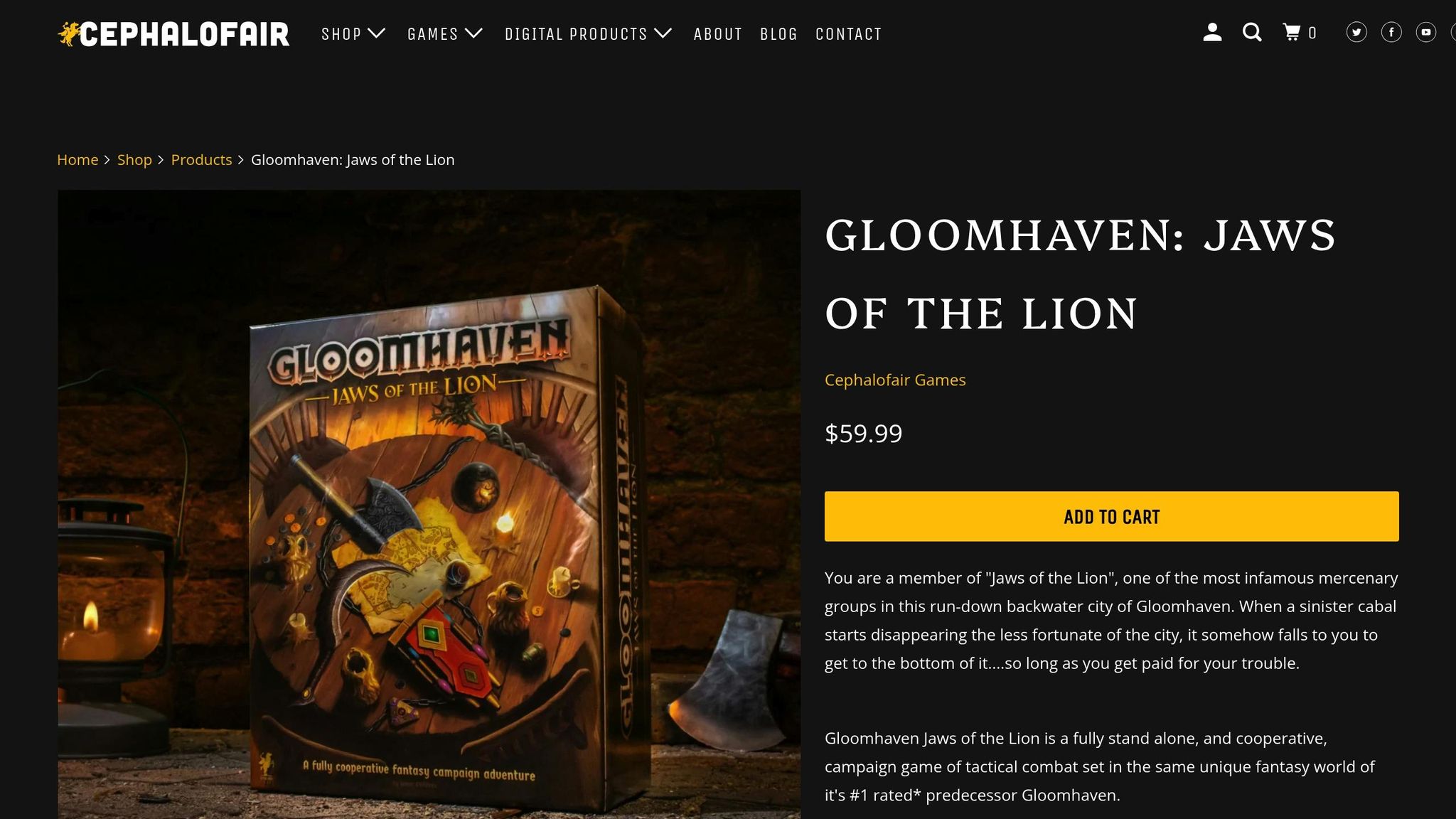
Gloomhaven: Jaws of the Lion builds on its predecessors with a rich, strategic experience designed for dedicated players. It's recommended for ages 14 and up, thanks to its gradual introduction of rules through a five-scenario tutorial. This step-by-step approach starts with simple mechanics like basic monster actions and progresses to more complex gameplay elements, making the game easier to learn. However, as the campaign unfolds, the gameplay demands greater focus and strategic thinking. The dark fantasy setting - where mercenaries investigate a shadowy conspiracy linked to the disappearance of the city's vulnerable - might feel too intense for younger audiences.
Theme Intensity
In this game, you step into the shoes of the "Jaws of the Lion", a notorious mercenary group navigating a 25-scenario campaign. The story branches based on the decisions you make, creating a dynamic and engaging narrative. Each character's abilities are deeply tied to the story, adding a personal touch. For example, the Hatchet character can retrieve their "Favorite" axe from defeated enemies, adding a layer of immersion. Dan Thurot from Ars Technica sums it up well:
"Jaws of the Lion is Gloomhaven made more focused and more narrow. It's still cerebral, still clever, and still imaginative." - Dan Thurot, Ars Technica
Complexity Rating
On BoardGameGeek, Jaws of the Lion has a complexity rating of 3.64 out of 5, making it a challenging game, though slightly easier to approach than the original Gloomhaven, which scores 3.92. One of its standout features is the spiral-bound scenario book, which replaces traditional map tiles. This clever design significantly reduces setup time and streamlines gameplay. Simplified rules for line of sight and monster focus also help make tactical combat more approachable. Moe Tousignant from Tabletop Bellhop praises the tutorial system:
"The Learn to Play Guide, which walks you through the first five scenarios as it slowly introduces the rules of the game one aspect at a time, is brilliant." - Moe Tousignant, Tabletop Bellhop
That said, the game isn't without its challenges. Renato Fornaroli from Age of Miniatures offers a cautionary note:
"While it is a simplified rule set, it is by no means simple." - Renato Fornaroli, Age of Miniatures
This balance of complexity and accessibility makes the game appealing to both seasoned players and those new to the series.
Player Count
Designed for 1 to 4 players, the game offers flexible options for solo or group play. Each session lasts between 30 and 120 minutes. The four character classes - Red Guard, Hatchet, Voidwarden, and Demolitionist - are not only central to this game but also compatible with Gloomhaven and Frosthaven, adding long-term versatility.
Accessibility Pros and Cons
Pros:
- Step-by-Step Tutorial: The five-scenario introduction eases players into the game's mechanics.
- Faster Setup: The spiral-bound scenario book eliminates the need for assembling map tiles, saving time.
- Helpful Reference Tools: A glossary is included for quick rule clarifications.
Cons:
- Challenging Complexity: Despite its streamlined rules, the game still requires strategic planning and mental effort, earning its 3.64/5 complexity rating.
- Text-Heavy Gameplay: The extensive text may pose difficulties for non-native English speakers.
Gloomhaven: Jaws of the Lion is typically priced at $59.99, though you can often find it for $42.00 to $49.99 at various hobby stores. The game has also earned several accolades, including the 2020 Golden Geek Awards for Heavy Game of the Year, Best Thematic Board Game, and Best Cooperative Game.
9. Terraforming Mars
Age Suitability
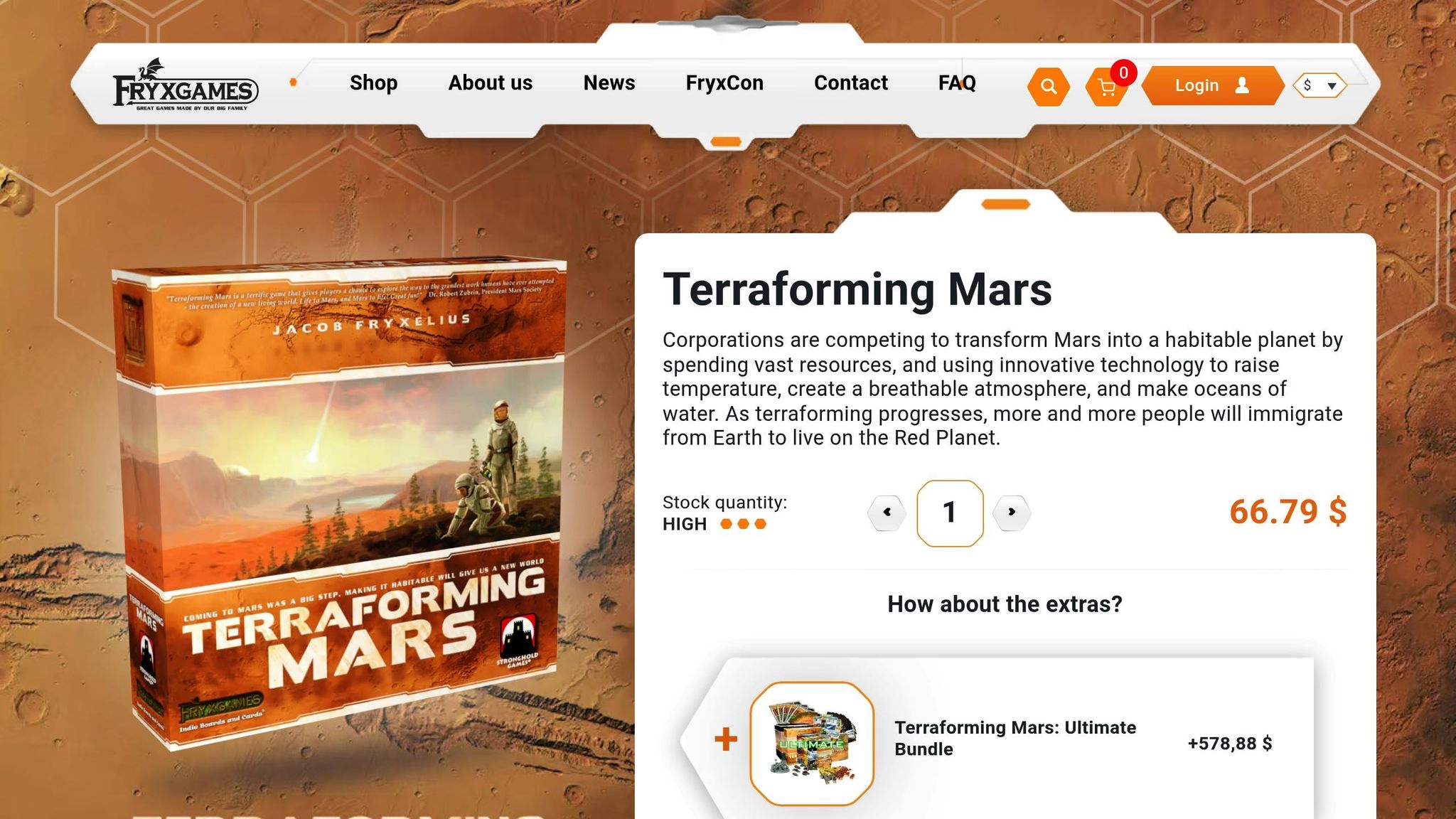
Terraforming Mars is best suited for players aged 12 and up, mainly due to its strategic depth and the extensive text on its cards. With a wealth of project cards to navigate, strong reading skills are essential. While experienced players might grasp the rules in about an hour, newcomers could take significantly longer to get comfortable. Its science-fiction theme, centered on rival corporations working to terraform Mars by increasing oxygen levels, temperature, and ocean coverage, is particularly appealing to those with an interest in STEM topics.
Theme Intensity
This game offers an immersive science-fiction experience, drawing inspiration from Kim Stanley Robinson's Mars trilogy. In a nod to this influence, the rulebook even names example players as "Kim", "Stanley", and "Robinson". Dan Jolin from The Guardian captures the essence of the game perfectly:
Terraforming Mars isn't just a great science game, it's a great game full stop.
Players juggle six types of resources - MegaCredits, Steel, Titanium, Plants, Energy, and Heat - while building infrastructure across 61 hexagonal tiles. The gameplay is rich with thematic elements, making it a treat for fans of the genre.
Complexity Rating
Terraforming Mars has a BoardGameGeek complexity rating of 3.27 out of 5, placing it in the medium-heavy strategy category. Its learning curve can be steep, particularly for new players, as the game features numerous card interactions and some mechanics that aren't fully explained. Aaron Zimmerman of Ars Technica describes it as:
A crunchy, engaging brain-burner with amazing theme.
Games typically last around 120 minutes, though variants can extend this by an additional 30–60 minutes. Its strategic depth and engaging mechanics have earned it a spot among the top 10 board games globally, with its peak ranking as the third highest-rated game on BoardGameGeek.
Player Count
Terraforming Mars supports 1–5 players, including a solo mode where the goal is to complete terraforming within 14 generations. For multiplayer sessions, 3–4 players often strike the best balance between interaction and downtime. However, with 5 players, the wait between turns can become noticeably longer. The optional drafting variant adds another layer of strategy but also increases playtime by about 30 minutes.
Accessibility Pros and Cons
Pros:
- High Replayability: The variety of cards ensures a fresh experience every time you play.
- Solo Mode: Offers a rewarding single-player option.
- Educational Appeal: Its STEM-focused theme resonates with science enthusiasts.
Cons:
- Language Dependence: The card-heavy gameplay can be a hurdle for non-fluent English speakers.
- Component Issues: Thin player mats and low-friction boards often lead players to seek third-party upgrades.
- Visual Challenges: Small text and detailed icons may pose difficulties for those with visual impairments.
Pricing and Awards
Terraforming Mars typically retails for $79.99, though prices often range from $50.00 to $74.71 at major retailers. The game has received notable recognition, including the 2017 Deutscher Spiele Preis for Best Family/Adult Game and a nomination for the 2017 Kennerspiel des Jahres.
10. Red Tape
Age Suitability
Red Tape is rated 14+, making it ideal for teens and adults. The game thrives on its sharp and humorous political satire, featuring witty, snarky content that appeals to players who enjoy political humor and commentary. Each of the 100 unique cards includes apocryphal historical quotes, adding a layer of intellectual charm that might go unnoticed by younger players, but is a treat for political enthusiasts. Its mix of luck and strategy ensures that both beginners and experienced players can enjoy a fair challenge.
Theme Intensity
This game flips traditional engine-building mechanics on their head, embracing bureaucratic chaos and political gridlock as its core theme. As MINIFINITI puts it:
Red Tape is the only board game that lets you indulge in political chaos by flipping traditional engine-building mechanics on their head, challenging you and your friends to outmaneuver each other with witty, snarky, and beautifully illustrated cards.
MINIFINITI also describes it as "the perfect game for those who appreciate a clever critique of democracy". The goal? Create so much red tape that your opponents can't play a single Policy card. The satirical tone, combined with mechanics like breaking deals and targeting opponents, adds a layer of competitive mischief that players who enjoy poking fun at politics will love.
Complexity Rating
While the theme may be politically charged, the gameplay itself is straightforward and easy to pick up. Players take turns playing Policy cards until a Department card appears, triggering a bidding war with Senators. This reverse engine-building mechanic is simple enough for newcomers but still offers strategic depth for more experienced players. A typical session lasts around 30–45 minutes, making it a quick and engaging choice for game night.
Player Count
Designed for 3–5 players, Red Tape focuses on competitive social interaction and deal-making, perfectly aligning with its chaotic political theme. This player count ensures a dynamic experience, with plenty of opportunities for alliances, betrayals, and strategic plays.
Accessibility Pros and Cons
Pros:
- Quick Setup: Players can dive into the action within just 2 minutes.
- Distinctive Design: Each of the 100 cards features unique artwork and historical quotes, adding to the game's charm.
- Fair Play: The balance of luck and strategy ensures that newcomers can compete effectively against seasoned players.
Cons:
- Player Requirement: The game requires at least 3 players, which may limit flexibility.
- Niche Appeal: Its satirical take on politics might not resonate with those looking for cooperative or more serious gameplay.
Red Tape has earned 5/5 stars on The Game Crafter, with reviewers commending its fun gameplay, replayability, well-written rules, and eye-catching artwork. Priced at $39.99, MINIFINITI also invites players to join weekly game nights to experience the prototype firsthand.
Top 10 Games with Amazing Theming
Strengths and Weaknesses
This section breaks down the standout strengths and challenges of each game, focusing on how they align with different age groups. While the earlier reviews explored individual mechanics in depth, here’s a concise look at what works - and what doesn’t - for players of various ages.
For preschoolers (ages 3–5), games need to be simple, quick, and easy to grasp, with minimal reliance on reading. Zingo fits perfectly here, offering straightforward gameplay, though its heavy reliance on luck might not appeal to everyone. On the other hand, Story Cubes sparks creativity with its open-ended storytelling, but the absence of clear objectives may leave some players feeling adrift.
For elementary-aged kids (6–8), games that balance small decisions with quick satisfaction work best. Sushi Go! is a great pick, thanks to its fast pace and intuitive mechanics, though younger players might occasionally need help with scoring. Sleeping Queens, while fun and great for teaching memory skills, might feel too simplistic for older children who crave more complexity.
When it comes to teens and adults, deeper strategy and more intricate gameplay become the focus. Catan shines here with its emphasis on trading and negotiation, though the robber mechanic can sometimes frustrate players. Meanwhile, Azul offers a beautifully tactile puzzle experience, though its abstract theme might lack the storytelling appeal some players prefer. Pandemic Legacy: Season 1 encourages teamwork and collaboration, but it can suffer if one player dominates the decision-making process.
Dr. Jennifer Walsh, a family therapist, suggests cooperative games when competition leads to conflict:
“I recommend cooperative games for families where competitive games consistently end in tears, conflict, or sibling resentment”.
For those seeking immersive and strategic experiences, Gloomhaven: Jaws of the Lion and Terraforming Mars are excellent choices. However, their complexity and time demands might overwhelm casual players. On a lighter note, MINIFINITI's Red Tape uses humor to make strategy more approachable and enjoyable.
Professor David Chen from Imperial College London highlights the value of competition for developing strategic thinking:
"Competitive games create natural motivation for strategic thinking... Children want to win, so they engage deeply with strategic analysis".
For groups with mixed ages, house rules can help level the playing field and keep everyone engaged. Ultimately, the best game choice depends on the players' ages, preferences, and tolerance for complexity. This overview provides a guide to matching the right game with your group’s dynamics for an enjoyable tabletop experience.
Conclusion
Looking at these diverse games, it's clear that thematic gameplay can appeal to players of all ages. Finding the right game is all about balancing complexity, theme, and playtime with the preferences and age range of your group.
For preschoolers (ages 3–5), games like Zingo and Sleeping Queens are fantastic choices. They feature simple rules, quick turns, and minimal reading, ensuring young players stay entertained without feeling overwhelmed.
Elementary-aged kids (6–8) thrive with games that teach logic and pattern recognition while keeping things light and quick. Options like Sushi Go! and Story Cubes encourage decision-making and creativity, which helps build confidence.
Tweens (ages 9–12) gravitate toward games like Azul and Catan, which offer clear goals and strategic depth. These games challenge their growing minds while still being easy to learn and enjoy.
Teens and adults (13+) often prefer games with more complexity and mature themes. Pandemic Legacy: Season 1 emphasizes teamwork through its collaborative campaign, while titles like Gloomhaven: Jaws of the Lion and Terraforming Mars deliver immersive, strategy-heavy experiences. For something lighter but still strategic, MINIFINITI's Red Tape ($39.99) adds humor to the mix, making intricate gameplay more accessible for all.
To get started, try budget-friendly games to see what resonates with your group. Look for tactile elements and simultaneous play mechanics to keep everyone involved, and don’t shy away from tweaking the rules to suit mixed-age players. By matching the game's complexity, theme, and playtime to your group's needs, you can create an exciting and inclusive tabletop experience for everyone.
FAQs
What should I keep in mind when picking a thematic game for different age groups?
When picking a thematic game, age-appropriateness should guide your decision. Think about the game's complexity, theme, and how accessible it is for the intended players. For younger kids, focus on games with straightforward rules, larger pieces that are easy to handle, and quick turns to keep their interest without overwhelming them. On the other hand, older kids and teens often enjoy games that are more strategic and mentally engaging, especially those that promote critical thinking and teamwork.
The theme of the game should also align with the players' interests and maturity. Avoid themes or content that might feel too intense or inappropriate for younger children. Look for games with clear instructions and simple setups to make the experience enjoyable from start to finish. Balancing fun, learning opportunities, and developmental appropriateness is the secret to selecting a game that everyone can enjoy.
How do complexity levels affect the enjoyment of games for different age groups?
Complexity levels are a big factor in how much people enjoy games. They help ensure the rules and challenges fit the skills and interests of players across different age groups.
For younger players, simpler games often work best. These games usually come with easy-to-follow rules, shorter play sessions, and themes that are fun and relatable. This makes them quick to pick up and enjoyable without leading to frustration.
Meanwhile, games with higher complexity cater to older kids and adults. These often include detailed strategies, longer playtimes, and more intricate mechanics. For players looking for a challenge, these games offer a deeper and more satisfying experience. Matching the game's complexity to the players’ abilities not only boosts enjoyment but also encourages learning and creates opportunities for meaningful social interactions.
What are the advantages of playing cooperative versus competitive games during family game nights?
Cooperative games are a fantastic way to bring families closer by promoting teamwork, open communication, and understanding. Instead of pitting players against each other, these games encourage everyone to work toward a common goal, creating a sense of unity and shared achievement. They’re especially great for families with younger kids or those who might feel discouraged by competitive gameplay, as the focus shifts from winning or losing to collaboration.
On the flip side, competitive games can sharpen individual skills like strategic thinking and decision-making. While they can be exciting, they sometimes spark rivalry or frustration, particularly for younger or more sensitive players. For family game nights, cooperative games often provide a more welcoming and enjoyable experience, helping to strengthen relationships and ensuring everyone feels included and appreciated.