
Turn Order Variations: Design Tips for Game Creators
Turn order systems in games influence pacing, fairness, and player engagement. While simple clockwise rotations are common, they can create imbalances, such as first-player advantage or predictable gameplay. Alternatives like snake drafts, auction-based systems, performance-based turns, randomized orders, and role-based sequences add variety and strategy. Each system has trade-offs in complexity, fairness, and thematic alignment, making it essential to match the approach to your game's goals and audience.
Key Takeaways:
- Clockwise Rotation: Simple, but risks imbalances.
- Snake Drafts: Balances early advantages during setup.
- Auction-Based: Adds strategy but requires more explanation.
- Performance-Based: Helps trailing players catch up.
- Randomized: Adds unpredictability but reduces control.
- Role-Based: Aligns turns with the game’s narrative.
Tip: Start with a basic system during playtests, then experiment with alternatives to refine balance and engagement. Tailor your turn order to fit your game’s complexity, player count, and theme.
Creating a modern board game! - Part 2: Turn Order
Static Turn Order Designs
Static turn order systems stick to a fixed, predictable pattern throughout the game. A classic example is the clockwise rotation. This straightforward approach is a favorite for many games because it allows players to focus on their strategies without worrying about who goes next.
This design works well for family board games and lighter strategy titles, like Settlers of Catan and Ticket to Ride. However, simplicity can come with drawbacks. A major issue is the potential for first-player advantage, especially in games where early access to resources or key positions can snowball into bigger benefits. Another concern is that seating position might matter more than it should - being sandwiched between aggressive players or always going last can make the experience less enjoyable.
Fixed Rotations
In a fixed rotation system, turns proceed in a consistent order, usually clockwise. For example, the rule might state: "Play proceeds clockwise from the start player". While this setup is easy to follow, it can create persistent positional advantages. Players seated earlier in the turn order might repeatedly gain access to limited resources, while those going later could find themselves at a disadvantage. Additionally, being seated next to particularly competitive players can make things even tougher.
Game designers often address these issues by rotating the start player between rounds while keeping the clockwise pattern within each round. Other balancing strategies include giving players later in the turn order slightly stronger starting resources, introducing asymmetric starting powers, or designing the board to evenly distribute high-value options.
Let’s take a closer look at how snake drafts can help balance things during setup phases.
Snake Drafts for Setup Balance
A snake draft flips the pick order in alternating rounds (e.g., 1–2–3–4 becomes 4–3–2–1), which helps offset early advantages. By having the first player in one round pick last in the next, the system balances the benefits of going first.
This method shines in situations where early picks have a big impact, like choosing starting board positions, powerful character abilities, or valuable tiles. For example, Settlers of Catan uses a snake draft during the initial settlement placement phase, ensuring that players who pick later still have a chance to claim strong positions. Including diagrams in the rulebook can make it easier for new players to understand the process. Snake drafts are typically reserved for high-stakes decisions during setup rather than being used throughout the game.
Dynamic and Player-Driven Turn Orders
Dynamic turn order systems bring an interesting layer of strategy to games, as they require players to carefully manage their resources. The challenge lies in deciding whether to go early in a round or conserve resources for future opportunities.
Auction-Based Turn Selection
In auction-based systems, players use resources - like money, points, or actions - to bid for their preferred turn order each round. This setup forces players to make a tough choice: secure an earlier turn at the cost of valuable resources or save those resources for other advantages.
There are different ways to design these auctions: sealed bid auctions keep bids private, adding an element of uncertainty, while open bidding lets players adjust their offers based on others’ actions. To keep the game balanced, designers can introduce variable costs or diminishing returns, ensuring no single player can dominate the best positions every round. Testing is crucial here to avoid situations where resource-rich players consistently claim early turns, skewing the game.
Turn Order Based on Player Performance
Performance-based systems shake things up by giving the first turn to the player who’s trailing and the last turn to the leader. This approach levels the playing field, giving those behind a chance to seize new opportunities before anyone else. It’s a natural and intuitive way to balance gameplay.
That said, there’s a risk of predictability if score gaps become too wide. To keep things interesting, designers can mix this system with other mechanics, like varying action costs or limited resources that reset each round. This combination ensures the order stays fluid and prevents leaders from feeling unfairly punished.
Next, we’ll dive into how randomized and role-based systems add even more variety to turn order mechanics.
Randomized and Role-Based Turn Orders
Using randomized or role-based systems can shake up how players interact with your game. Randomized methods bring unpredictability, while role-based orders tie turns to character themes. Both approaches can change the way players experience gameplay, but they do so in distinct ways.
Randomized Approaches
Randomized systems mix things up, disrupting predictable turn patterns and forcing players to adapt in the moment. For example, in Dungeons & Dragons 5e, each combatant rolls a d20 (plus modifiers) at the start of combat to determine initiative. That order stays fixed for the rest of the encounter, balancing randomness with character stats. This setup ensures some variety while still allowing for strategic planning. On the other hand, Savage Worlds takes a different approach by reshuffling a deck of cards each round. Players draw cards to determine their turn order, with special cards like Jokers offering bonuses. This creates a sense of excitement and opportunity, making randomness feel rewarding instead of frustrating.
Dice rolls are quick and familiar, while card-based systems provide a visual, easy-to-follow sequence. Another option is chit-pull mechanics, where tokens are drawn from a bag to decide which faction or character acts next. This method adds tension and unpredictability, especially in skirmish games where the "fog of war" is part of the experience. The key is to match the system to your game’s pacing. For a chaotic, fast-paced brawler, reshuffling cards every round might fit perfectly. For a tactical game where positioning is critical, a single initiative roll at the start of combat maintains the strategic flow.
However, pure randomness can frustrate players, especially if someone consistently ends up acting last. To address this, you can add catch-up mechanics, like giving players who acted last a small bonus or a reroll advantage. Another option is using tiered ranges - grouping players into broad "early" or "late" bands and breaking ties with secondary stats. These tweaks keep the unpredictability but reduce the feeling that luck is the only factor. Ultimately, the turn order system should align with your game’s pace and goals to keep players engaged.
Role-Based Orders
Role-based systems take a different route by connecting turn order to the game’s narrative. In this setup, turn order is tied to character roles, creating a sequence that feels natural within the game world. For instance, in One Night Ultimate Werewolf, each role activates during a specific step of the night phase. Werewolves act first to identify each other, followed by the Seer who investigates, and then the Robber, who can swap roles. This sequence isn’t random - its unpredictability comes from players not knowing who holds which role.
This method works best when the sequence reflects the game’s logic. For example, investigative roles might act before destructive ones to allow players to gather clues first. Alternatively, you might reverse the order to create chaos before analysis. Keeping the sequence short and repeatable helps avoid slowing down gameplay. Tools like reference cards or mats listing the sequence with icons can make it easier for players to follow along. For games with a moderator, scripted instructions like "Werewolves, open your eyes and choose a victim" help maintain clarity, especially in groups of 4–8 players where confusion can derail the experience.
You can also combine randomness with role-based mechanics. For instance, roles can be assigned randomly at the start of the game, but the turn sequence remains fixed each round. Some games even allow specific roles to manipulate the sequence, such as acting "before everyone else" once per game or swapping positions with another role. These tweaks introduce controlled chaos while keeping the overall structure intact, giving players something to learn and strategize around.
sbb-itb-7b84150
Comparison of Turn Order Systems
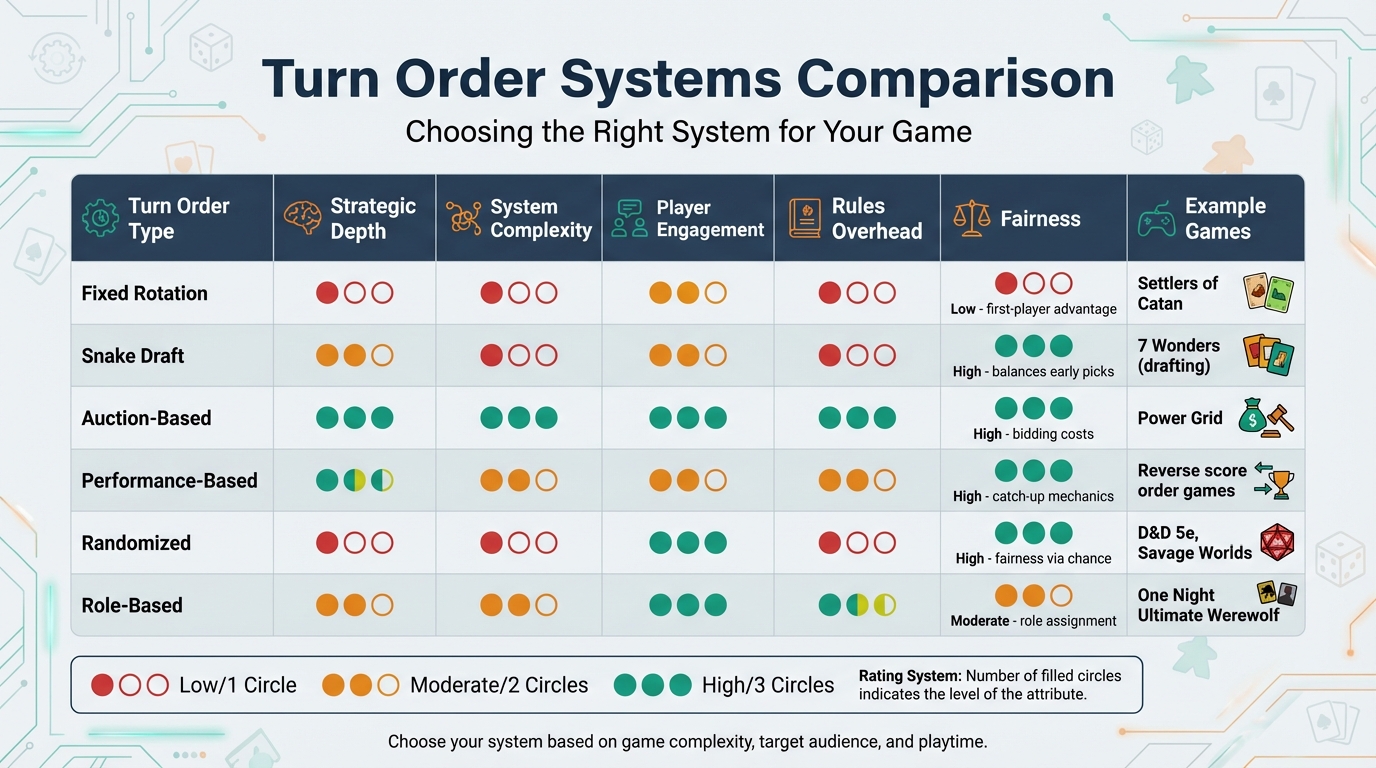
Turn Order Systems Comparison: Strategic Depth, Complexity, and Fairness
When it comes to choosing a turn order system for a game, it’s all about balancing strategic depth, complexity, and how much players feel involved. Fixed rotations are straightforward and easy to use, while auction-based systems add a layer of strategy but come with more complexity. Randomized systems, on the other hand, bring an element of surprise and excitement, though they limit player control. Role-based systems immerse players in the theme of the game, but they require clear communication to avoid confusion.
Another factor to consider is how much effort the rules and setup demand. Auction and role-based systems often need more explanation and additional components compared to simpler fixed-turn systems. Snake drafts and performance-based systems actively balance advantages between players, while fixed rotations may need extra mechanics to level the playing field. Player count and session length also play a big role: complex systems like bidding can slow things down with larger groups, while streamlined systems help reduce downtime.
The type of game you’re designing matters, too. Tactical games tend to favor predictable systems like fixed, auction-based, or performance-based turns. Social deduction games thrive on the unpredictability of randomized or role-based systems. Economic games often lean toward auctions, while adventure games typically use initiative-based mechanics inspired by RPGs.
Comparison Table: Turn Order Systems
Here’s a quick breakdown of how different turn order systems stack up across key criteria:
| Turn Order Type | Strategic Depth | System Complexity | Player Engagement | Rules Overhead | Fairness | Example Games |
|---|---|---|---|---|---|---|
| Fixed Rotation | Low | Low | Moderate | Low | Low (first-player advantage) | Settlers of Catan |
| Snake Draft | Moderate | Low | Moderate | Low | High (balances early picks) | 7 Wonders (drafting) |
| Auction-Based | High | High | High | High | High (bidding costs) | Power Grid |
| Performance-Based | Moderate-High | Moderate | Moderate | Moderate | High (catch-up mechanics) | Games with reverse score order |
| Randomized | Low | Low | High | Low | High (fairness via chance) | D&D 5e, Savage Worlds |
| Role-Based | Moderate | Moderate | High | Moderate-High | Moderate (role assignment) | One Night Ultimate Werewolf |
Ultimately, playtesting is the best way to ensure your chosen system fits your game’s goals. A system that works well for seasoned gamers might feel overwhelming for casual players, and vice versa. This comparison highlights the trade-offs of each system, helping you make informed decisions to match your game’s style and target audience.
Conclusion and Recommendations
When choosing a turn order system, think about how it fits your game's goals and who will be playing. Fixed rotations, like going clockwise, are great for quick, easy-to-learn mechanics that get players into the action fast. On the other hand, dynamic systems, such as auction-based or performance-based orders, allow for more strategy and player involvement but require more explanation and can slow things down with larger groups. Randomized or role-based systems add unpredictability and thematic flair, though players may feel less in control. These considerations will help you make clear, purposeful design decisions.
Key Takeaways
Your turn order should match your audience and the theme of your game. For family-friendly games that last 30–60 minutes, stick to simple systems like clockwise rotation or a quick snake draft - something you can explain in under a minute. For strategy-heavy games aimed at hobbyists with playtimes of 90–180 minutes, consider auction-based or benefit-driven systems that reward planning and strategic timing. These players will enjoy the added layer of tactical decision-making.
Make sure the turn order aligns with the game's narrative. For example, position-based systems where the weakest player goes first work well with "comeback" themes, while role-based systems shine in games where certain characters logically act before others (like a scout moving ahead of artillery). If the turn order feels disconnected from the game’s story, it risks coming across as arbitrary and could disrupt player immersion.
Next Steps for Game Creators
Start simple: use a basic clockwise rotation during your initial playtests. Once your core gameplay feels polished, experiment with alternative systems. Try position-based or benefit-driven orders one at a time, and compare their impact during structured playtests. Track win rates by player position over 20–30 games to spot any imbalances. If one seat consistently wins more often, it’s a sign your turn order or game setup might need tweaking.
Pay close attention to how players interact during playtests. Are they engaged while waiting for their turn? Do they frequently ask whose turn it is? If so, your system might be too complicated for the game’s weight class. Testing with diverse groups, such as those at MINIFINITI, can give valuable insight into how different systems work with various audiences. Before finalizing, conduct a "blind test" where new players learn the game solely through your rulebook. This ensures your turn order explanation is clear and ready for release.
Explore More with MINIFINITI

If you're looking for inspiration in crafting unique turn order mechanics, MINIFINITI offers a standout example. Their games blend humor with strategic gameplay, showing how creative mechanics and engaging themes can elevate the tabletop experience. Take their game "Red Tape", for instance. This title flips traditional engine-building mechanics upside down, using clever card interactions to challenge conventional gameplay. It's a fantastic case study for designers eager to explore how unconventional turn structures can balance comedy with meaningful tactical decisions.
MINIFINITI also organizes weekly game nights, giving designers the perfect opportunity to test prototypes and gather real-time feedback. These events create a vibrant community space where you can observe how various player groups engage with different turn order systems. Whether you're experimenting with auction-based mechanics or role-based strategies, testing with diverse audiences can uncover insights that solo playthroughs often miss.
Ready to dive deeper? Visit MINIFINITI to learn more about "Red Tape" (available for preorder at $39.99), join their game nights, or explore their designer resources. Whether you're just starting out or refining a complex strategy game, seeing how others tackle turn order challenges could spark fresh ideas for your own projects.
FAQs
How do I choose the right turn order system for my game?
To choose the right turn order system for your game, think about how it fits with the overall flow, keeps players interested, and aligns with the level of strategy you aim to provide. A fixed turn order is great for maintaining a structured and predictable gameplay experience. On the other hand, variable or dynamic systems can introduce an element of surprise and keep things fresh. Experiment with different setups to see which one elevates the experience for your players the most.
What are the pros and cons of using a randomized turn order in games?
Randomized turn order shakes things up, bringing a sense of unpredictability to the game. This added variety can keep things fresh and boost replay value. Plus, it pushes players to think on their feet, leading to more dynamic and interactive gameplay moments.
On the flip side, it can throw some players off, making it harder for them to plan ahead. If luck seems to favor certain players repeatedly, it might even feel unfair. Striking the right balance between randomness and strategy is key to keeping the game enjoyable and fair for everyone.
How can I balance first-player advantage in a fixed turn order system?
To reduce the advantage of always having the same first player in a fixed turn order system, you can switch up the starting player each round or game. For instance, if someone starts first in one round, they could take the last turn in the next. This rotation helps balance the gameplay.
Alternatively, you could introduce an element of chance, like rolling dice or drawing cards, to determine who starts each game. This adds an unpredictable twist, ensuring no single player repeatedly gains the benefit of going first.