
Game Talk
Designing Games with Action Points
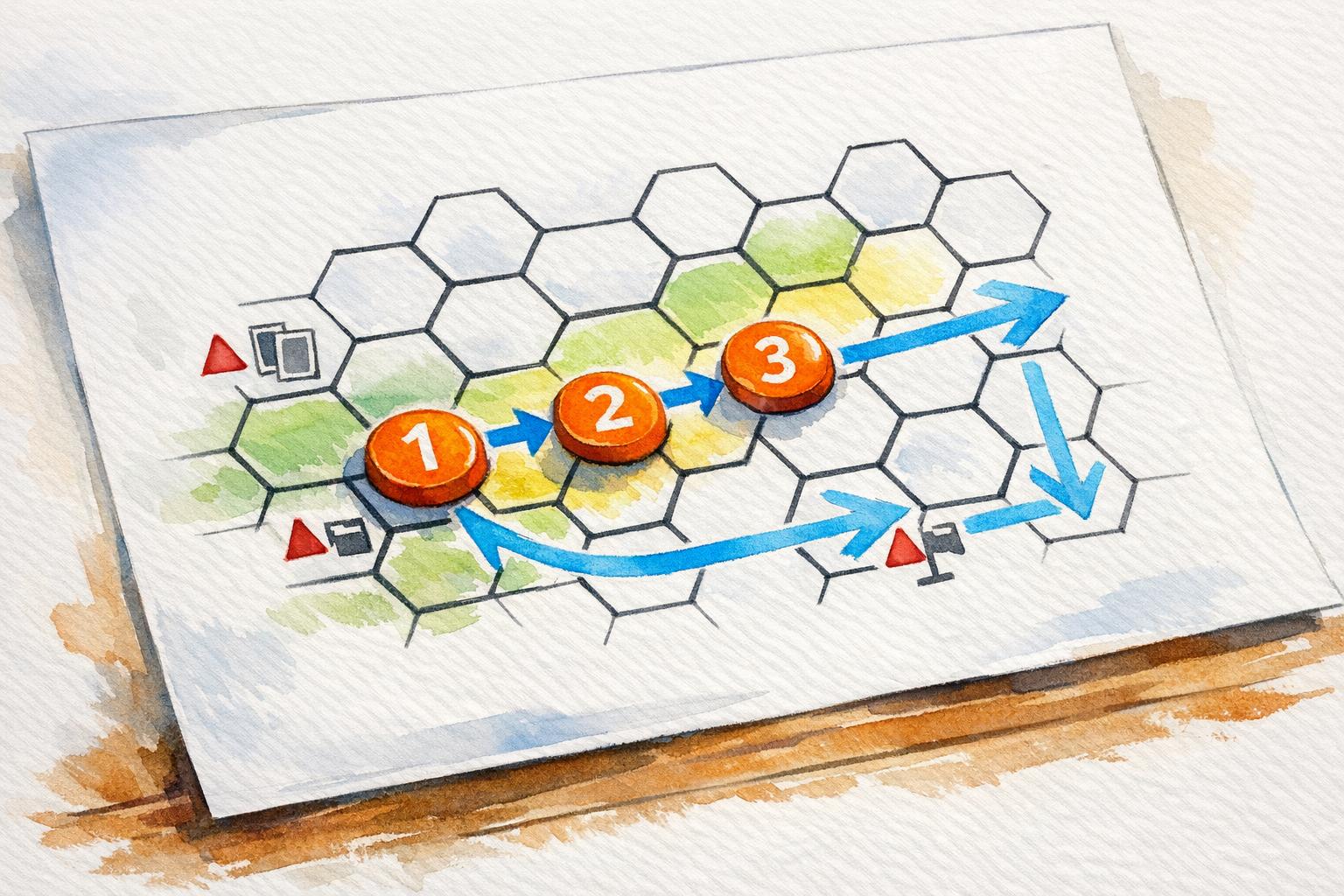
Action points are a resource in games that players spend to perform actions like moving, attacking, or building. This system forces players to prioritize and make tough decisions, creating a structured “action economy.” Popularized by games like Tikal and Pandemic, action point mechanics offer flexibility and depth by allowing players to combine actions within a turn.
Key takeaways:
- What are action points? A limited pool of points used to execute actions, with each action having a set cost.
- Why use them? They balance freedom and structure, encourage planning, and keep gameplay engaging by limiting resources.
- Design essentials: Balance action costs, keep options manageable, and test for fairness and clarity.
- Challenges: Avoid overwhelming players with too many choices or overly complex systems.
Action Points
sbb-itb-7b84150
Core Elements of Action Point Systems
Action point systems revolve around three main components: point allocation (the player’s resource budget), an action menu (the list of available tasks), and action costs (the price assigned to each task). Together, these elements create a framework where players must carefully prioritize their moves within a limited pool of resources. Players can often chain actions together within a single turn, strategically deciding the best sequence to create efficient “action sets”. This flexibility transforms action points into a form of strategic currency, adding tension as players strive to maximize their limited points.
Action Costs and Point Allocation
Balancing action costs with their impact is key. A good system ensures a consistent cost-to-benefit ratio - a two-point action should roughly deliver twice the value of a one-point action. For example, in Tikal, players receive 10 points per turn to distribute across 7 possible actions, with costs reflecting the power of each action. In contrast, Mexica gives players just 6 points but offers 12 potential actions within the same cost range.
To prevent players from overusing the strongest moves, designers can introduce escalating costs. This means performing the same action multiple times in one turn becomes progressively more expensive. Some systems even tie action points to in-game resources such as Food or Taler, though this can create an imbalance where wealthier players gain an outsized advantage.
Games with higher action point counts (10 or more) often benefit from physical tools like tokens or a dedicated tracker to help players manage their spending. These tools ensure clarity and prevent errors during gameplay.
Player Freedom vs. Game Structure
The real challenge lies in balancing player freedom with a structured game flow. Too much freedom can overwhelm players, leading to analysis paralysis.
“Having many choices but limited options give players a measure of freedom but at the same time boxes them in.” – BHFuturist, Game Designer
One way to strike this balance is by grouping actions into phases. For instance, actions can be categorized into “Combat” (for attacks and movement) and “Town” (for trading and upgrades), helping players make decisions in a logical sequence. Another method is limiting how often specific actions can be performed per turn, discouraging repetitive use of powerful moves.
When you design cooperative board games, titles like Hellboy: The Board Game offer an interesting twist. In this game, players can spend their 3 action cubes to “assist” teammates by upgrading their dice - boosting them from yellow to orange, red, or even black - to ensure success during critical moments. This transforms individual decision-making into a collaborative strategy.
Finally, keep the action menu manageable. If your system offers 10 to 15 potential actions, consider that 4 to 6 of them might add unnecessary complexity. The relationship between available actions and total points is crucial - offering 30 options but only 3 points can overwhelm players, reducing strategic depth and enjoyment.
Building Action Point Systems for Your Game
When designing an action point (AP) system for your game, start by deciding what your action points represent - whether it’s time, stamina, effort, or energy. This choice shapes how players experience the game and determines the right number of points and actions. For example, in Legends of Andor, AP represents “hours in a day”, with players working within a 7-hour limit to complete tasks. This clear connection between time and actions makes the system intuitive. If AP reflects stamina, you can add tension by letting players push their limits and risk damage for extra points.
The action-to-point ratio is crucial for setting the game’s pace. Too many actions with too few AP can overwhelm players, while too many points with limited actions can make turns feel sluggish. Railways of the World balances this well, offering 3 AP per turn across 5 action types, keeping decisions quick and focused. On the other hand, Tikal gives players 10 AP to use across 7 actions, encouraging intricate planning and action chains.
You can also choose between fixed or dynamic AP systems. Fixed systems, like the 4 AP per turn in Pandemic, provide predictability, while dynamic systems adapt to the game state. For instance, Defenders of the Realm ties AP to character health - taking damage reduces available actions. Similarly, Tahiti limits AP based on the cargo weight in your canoe, and Through the Ages splits points into civil and military categories, adding layers of strategy. These decisions shape how players manage resources and navigate challenges.
Balancing Your Action Point System
Balancing costs is key to maintaining fairness and strategy. Tikal demonstrates this with action costs ranging from 1 to 5 points, ensuring each option feels impactful. Avoid comparing actions across vastly different power levels; instead, balance actions within the same tier.
One effective method to encourage variety is escalating costs. For example, in The Motherlode of Sticky Gulch, players start with 3 AP and 4 actions. The first time an action is used, it costs 1 AP, but repeating it in the same turn costs 2 AP. This system nudges players to diversify their choices without imposing strict limits. Another approach ties costs to character progression - higher-level characters might spend fewer AP on the same actions, offering more flexibility as they grow.
Playtesting is essential for identifying imbalances. If AP is tied to resources like food or currency, watch for scenarios where wealthier players gain an outsized advantage. Counter this with mechanics like maintenance costs for large empires or giving trailing players priority in taking actions. For games with higher AP counts (10 or more per turn), include physical tools like tokens or a tracking board to help players stay organized and avoid frustration.
Mixing Action Points with Other Game Mechanics
Think of action points as currency that players can spend, save, or even lose. This opens up opportunities for deeper strategies, such as banking unused AP for reactions or defensive moves during an opponent’s turn.
Linking AP to other resources creates interesting trade-offs. For instance, AP might depend on the number of units a player controls or the amount of food they’ve stockpiled. High-cost actions that exceed a single turn’s AP pool - like a 10 AP spell for a character with only 6 AP per turn - force players to plan ahead and “charge” their moves over multiple turns.
Integrating AP with movement and combat mechanics can also add depth. In a system like Dungeons & Delvers, movement costs 1 AP per 5 feet, while attacks cost 4 AP. This forces players to weigh the importance of positioning versus offense, creating dynamic decision-making moments.
“APs become a type of currency within a game. It is, in fact, a currency type resource that can be handled just like any other currency by both the designer and the player.” – BHFuturist, Board Game Designer
Once you’ve combined AP with other mechanics, thorough playtesting becomes critical to refine the experience.
Testing and Refining Your System
Playtesting helps identify potential issues like analysis paralysis, where players take too long to decide their moves. If turns drag, it may mean you’ve created too many options or overly complex permutations. Pay attention to which actions players use most frequently - if certain actions dominate every turn, they may be too cheap or too powerful. Conversely, actions that are rarely chosen might need a lower cost or additional benefits.
Gather feedback on how players perceive restrictions. Designer Jeff Warrender advises: “Design with incentives, not with restrictions”. If your system feels more like a chore than a challenge, it may be too limiting. Players should feel rewarded for clever AP management, not punished by arbitrary limits.
Make adjustments based on gameplay data. For example, if a 3-point action is used in 80% of turns, increase its cost or reduce its power. Grouping actions into phases (e.g., Combat vs. Town) can also help streamline decision-making without overwhelming players. With over 6,700 games using action point mechanics listed on BoardGameGeek, studying successful examples in your genre can offer valuable insights for refining your system.
Benefits and Drawbacks of Action Point Systems
Action Point Systems: Benefits vs Challenges in Game Design
Action point systems bring a lot to the table when it comes to game design, but they also come with their own set of challenges. These systems shine by giving players greater control over their choices, allowing them to decide the sequence and combination of actions like moving, attacking, and repositioning. This creates a more dynamic experience compared to traditional single-action systems. Players can strategize how to maximize their limited points, leading to satisfying moments when combos come together. Plus, victories often feel more rewarding since they rely on tactical planning rather than luck.
On the flip side, this complexity can sometimes overwhelm players. The sheer number of choices can lead to “analysis paralysis”, where players overthink their options. Another issue is the extra effort needed to track points, especially across multiple turns or characters, which can slow the game down.
“One of the main reasons to use an action point system is to add tactical angst to the player’s turn. Having the players always wanting or needing just one or two more points each turn in order to really get it all done.” – BHFuturist, Board Game Designers Forum
Resource balancing is another tricky aspect. If action points are tied to resources like food or crew, players who gain an early advantage can snowball, leaving others struggling to catch up. Additionally, if one action is clearly more effective than others, players might repeatedly choose it, which can make the gameplay feel monotonous.
Pros and Cons Comparison
Here’s a quick breakdown of the strengths and weaknesses of action point systems, along with some ideas for addressing common challenges:
Advantage
Challenge
Designer Solution
High player control: Allows chaining actions and creating combos
Analysis paralysis: Players overthink their options
Keep the AP pool small or group actions into phases
Tactical depth: Adds tension with limited points to spend
Long turns: Extended downtime between players
Standardize action costs to speed up decisions
Reduced reliance on luck: Rewards smart choices
Excessive tracking can slow gameplay
Use physical tokens or beads for easier tracking
Thematic versatility: Can represent time, stamina, or energy
Defensive stalemates: Players hoard points for defense
Encourage offensive play with rewards for momentum
Adjustable difficulty: Easy to tweak by changing point totals
Repeated actions: Overuse of the most efficient move
Add escalating costs or cooldowns for repeated actions
Whether an action point system fits your game depends on what you’re aiming for. If you want to offer players a deep, strategic experience with lots of decision-making, this system can deliver. But if your focus is on quick, accessible gameplay, a simpler mechanic might be a better fit.
Conclusion
Action point systems distill gameplay into a series of meaningful strategic choices. By carefully managing an action economy - where every point spent carries a tactical weight - you empower players to take control of their decisions. This approach shifts the focus away from luck and toward planning, creating opportunities for dynamic, decision-driven moments. For example, the ability to chain actions like move-attack-move adds layers of strategy and excitement.
The success of this system depends heavily on balancing and thorough testing. Each action’s cost should align with its impact, and the total number of actions must remain manageable to avoid overwhelming players. As Nick Murray aptly stated, “A game with high player interaction is a game with high replayability and balance built right into its core system”. The constant adaptation to opponents’ strategies ensures the game stays engaging and unpredictable.
Action points also lend themselves well to a variety of themes and genres, from tactical combat to resource management. A great example is the “Mask Trilogy”, beginning with Tikal in 1999, which modernized this mechanic and inspired countless games that followed. These systems thrive when they enhance the thematic experience, making the mechanics feel natural and immersive.
Playtesting is essential to strike the right balance between strategic depth and accessibility. Watch out for issues like analysis paralysis or overly long turns, and don’t hesitate to simplify actions that add unnecessary complexity. Tools like tokens or sliders can also help players track their points more efficiently, keeping the game flowing smoothly.
When designed thoughtfully, action point systems create a sense of investment in every decision. The tension of needing just a few extra points to optimize a turn keeps players engaged, turning each session into a satisfying puzzle of strategy and adaptation. Drawing from both classic and modern designs, these principles form the backbone of a strong action point system that can elevate any tabletop game.
FAQs
How many action points does a player get per turn?
Most tabletop games allocate 6 to 10 action points per turn, tailored to the specific design of the game. Take Tikal, for instance - players are given 10 action points to carry out different actions. This range is carefully selected to strike a balance between offering enough flexibility for strategic choices and keeping the gameplay complexity at a level that feels approachable and engaging.
How do I price actions so no option becomes a must-pick?
To keep any action from becoming overly dominant, it’s crucial to balance point costs thoughtfully. Assign higher costs to more powerful actions, ensuring players face meaningful trade-offs and need to prioritize their choices. Emphasizing variety and balance in action design encourages more strategic flexibility and keeps gameplay dynamic.
Another way to prevent over-reliance on a single action is by introducing diminishing returns or increasing the costs for repeated use. This approach pushes players toward deeper decision-making while steering clear of predictable patterns.
How can I reduce analysis paralysis in an AP game?
To make gameplay in an action point (AP) game smoother and avoid analysis paralysis, try these approaches:
- Divide turns into smaller phases: Breaking up turns helps players focus on one decision at a time, reducing overwhelm.
- Limit actions or points: Fewer choices mean quicker decisions, keeping the game moving.
- Simplify opportunity costs: Streamlined options make it easier for players to weigh decisions without overthinking.
- Cut down on visual clutter and complex calculations: A cleaner, more straightforward interface helps players focus on gameplay rather than getting bogged down by details.
- Incorporate simultaneous actions: Let players act at the same time to eliminate bottlenecks and keep the pace lively.
These strategies make decision-making quicker and gameplay more dynamic, keeping players engaged and the experience enjoyable.