
Game Talk
Ultimate Guide to SEL with Games
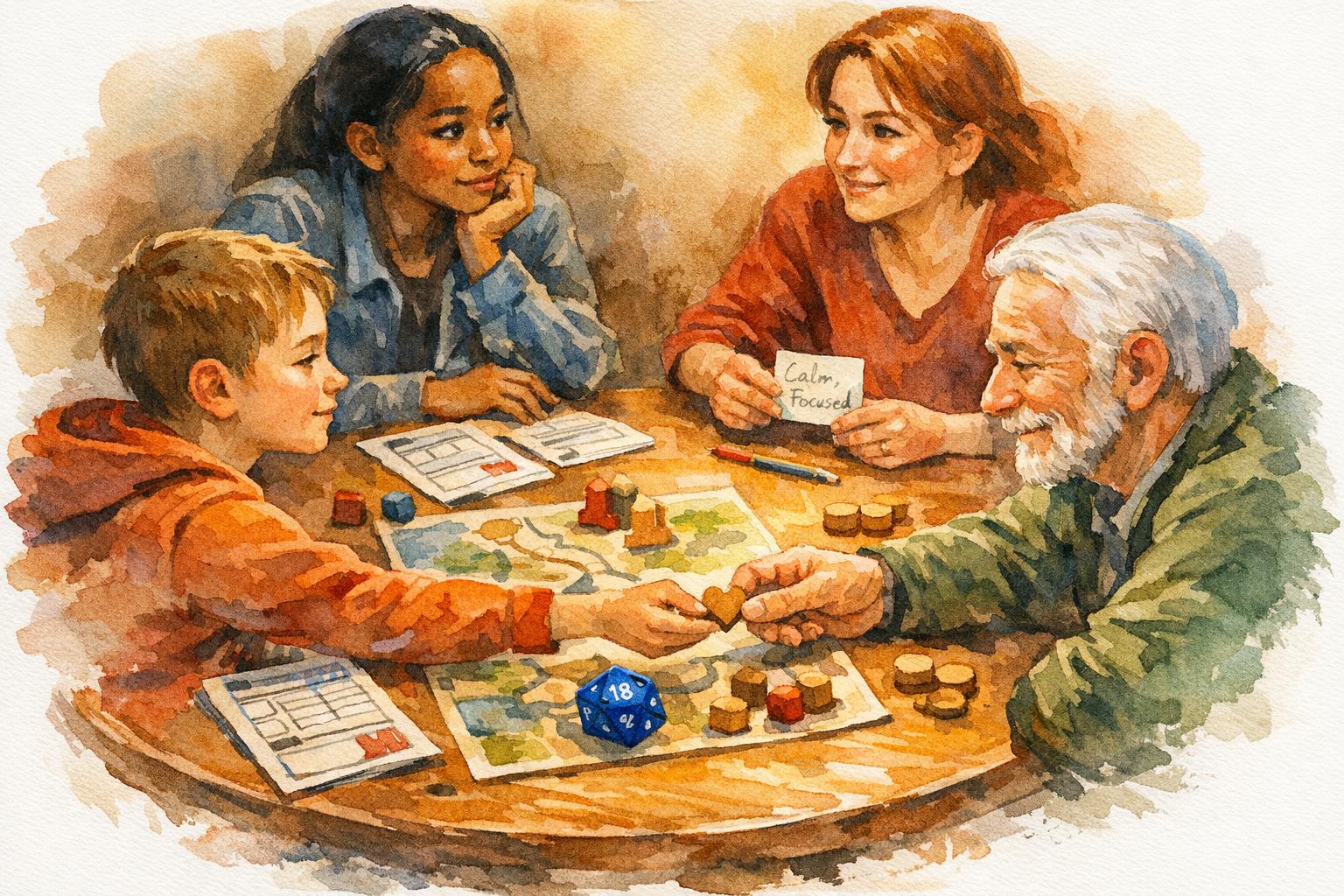
Tabletop games are a powerful tool for developing social-emotional learning (SEL) skills like self-awareness, teamwork, empathy, and emotional regulation. Unlike traditional methods, games provide a fun, interactive way to practice these skills in a low-pressure environment. Here’s why they work:
- Safe Learning Space: Players can explore social behaviors and learn from mistakes without personal consequences.
- Teamwork Focus: Cooperative games encourage shared goals, reducing anxiety and promoting collaboration.
- Empathy Building: Role-playing games help players step into others’ shoes, fostering understanding and perspective-taking.
- Skill Development: Games enhance emotional regulation, communication, conflict resolution, and patience.
For example, games like Pandemic require teamwork to solve problems, while tabletop RPGs like Dungeons & Dragons allow players to develop empathy through character interactions. Studies show SEL programs improve academic performance by 13 percentile points and increase graduation rates by 11%. Adding structured reflection after gameplay helps connect in-game experiences to real-life skills.
Whether you’re working with young children or teens, choosing the right game and facilitating sessions thoughtfully can turn play into meaningful growth opportunities.
Games and Activities to teach Social Emotional Learning through Play - SEL Virtual Summit
sbb-itb-7b84150
How Games Build SEL Skills
Tabletop games offer a fun and interactive way to nurture emotional growth and social interaction. By turning abstract SEL (social-emotional learning) concepts into real, lived experiences, players naturally develop skills like collaboration and empathy while working toward shared goals. Instead of being taught these skills in a traditional way, players learn them organically through engaging gameplay. As TTRPGkids puts it:
“It turns SEL from something that ‘you have to practice’ to something that just happens when you’re enjoying yourself and that facilitates a cool game that you WANT to play.”
The combination of low-pressure failure, instant feedback, and opportunities to try again creates a learning loop that builds confidence and resilience.
Safe Practice for Real-Life Skills
Tabletop games create a unique space where players can safely explore social behaviors and learn from mistakes without real-world consequences. Since actions occur through a fictional character or within the game, players can observe outcomes and grow without risking personal relationships.
This environment is especially helpful for youth who may be shy, neurodiverse, or have experienced bullying. The structured rules make social interactions feel less daunting, and the low-stakes nature of failure encourages experimentation with new communication styles and emotional responses. As foundry10 explains:
“TTRPGs provide a safe and controlled environment for youth to practice key SEL skills, allowing them to make mistakes without serious repercussions.”
In a 10-week TTRPG study involving Title I youth, participants showed growth in introspection, teamwork, and confidence through repeated, structured gameplay.
Games also help players build a “positive social XP bank” through successful interactions, making socializing feel more manageable. Even conflicts - like disagreements over strategy - become opportunities to practice communication and emotional regulation.
Collaboration and Teamwork
Cooperative games shift the focus from individual success to shared goals, where the group either wins or loses together. This shift reduces anxiety and aggression, fostering a more supportive environment.
Take a game like Pandemic, for example. Players must work together, sharing resources and strategies to prevent a global crisis. Cooperation isn’t optional - it’s essential. Tabletop RPGs go even further, requiring players to lean on each other’s unique character abilities to overcome challenges that no single player could tackle alone.
Studies show that cooperative games can reduce aggressive behaviors - like hitting, name-calling, and kicking - in children compared to competitive games. Suzanne Lyons, founder of CooperativeGames.com, explains:
“In cooperative games, players don’t compete against each other. Instead they have a common goal so players either win or lose together.”
In the same 10-week TTRPG study, participants reported stronger group bonds and a better understanding of their teammates’ motivations as the campaign progressed. Even disagreements, such as debating combat strategies, became teachable moments for improving communication and validating others’ ideas. As one Game to Grow facilitator put it:
“It is teams that can work together well, or teams that can be frustrated with each other… This is how teams work.”
These collaborative experiences lay a foundation for deeper social-emotional skills.
Empathy and Perspective-Taking
Role-playing games naturally encourage players to step into someone else’s shoes, fostering empathy and a deeper understanding of others’ perspectives. Whether it’s developing their own character or interacting with Non-Player Characters (NPCs), players must consider how their actions impact others emotionally.
In the foundry10 study, youth participants demonstrated remarkable empathy by protecting NPCs, such as a tavern owner, or ensuring that fictional bystanders weren’t harmed during gameplay. The sandbox nature of these games provides a layer of separation, reducing fear of real-world judgment while still offering valuable feedback on social interactions. As foundry10 notes:
“Games can provide a type of sandbox testing environment for youth to try new things and learn from mistakes with a degree of separation, which can lead to increased insight and perspective-taking.”
Collaborative gameplay also helps players appreciate the unique strengths and flaws of their teammates, promoting a deeper respect for diverse perspectives. This understanding often carries over into real-life interactions, helping players build stronger, more empathetic relationships. These role-playing experiences set the stage for mastering essential SEL skills, which will be explored further in the next section.
Core SEL Skills Developed Through Games
Tabletop games offer a relaxed and structured environment where players can naturally develop key social and emotional learning (SEL) skills. These games encourage growth in areas like emotional regulation, communication and conflict resolution, and patience through turn-taking. Let’s take a closer look at how these skills are sharpened during gameplay.
Emotional Regulation
Tabletop role-playing games (TTRPGs) provide a safe space for players to navigate frustrations, such as rolling an unlucky dice or dealing with a teammate’s questionable decision-making. Research by foundry10 and Game to Grow highlights how facilitators can pause gameplay to help players reflect on their reactions during challenging moments. This approach helps players improve emotional regulation over time.
Drama-based games add another layer by teaching players to recognize and manage their emotional responses. Activities like “Emotion Countdown”, where players gradually reduce the intensity of their feelings from a 10 (very intense) to a 1 (mild), encourage self-awareness and emotional control. End-of-session reflections, such as check-out questions, also help players process their experiences and learn from emotionally charged situations. Mastering emotional regulation sets the stage for better communication, especially during conflicts.
Communication and Conflict Resolution
Cooperative games emphasize teamwork over individual success, pushing players to negotiate, compromise, and actively listen to one another. In TTRPGs, players take on roles with unique strengths and weaknesses, which encourages them to understand their teammates’ abilities and collaborate effectively.
In one study from 2020–2021, two players in a competitive backflip contest engaged in verbal sparring that escalated tensions. A facilitator stepped in, guiding the players to express their frustrations in a constructive way. This interaction ended with one player thanking the other, showcasing how games create a safe space for working through conflicts. A Game to Grow facilitator reflected on the value of these moments:
“It is teams that can work together well, or teams that can be frustrated with each other. Teams that can say, ‘Hey, I didn’t like it when you did that.’ And then you say, ‘Yeah, you’re right. And I still did it anyway, and that’s what we’re going to do, because we’re a team.’”
Reward systems, like bonus tokens for effective communication, further encourage players to engage in constructive dialogue, both in character and out of character. These practices naturally build patience and respect for others’ turns.
Patience and Turn-Taking
Games with structured turn-taking systems teach players to respect each other’s contributions while honing self-control and emotional management skills. Facilitators can support this development by setting clear social goals, such as encouraging players to be supportive, and by offering gentle reminders during gameplay. Post-game reflections also allow players to evaluate their patience and turn-taking behaviors.
Some games, like The Talking, Feeling, Doing & Stop, Relax, Think Game, are specifically designed to help players - especially impulsive ones - practice thinking before acting. Playworks emphasizes the importance of shared norms during play:
“Shared norms for how to tag safely, how to resolve small disagreements, and who can join in (everyone) go a long way toward making playtime fun and inviting.”
Mid-game debriefs, where facilitators pause to discuss what’s working or what needs improvement in team dynamics, provide immediate opportunities to reinforce patience and communication skills. These moments help players develop habits that extend far beyond the game table.
Selecting Games for SEL Goals
Tabletop RPGs vs Board Games for Social-Emotional Learning
When choosing games to support Social and Emotional Learning (SEL), focus on those that align with specific skills like self-regulation, perspective-taking, communication, or collaboration. It’s also important to think about the group’s dynamics. Does the game offer different roles, such as leaders or coordinators? Does it provide a “sandbox” setting where players can experiment socially without facing real-world consequences? These elements tie closely to game mechanics, creating opportunities for players to practice SEL skills in a safe, engaging way.
Practical considerations are just as important as educational goals. The game should fit the grade level, group size, available time, and physical space. Look for games that spark teachable moments through productive conflict - situations where disagreements about strategy or gameplay naturally encourage communication and emotional regulation. These interactions not only support SEL development but also enrich the overall experience of playing.
Tabletop RPGs vs. Board Games
Tabletop role-playing games (TTRPGs) and board games each bring distinct benefits for SEL. TTRPGs are great for fostering empathy and encouraging complex problem-solving through collaborative storytelling. On the other hand, board games excel at teaching skills like turn-taking and adherence to rules.
Between 2020 and 2021, Game to Grow collaborated with foundry10 to conduct a study involving 16 youth from Title I schools. Over a 10-week virtual TTRPG campaign, researchers Caroline Pitt and Katharine Chen observed participants evolving from making individual decisions to working as a highly coordinated group. Some even met outside of scheduled sessions to strategize their next in-game moves.
Factor
Tabletop RPGs (TTRPGs)
Board Games
Complexity
Higher; needs a facilitator for rules and narrative
Lower; rules are predefined and self-contained
Narrative Depth
High; players create and inhabit characters in a shared world
Moderate to Low; narrative is secondary to gameplay
Group Size Flexibility
High; adaptable for small or medium groups
Low; often limited to specific player counts (e.g., 2–4)
SEL Focus
Strong on empathy, perspective-taking, and problem-solving
Strong on turn-taking, rule-following, and strategic thinking
Failure Stakes
Very Low; social “failures” only affect fictional characters
Moderate; outcomes like winning or losing are more concrete
Now, let’s explore some game suggestions tailored to different age groups and SEL focus areas.
Game Recommendations by Age and Focus Area
Early childhood (Pre-K/Elementary) thrives on games with clear emotional themes. For example, Daniel Tiger’s Grr-ific Feelings helps young children recognize and name emotions, while Cora Quest introduces teamwork through straightforward dungeon-crawling mechanics. In a 30-week curriculum developed by TTRPGkids, a story about a shy yeti named Betti used hide-and-seek mechanics to teach pre-K children how to approach others and navigate feelings like embarrassment in a safe, fictional setting.
Middle school students often enjoy games that mix humor with strategy. Red Tape by MINIFINITI ($39.99) offers a lighthearted yet strategic experience, making it perfect for fostering social connections during this transitional stage. Meanwhile, Hall of Heroes focuses on social changes, and Goblin Quest uses slapstick humor to encourage collaboration.
High school and mature groups can handle deeper ethical challenges. Games like This War of Mine delve into survival ethics, while Spent simulates the struggles of living in poverty, promoting empathy and perspective-taking. These games create meaningful opportunities for discussions about complex social issues and real-world challenges.
Facilitating SEL Through Games
Creating meaningful SEL (Social and Emotional Learning) experiences through games goes beyond just picking a fun activity. It requires a thoughtful environment where learning naturally takes place. The facilitator plays a key role here, shaping the atmosphere and guiding participants to connect gameplay with real-world skills. Without this guidance, players might miss the deeper lessons hidden in their in-game actions.
Setting Up for Success
Start by matching your game to your specific SEL goal. For example, if your focus is on creative thinking, choose games that encourage brainstorming. If decision-making is the goal, look for games that involve meaningful choices. Also, consider the group’s comfort level with vulnerability. New groups might benefit from low-pressure activities, like letting players pick their own partners, while more established groups can handle deeper, more reflective prompts.
Before diving into gameplay, set clear ground rules. Explain how players will join the game, resolve minor disagreements, and follow any physical safety measures if movement is involved. For role-playing games, introduce safety tools that allow players to pause or step away if needed. A structured approach, like the 90-minute weekly sessions using the “Critical Core” methodology, can be particularly effective. This method includes a check-in to ground the group, gameplay to practice skills, and a check-out for reflection. This structure helps participants develop self-regulation and perspective-taking in a controlled, low-risk environment.
Keep an eye on the group’s energy levels. If focus starts to wane, shift gears - try movement-based activities or mindfulness exercises to bring everyone back on track. And don’t shy away from moments of conflict. These situations are valuable opportunities for growth. As the foundry10 study highlights:
TTRPGs provide a safe and separate space for youth to work through moments of conflict in a testing ground so they can better navigate conflict in real life interactions.
When conflicts arise, encourage open communication and validate different perspectives. Rather than shutting down tension, use it as a chance to teach problem-solving and empathy. These steps create a foundation for meaningful reflection.
Encouraging Reflection and Growth
Once gameplay wraps up, a well-planned debrief can turn game moments into lasting lessons. CASEL emphasizes the importance of this step:
The debrief is where some of the most powerful learning takes place, so plan enough time for this valuable component.
Use the check-out session to guide players in reflecting on their experience. Ask them to highlight a peer’s contribution, discuss a challenge they faced, or predict what might happen in the next session. In role-playing games, encourage participants to consider how a Non-Player Character (NPC) might have felt during an interaction. This builds perspective-taking and helps players separate their own emotions from their character’s, fostering both self-awareness and empathy. Offering bonus tokens for thoughtful reflections can also reinforce positive collaboration.
Tailor your reflection process based on the session’s tone. If it was particularly challenging, use the closing time to share appreciations and reframe difficulties as moments of mutual support. This allows participants to reflect deeply on their teamwork, recognize their strengths, and identify areas for improvement.
Supporting Diverse Participants
Structured gameplay is especially effective for creating a safe and supportive environment, particularly for participants who might feel shy or socially anxious. Clear rules make it easier for everyone to engage. As TTRPGkids explains:
Structured social interactions feel safer and more manageable… particularly for kids who are coming into the game shy or who have been bullied.
Defined rules reduce the fear of judgment often associated with unstructured play.
Design challenges that require contributions from every participant, ensuring that everyone feels valued. Peer-support incentives, like bonus tokens that can only be used to assist others, can further encourage a culture of teamwork and mutual respect. The “sandbox” nature of games allows participants to experiment and learn from mistakes without real-world repercussions. For those who struggle socially, these experiences can transform their view of social interactions, making them feel less intimidating and more enjoyable.
Game designers like MINIFINITI include features like check-ins, safety tools, and bonus tokens to naturally integrate SEL into gameplay, helping participants grow in a supportive and engaging environment.
Conclusion: Building SEL Skills Through Play
Tabletop games provide a refreshing way to practice social and emotional skills - without the rigidity of a formal lesson. Whether it’s rolling dice, strategizing with teammates, or resolving in-game conflicts, players naturally develop self-awareness, emotional regulation, and teamwork. These games create a low-stakes environment where young people can experiment and grow without fear of failure. The lessons learned feel organic, not forced.
The numbers back this up: Students involved in SEL programs perform about 11 percentile points higher on academic achievement tests compared to their peers. They’re also 11% more likely to graduate high school. Considering that 81% of young people report the negative impacts of stress, tools like tabletop games offer a much-needed outlet for emotional management.
Getting started doesn’t require a massive overhaul. You could try a 5-minute check-in using an emoji chart, tweak a game like Jenga to include reflection prompts, or plan a 90-minute session with a simple structure: Check-In, Gameplay, and Check-Out. The key is consistency and thoughtful facilitation, which help turn these activities into meaningful learning opportunities. As one facilitator from Game to Grow explains:
“It is teams that can work together well, or teams that can be frustrated with each other… This is how teams work. This is how teams are formed.”
These small, approachable steps can lead to deeper, more reflective play. Moments of conflict - when guided by intentional reflection - become opportunities for growth. Whether it’s navigating a disagreement over strategy or managing frustration, players practice skills that extend far beyond the game. With the right support, these experiences transform into lessons that prepare young people for challenges in school, work, and life.
FAQs
How do I pick a game for a specific SEL skill?
To pick a game tailored to a specific social-emotional learning (SEL) skill, first pinpoint the skill you want to emphasize - such as empathy, self-regulation, or teamwork. Look for resources that organize games by skill, age range, or duration. These can make the selection process much easier. Additionally, follow facilitation tips to create an inclusive environment where everyone feels welcome. Guides and activity lists can also help you align games with your SEL objectives, ensuring the experience is both enjoyable and purposeful.
How can I run a simple SEL game session at home or school?
To host a straightforward SEL game session, start by selecting a game that aligns with your available space, group size, and the specific skills you’d like to focus on - such as teamwork or empathy. Establish clear guidelines for respectful behavior and create an inclusive atmosphere where everyone feels welcome. If conflicts arise, address them calmly and constructively. Stick to games that are engaging and suitable for the age group, and consider incorporating role-playing or cooperative activities. These approaches can help reinforce social and emotional skills in a supportive and enjoyable setting.
What if a player gets upset or conflicts happen during play?
If tensions or disagreements come up during gameplay, it’s important to handle them with care to keep the atmosphere friendly and fun. Start by setting clear expectations for respectful behavior and encourage players to share their feelings calmly. Acknowledge emotions, give everyone time to cool off if needed, and guide them through resolving the issue together. These moments can actually become learning opportunities, helping players build emotional resilience and improve their communication skills.